Organic Gardening: Practices, Manure & Benefits

Learn about organic gardening, natural manure, pest control methods, green manure preparation, and sustainable farming practices.

Introduction

Organic gardening is a sustainable method of crop production that focuses on the use of natural materials and environmentally friendly practices. It avoids the use of synthetic chemicals such as artificial fertilizers and pesticides.

This method of farming promotes:

  • Healthy crops
  • Safe food for consumption
  • Protection of the environment

Organic gardening relies on natural processes such as decomposition, recycling of waste, and biological pest control to maintain soil fertility and crop health.

Did you know? Organic gardening improves crop production without relying on synthetic fertilizers and pesticides, making it a safer choice for people, soil, and the environment.

What Is Organic Manure?

Organic manure refers to natural materials used to improve soil fertility. These materials come from plant and animal sources and are allowed to decompose before being added to the soil.

Examples of Organic Manure

  • Animal waste (dung, urine)
  • Crop residues
  • Plant materials

These materials are broken down naturally and added to the soil to:

  • Enrich nutrients
  • Improve soil condition

Key Points on Organic Manure

  • Made from plant and animal waste
  • Environmentally friendly
  • Improves soil fertility
  • Improves soil structure
  • Improves water retention

Organic manure is important because it restores soil nutrients without harming the environment.
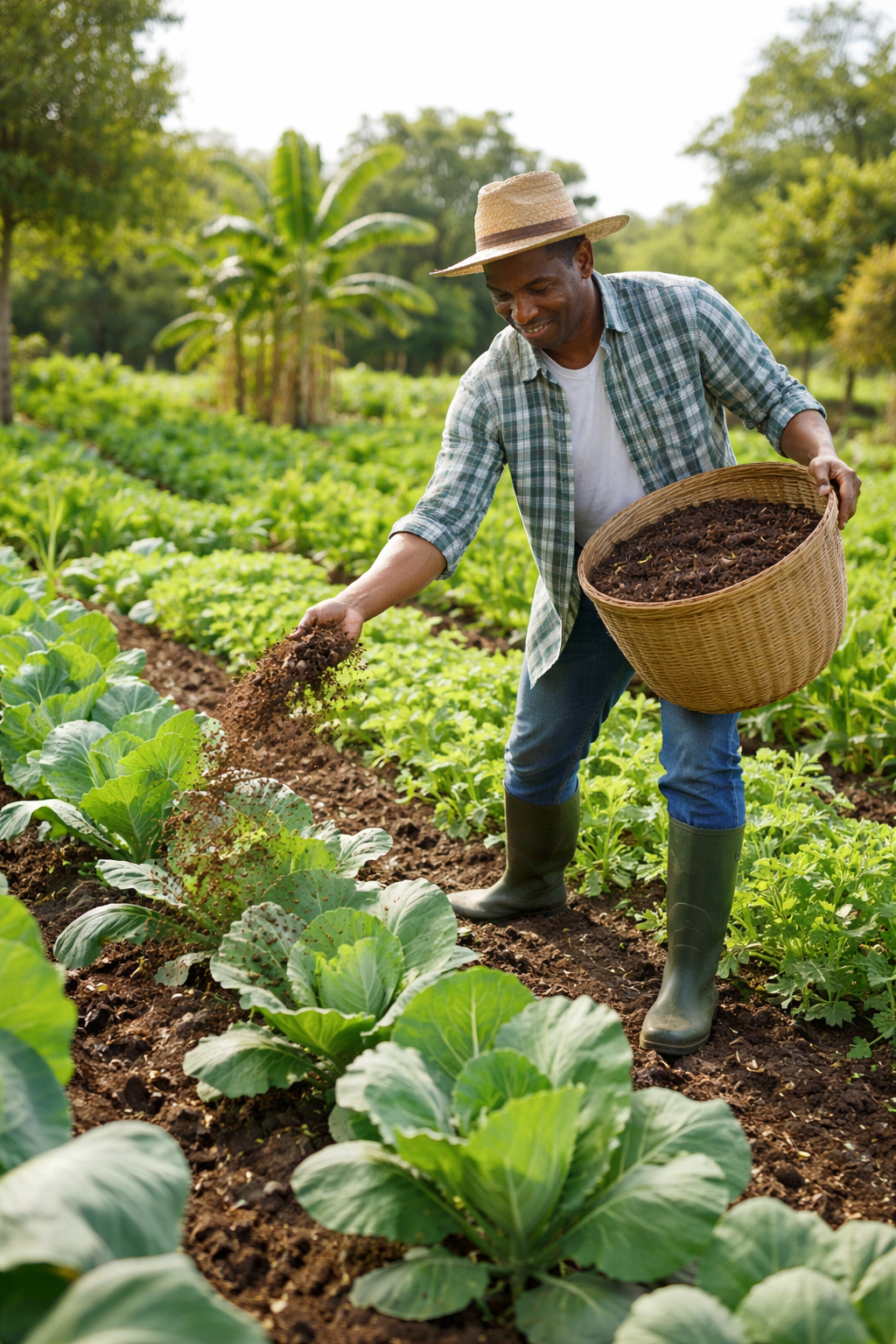
Compost manure used in organic gardening
Organic manure is a natural soil improver that adds nutrients, improves soil condition, and supports healthy crop growth.

Organic Gardening Practices

Organic gardening involves several practices that work together to ensure healthy crop production without the use of chemicals.

Did you know? Combining different organic practices improves soil fertility naturally and helps crops grow stronger without relying on synthetic chemicals.

Organic gardening practices include:

1. Use of Organic Manure

Organic manure is applied to the soil to improve fertility and support plant growth.

  • Supplies essential nutrients
  • Improves soil texture
  • Enhances water retention

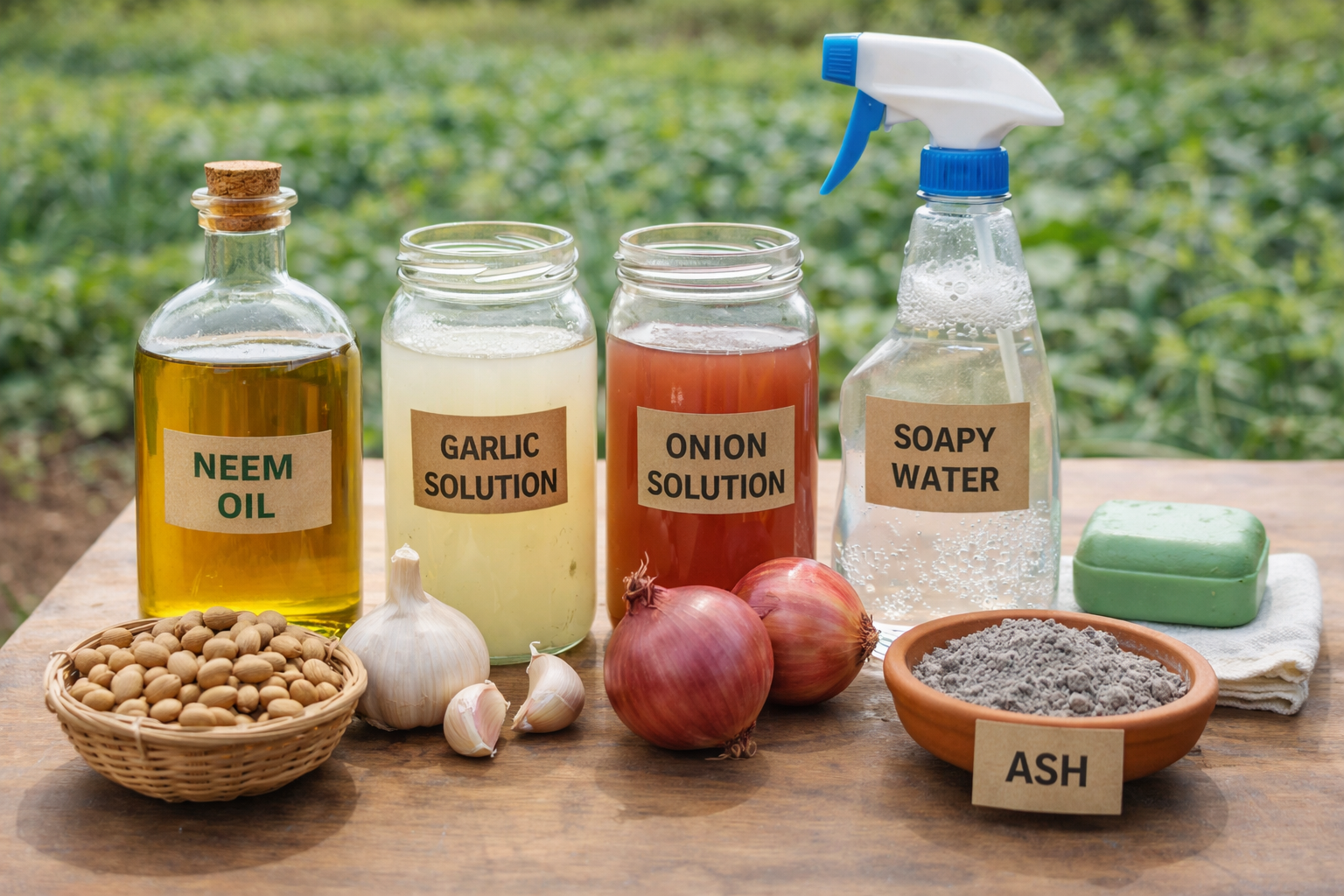
2. Use of Organic Pesticides

Organic pesticides are natural substances used to control pests without harming humans, animals, or beneficial insects.

Examples:

  • Neem oil
    • Extracted from neem seeds
    • Controls pests like aphids, mites, caterpillars, and white flies.
    • It is directly applied to crops
  • Pyrethrum extract
    • Made from pyrethrum flowers
    • Mixed with water and sprayed
  • Garlic solution
    • Crushed garlic mixed with water
    • Repels pests
  • Onion solution
    • Chopped onions mixed with water
    • Controls pests by causing respiratoy failure
  • Ash
    • Applied directly to crops
    • Acts as a natural pesticide
  • Soapy water
    • Soap mixed with water
    • Prevents insect damage
Natural organic pesticides used in organic gardening
Natural pest control materials such as neem oil, garlic solution, onion solution, ash, and soapy water used in organic gardening.

3. Mechanical Weed Control

Mechanical weed control involves removing weeds using physical methods instead of chemicals.

Methods:

  • Uprooting
    • Removing weeds from the roots manually
  • Tilling
    • Using tools like a jembe to remove weeds and loosen soil
  • Slashing
    • Cutting weeds using a panga or a slasher
  • Mulching
    • Covering soil to suppress weed growth by denying them sunlight

Key Considerations:

  • Avoid damaging crops
  • Weed regularly
  • Reduce competition for nutrients, water, and sunlight
Did you know? Regular weeding helps crops grow faster because it reduces competition for nutrients, water, and sunlight.

4. Use of Organic Foliar Feed

Organic foliar feed is a liquid fertilizer applied directly to plant leaves to supply nutrients quickly.

Importance:

  • Provides nutrients faster than soil application
  • Improves plant growth
  • Increases crop yield

Preparing Organic Foliar Feed

Materials Needed:

  • Leaves (e.g., Mexican sunflower)
  • Water
  • Bucket
  • Crushed eggshells
  • Knife
  • Sieve

Procedure:

  1. Cut leaves into small pieces
  2. Place them in a bucket
  3. Add crushed eggshells
  4. Add water and cover
  5. Leave for about two weeks to ferment
  6. Sieve the mixture
  7. Spray on crops

Want the full lesson? Subscribe to Premium to continue with complete notes on Preparing Green Manure and Importance of Organic Gardening, watch supporting video lessons, read quick summaries, attempt auto-marked questions, and practise with KJSEA-style exam questions. Also Access all Premium Content and Exams for all Subjects with a Single Premium Subscription.

Subscribe to Premium Back to Agric. Grade 9 Menu

Cleaning Household Facilities at Household Level

Household facilities should be cleaned regularly to maintain hygiene, safety, and comfort in the home.

Clean waste bins, sinks, and drainage areas help prevent bad smell, pests, and the spread of disease.

Correct cleaning promotes health and improves the home environment.

The lesson explains the meaning of household facilities and gives common examples found at home.

  • Waste bins and dustbins
  • Sinks and drainage structures
  • Open drains and surrounding areas

Learners also study materials, tools, and safety items required before cleaning begins.

Cleaning begins with preparation of tools, wearing protective items, and removing visible dirt and waste.

This is followed by washing, scrubbing, rinsing, disinfecting where necessary, and proper drying.

Safe handling of dirty water and cleaning agents is emphasized throughout the lesson.

  • Steps for cleaning a waste bin
  • Procedure for cleaning a sink
  • Guidelines for cleaning an open drain

Learners are guided on why each step matters and how good cleaning habits prevent health risks.

The lesson also links hygiene practices to responsibility at household level.

Important safety precautions are highlighted to protect the cleaner and other members of the household.

  • Using gloves correctly
  • Washing hands after cleaning
  • Keeping tools clean and dry

Learners then revise the topic using simplified summaries and guided review points.

The complete premium section includes structured notes, supporting video lessons, and quick revision summaries.

It also includes auto-marked practice activities and KCSE-style questions for revision and exam preparation.

Worked guidance and follow-up tasks are included in the full lesson.

Continuous practice helps learners understand cleaning procedures, hygiene rules, and household responsibility more clearly.

The remaining part of the lesson builds on these ideas with more guidance, examples, and revision support.

Want the full lesson? Subscribe to Premium Access to continue with complete notes on cleaning household facilities at household level, watch supporting video lessons, read quick summaries, attempt auto-marked questions, and practise with KCSE-style exam questions.

Cleaning Household Facilities at Household Level

Household facilities should be cleaned regularly to maintain hygiene, safety, and comfort in the home.

Clean waste bins, sinks, and drainage areas help prevent bad smell, pests, and the spread of disease.

Correct cleaning promotes health and improves the home environment.

The lesson explains the meaning of household facilities and gives common examples found at home.

  • Waste bins and dustbins
  • Sinks and drainage structures
  • Open drains and surrounding areas

Learners also study materials, tools, and safety items required before cleaning begins.

Cleaning begins with preparation of tools, wearing protective items, and removing visible dirt and waste.

This is followed by washing, scrubbing, rinsing, disinfecting where necessary, and proper drying.

Safe handling of dirty water and cleaning agents is emphasized throughout the lesson.

  • Steps for cleaning a waste bin
  • Procedure for cleaning a sink
  • Guidelines for cleaning an open drain

Learners are guided on why each step matters and how good cleaning habits prevent health risks.

The lesson also links hygiene practices to responsibility at household level.

Important safety precautions are highlighted to protect the cleaner and other members of the household.

  • Using gloves correctly
  • Washing hands after cleaning
  • Keeping tools clean and dry

Learners then revise the topic using simplified summaries and guided review points.

The complete premium section includes structured notes, supporting video lessons, and quick revision summaries.

It also includes auto-marked practice activities and KCSE-style questions for revision and exam preparation.

Worked guidance and follow-up tasks are included in the full lesson.

Continuous practice helps learners understand cleaning procedures, hygiene rules, and household responsibility more clearly.

The remaining part of the lesson builds on these ideas with more guidance, examples, and revision support.

Want the full lesson? Subscribe to Premium Access to continue with complete notes on cleaning household facilities at household level, watch supporting video lessons, read quick summaries, attempt auto-marked questions, and practise with KJSEA-style exam questions.

Cleaning Household Facilities at Household Level

Household facilities should be cleaned regularly to maintain hygiene, safety, and comfort in the home.

Clean waste bins, sinks, and drainage areas help prevent bad smell, pests, and the spread of disease.

Correct cleaning promotes health and improves the home environment.

The lesson explains the meaning of household facilities and gives common examples found at home.

  • Waste bins and dustbins
  • Sinks and drainage structures
  • Open drains and surrounding areas

Learners also study materials, tools, and safety items required before cleaning begins.

Cleaning begins with preparation of tools, wearing protective items, and removing visible dirt and waste.

This is followed by washing, scrubbing, rinsing, disinfecting where necessary, and proper drying.

Safe handling of dirty water and cleaning agents is emphasized throughout the lesson.

  • Steps for cleaning a waste bin
  • Procedure for cleaning a sink
  • Guidelines for cleaning an open drain

Learners are guided on why each step matters and how good cleaning habits prevent health risks.

The lesson also links hygiene practices to responsibility at household level.

Important safety precautions are highlighted to protect the cleaner and other members of the household.

  • Using gloves correctly
  • Washing hands after cleaning
  • Keeping tools clean and dry

Learners then revise the topic using simplified summaries and guided review points.

The complete premium section includes structured notes, supporting video lessons, and quick revision summaries.

It also includes auto-marked practice activities and KCSE-style questions for revision and exam preparation.

Worked guidance and follow-up tasks are included in the full lesson.

Continuous practice helps learners understand cleaning procedures, hygiene rules, and household responsibility more clearly.

The remaining part of the lesson builds on these ideas with more guidance, examples, and revision support.

Want the full lesson? Subscribe to Premium Access to continue with complete notes on cleaning household facilities at household level, watch supporting video lessons, read quick summaries, attempt auto-marked questions, and practise with KCSE-style exam questions.

Cleaning Household Facilities at Household Level

Household facilities should be cleaned regularly to maintain hygiene, safety, and comfort in the home.

Clean waste bins, sinks, and drainage areas help prevent bad smell, pests, and the spread of disease.

Correct cleaning promotes health and improves the home environment.

The lesson explains the meaning of household facilities and gives common examples found at home.

  • Waste bins and dustbins
  • Sinks and drainage structures
  • Open drains and surrounding areas

Learners also study materials, tools, and safety items required before cleaning begins.

Cleaning begins with preparation of tools, wearing protective items, and removing visible dirt and waste.

This is followed by washing, scrubbing, rinsing, disinfecting where necessary, and proper drying.

Safe handling of dirty water and cleaning agents is emphasized throughout the lesson.

  • Steps for cleaning a waste bin
  • Procedure for cleaning a sink
  • Guidelines for cleaning an open drain

Learners are guided on why each step matters and how good cleaning habits prevent health risks.

The lesson also links hygiene practices to responsibility at household level.

Important safety precautions are highlighted to protect the cleaner and other members of the household.

  • Using gloves correctly
  • Washing hands after cleaning
  • Keeping tools clean and dry

Learners then revise the topic using simplified summaries and guided review points.

The complete premium section includes structured notes, supporting video lessons, and quick revision summaries.

It also includes auto-marked practice activities and KCSE-style questions for revision and exam preparation.

Worked guidance and follow-up tasks are included in the full lesson.

Continuous practice helps learners understand cleaning procedures, hygiene rules, and household responsibility more clearly.

The remaining part of the lesson builds on these ideas with more guidance, examples, and revision support.

Subscribe to continue reading the full lesson.

Subscribe to Premium
"