Cooking Using Flour Mixtures: Types, Preparation, and Recipes
Learn about flour mixtures, the difference between dough and batter, essential preparation methods,
and practical food applications such as chapati, mandazi, and pancakes.
flour mixtures
dough and batter
chapati preparation
mandazi recipe
pancake batter
Introduction
Flour mixtures are an important part of everyday cooking and are used to prepare a wide variety of foods. Flour is obtained by grinding cereals such as maize, wheat, and millet into fine powder. These flours are then mixed with other ingredients like water, milk, eggs, or oil to form different types of mixtures.
Flour mixtures are very versatile and are commonly used to prepare foods such as:
- Chapati
- Pancakes
- Mandazi
These foods are widely consumed because they are nutritious, affordable, and easy to prepare.

Foods Made from Flour Mixtures
This image presents common foods prepared from flour mixtures, including chapati, pancakes, and mandazi.
Types of Flour Mixtures
Flour mixtures are mainly classified into two categories depending on their consistency:
1. Dough
Dough is a thick mixture made by combining flour with a small amount of liquid such as water or milk.
Characteristics of Dough
- Thick and firm in texture
- Cannot be poured
- Requires shaping before cooking
Types of Dough
- Soft dough – easy to knead and shape
- Hard dough – firm and less flexible
Dough is mainly used to prepare foods that require shaping, such as chapati and mandazi.
💡 Did you know?
Resting dough for about 20–30 minutes helps gluten develop, making it softer, more elastic, and easier to shape.
2. Batter
Batter is a more liquid mixture made by combining flour with a larger amount of liquid.
Characteristics of Batter
- Soft and flowing
- Can be poured easily
- Does not require shaping
Types of Batter
- Thin batter – flows easily (e.g., for light pancakes)
- Thick batter – slightly heavy but still pourable
Batter is mainly used in foods like pancakes.
💡 Did you know?
Overmixing batter can make pancakes tough instead of soft and fluffy because it develops too much gluten.
Comparison Between Batter and Dough
| Feature | Batter | Dough |
|---|---|---|
| Consistency | Liquid / semi-liquid | Thick / firm |
| Handling | Easy to pour | Requires shaping |
| Uses | Pancakes | Chapati and mandazi |

Dough and Batter
This image helps learners compare thick dough with flowing batter.
Tools and Equipment used in preparation of batters and doughs
Proper tools and equipment are necessary for efficient preparation of flour mixtures.

Tools Used in Preparing Dough and Pastry
This image shows essential tools and equipment used in the preparation of batters and doughs.
Food Production Processes
These are important techniques used when preparing flour mixtures.
Kneading
Kneading involves mixing and pressing dough using hands.
- Develops elasticity in dough
- Ensures even mixing of ingredients
- Improves texture
Sifting
Sifting involves passing dry ingredients through a sieve.
- Removes lumps
- Ensures uniform mixing
- Adds air to the flour
Whisking
Whisking is the process of mixing liquids or eggs rapidly.
- Incorporates air into the mixture
- Makes batter smooth and light
- Ensures proper blending of ingredients
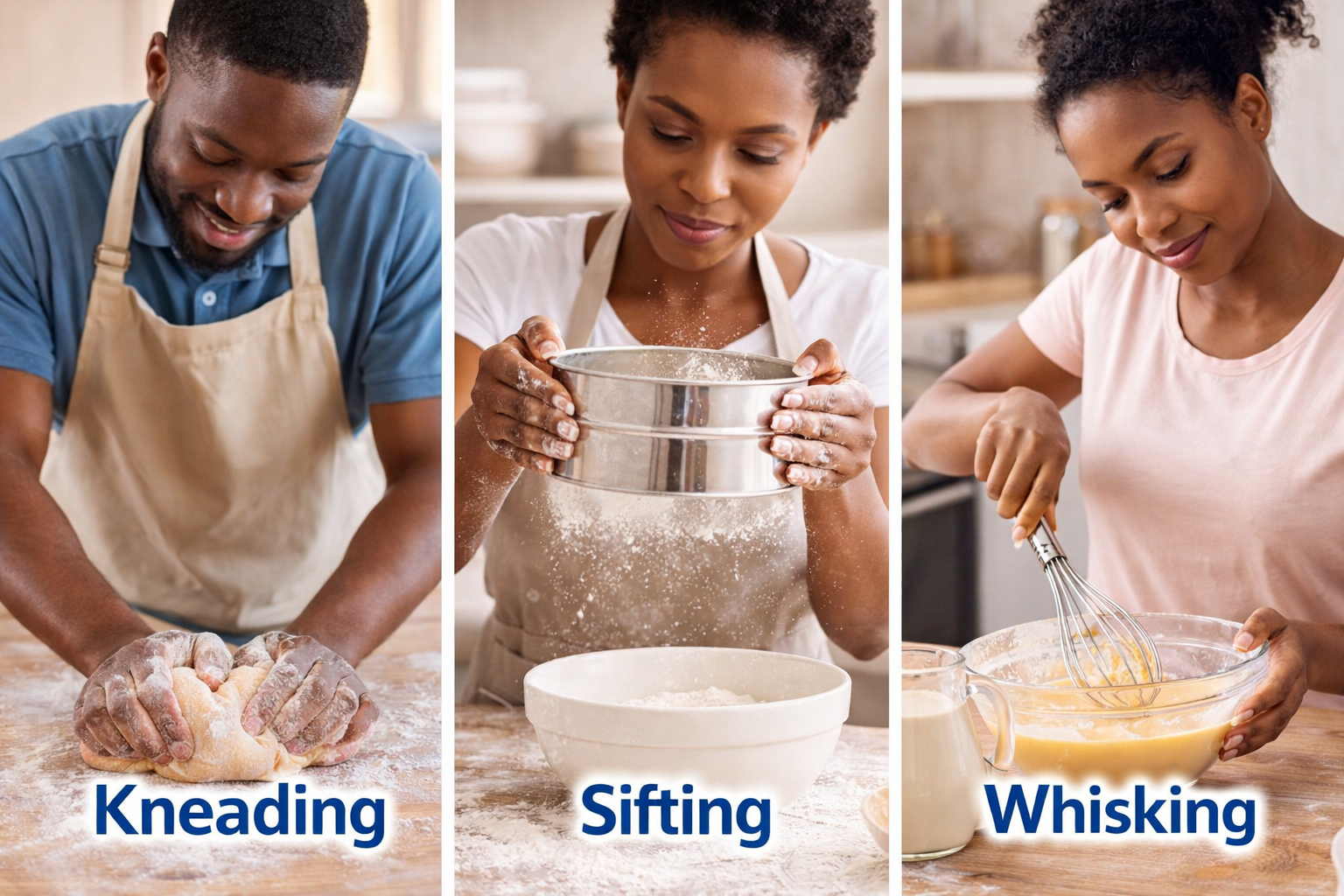
Kneading, Sifting and Whisking
This image highlights the main processes used when preparing flour mixtures.
Preparing Flour Mixtures
a) Pancake Batter
Ingredients
- 1 cup wheat flour
- 1 egg
- 150 ml milk
- 1 teaspoon sugar
- A pinch of salt
- Cinnamon or vanilla (optional)
Procedure
Step 1: Preparation
- Measure all ingredients accurately
- Ensure all equipment is clean
Step 2: Mixing Dry Ingredients
- Combine flour, sugar, salt, and spices
- Mix thoroughly
Step 3: Sifting
- Sift the dry mixture
- Remove lumps and improve texture
💡 Did you know?
Sifting flour helps add air to the mixture, which can make pancake batter lighter and smoother.
Step 4: Preparing Liquid Mixture
- Beat the egg in a separate bowl
- Add milk and mix well
Step 5: Mixing
- Gradually add liquid mixture to dry ingredients
- Stir until a smooth batter is formed
Important Note
- Batter should be smooth
- It should not be too thick or too watery
💡 Did you know?
Adding the liquid gradually helps prevent lumps and gives better control over the thickness of the batter.
b) Preparing Dough
Dough preparation involves mixing flour with liquid to form a thick mixture.
Key Points
- Made from flour and water or milk
- Can be soft or hard depending on use
Important Note
- Baking powder is added in some recipes (e.g., mandazi)
- Not used in chapati
Steps of Making Dough
1. Measure Ingredients
- Measure the required amount of flour
- Prepare other ingredients such as:
- Water or milk
- Salt
- Oil (optional, depending on recipe)
2. Put Flour in a Bowl
- Place the measured flour in a clean mixing bowl
3. Add Dry Ingredients
- Add salt (and sugar if required for some recipes)
- Mix dry ingredients evenly
4. Add Oil (if required)
- Add a small amount of cooking oil or fat
- Mix lightly into the flour
5. Add Liquid Gradually
- Add water or milk little by little
- Do not pour all at once to avoid making the dough too soft
6. Mix to Form Dough
- Combine the flour and liquid using hands or a spatula
- Continue mixing until a rough dough forms
7. Knead the Dough
- Press and fold the dough repeatedly using hands
- Continue kneading until:
- The dough becomes smooth
- It is soft and elastic
8. Adjust Consistency
- If too dry → add a little water
- If too sticky → add a little flour
9. Cover and Rest the Dough
- Cover the dough with a clean cloth or lid
- Leave it to rest (about 20–30 minutes)
👉 This allows:
- Gluten to develop
- Dough to become softer and easier to shape
10. Ready for Use
- After resting, the dough is ready for:
- Shaping (chapati, mandazi, etc.)
- Cooking
Making Products from Flour Mixtures
Cooking Pancakes
Equipment Needed
- Cooking oil
- Pan
Procedure
- Heat the pan
- Add a small amount of oil
- Pour batter into the pan
- Spread into a circular shape
- Cook until bubbles form on the surface
- Turn and cook the other side
- Serve while hot
💡 Did you know?
Bubbles forming on the surface of pancakes are a sign that the batter is cooking properly and ready to be turned.
Notes
- Pancakes can be served with fruits such as bananas
- Maintain hygiene during preparation
- Use fuel and ingredients responsibly
Recipe Video
Flour Mixtures Video
Watch this video demonstration for the recipe process.
Making Mandazi
Mandazi is made using dough and deep-fried in oil.
Procedure
- Divide dough into portions
- Roll dough flat
- Cut into desired shapes
- Heat oil in a pan
- Fry until golden brown
- Remove and drain excess oil
- Serve hot
Recipe Video
Flour Mixtures Video
Watch this video demonstration for the recipe process.
💡 Did you know?
Proper oil temperature is important when frying mandazi—too hot burns the outside, while too cool makes them absorb excess oil.
Preparing Chapati
Chapati is made from soft dough and cooked on a pan.
Ingredients
- 3 cups wheat flour
- Salt
- Cooking oil
- Warm water
Procedure
Mixing Dough
- Put flour in a bowl
- Add salt
- Add oil
- Add water gradually
- Knead into soft dough
- Cover and let it rest for about 30 minutes
Shaping Chapati
- Divide dough into small balls
- Roll into circular shapes
- Apply oil
- Fold and roll again
Cooking
- Place on a hot pan
- Cook evenly on both sides
- Turn until golden brown
- Serve hot
Serving
Chapati is commonly served with:
- Beans
- Vegetables
- Meat
Recipe Video
Flour Mixtures Video
Watch this video demonstration for the recipe process.
Important Practices
- Maintain hygiene at all times
- Use resources responsibly (fuel, ingredients)
- Handle kitchen tools safely
Summary
Flour Mixtures
- Flour mixtures are made by combining flour with liquids such as water or milk.
- They are used to prepare foods like chapati, pancakes, and mandazi.
- They are versatile, affordable, and easy to prepare.
Types of Flour Mixtures
- There are two main types: dough and batter.
- Dough is thick and requires shaping.
- Batter is more liquid and can be poured.
Dough
- Dough is firm and cannot be poured.
- It is used for foods like chapati and mandazi.
- It can be soft or hard depending on the recipe.
Batter
- Batter is soft and flowing.
- It is used mainly for pancakes.
- It can be thin or thick depending on the desired result.
Preparation Processes
- Kneading improves dough texture and elasticity.
- Sifting removes lumps and adds air.
- Whisking makes mixtures smooth and light.
Tools and Equipment
- Common tools include spatula, whisk, and dough cutter.
- Additional tools include mixing bowls and rolling pins.
- Proper tools improve efficiency and accuracy.
Preparing Pancake Batter
- Mix dry and liquid ingredients separately.
- Combine gradually to form a smooth batter.
- Avoid making the batter too thick or too watery.
Preparing Dough
- Mix flour with liquid gradually.
- Knead until smooth and elastic.
- Allow dough to rest before use.
Cooking Methods
- Pancakes are cooked on a pan using batter.
- Mandazi is deep-fried using dough.
- Chapati is cooked on a hot pan after shaping.
Good Cooking Practices
- Maintain hygiene during food preparation.
- Use ingredients and fuel responsibly.
- Handle kitchen tools safely.
Assessment
Flour Mixtures Assessment
Answer all 15 questions about flour mixtures, dough, batter, preparation methods, and products made from flour mixtures. Your results will be marked automatically.
15 Questions
Certificate of Achievement
This certifies that
has successfully completed the assessment on
Flour Mixtures
Score:
Jump to Grade 9 Agriculture Topics
Select another topic below:
Conserving Animal Feed
Conserving Leftover Foods
Integrated Farming
Organic Gardening
Storage of Crop Produce
Cooking Using Flour Mixtures
Cleaning Waste Disposal Facilities
Disinfecting Clothing and Household Articles
Grafting in Plants
Homemade Sun Dryer