Storage of Crop Produce: Methods, Importance and Practices
Learn about the importance of crop storage, common storage structures, preparation methods, and proper management practices used to reduce post-harvest losses and maintain quality.
Introduction
Storage of crop produce is an important activity carried out after harvesting. It involves keeping harvested crops in safe and suitable conditions so that their quality is maintained, losses are minimized, and food remains available for future use.
After harvesting, crops are still living materials and can easily spoil if not properly handled. Therefore, proper storage protects them from moisture, pests, and diseases.
Proper storage helps farmers to:
- Preserve food for long periods without spoilage
- Reduce wastage caused by pests, rot, or poor handling
- Maintain the quality and market value of produce
- Ensure a steady supply of food throughout the year
- Get more income by selling their product when prices are high
Importance of Storage
Storage plays a very important role in crop production and food security because it ensures that food remains available even when it is not being produced.
Key Importance:
- Ensures food availability during off-seasons when crops are not being harvested
- Prevents spoilage and deterioration caused by moisture, heat, and pests
- Reduces post-harvest losses, which can be very high if storage is poor
- Maintains the quality and nutritional value of food
- Allows farmers to store produce and sell later when prices are higher
Storage Structures for Storing Produce
Crop produce must be stored in suitable structures that protect it from pests, moisture, and physical damage. The type of structure used depends on the type and quantity of produce.
Common Storage Structures
-
Granaries
- Traditional storage structures mainly used for grains
- Usually raised above the ground to prevent moisture and pest entry
- Often made using local materials such as wood, mud, or grass
-
Stores (Warehouses)
- Large buildings used for storing produce in bulk
- Provide good ventilation and protection from weather
- Suitable for commercial or large-scale farmers
-
Bags (Sacks)
- Used for storing grains and seeds
- Easy to handle, stack, and transport
- Should be clean and dry before use
-
Containers
- Includes bins, drums, and silos
- Provide better protection against moisture and pests
- Often used for long-term storage
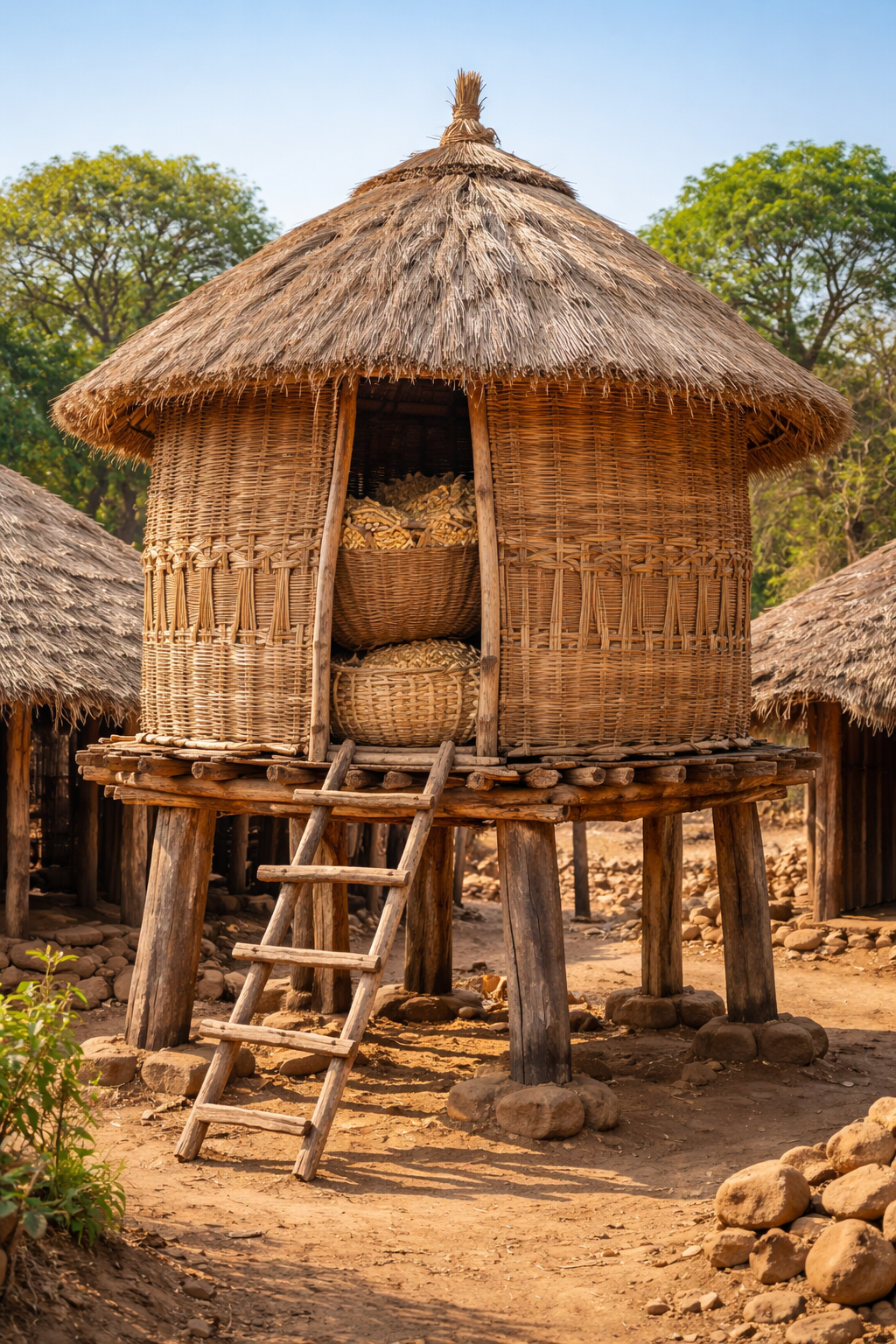
Traditional granary used for storing grains
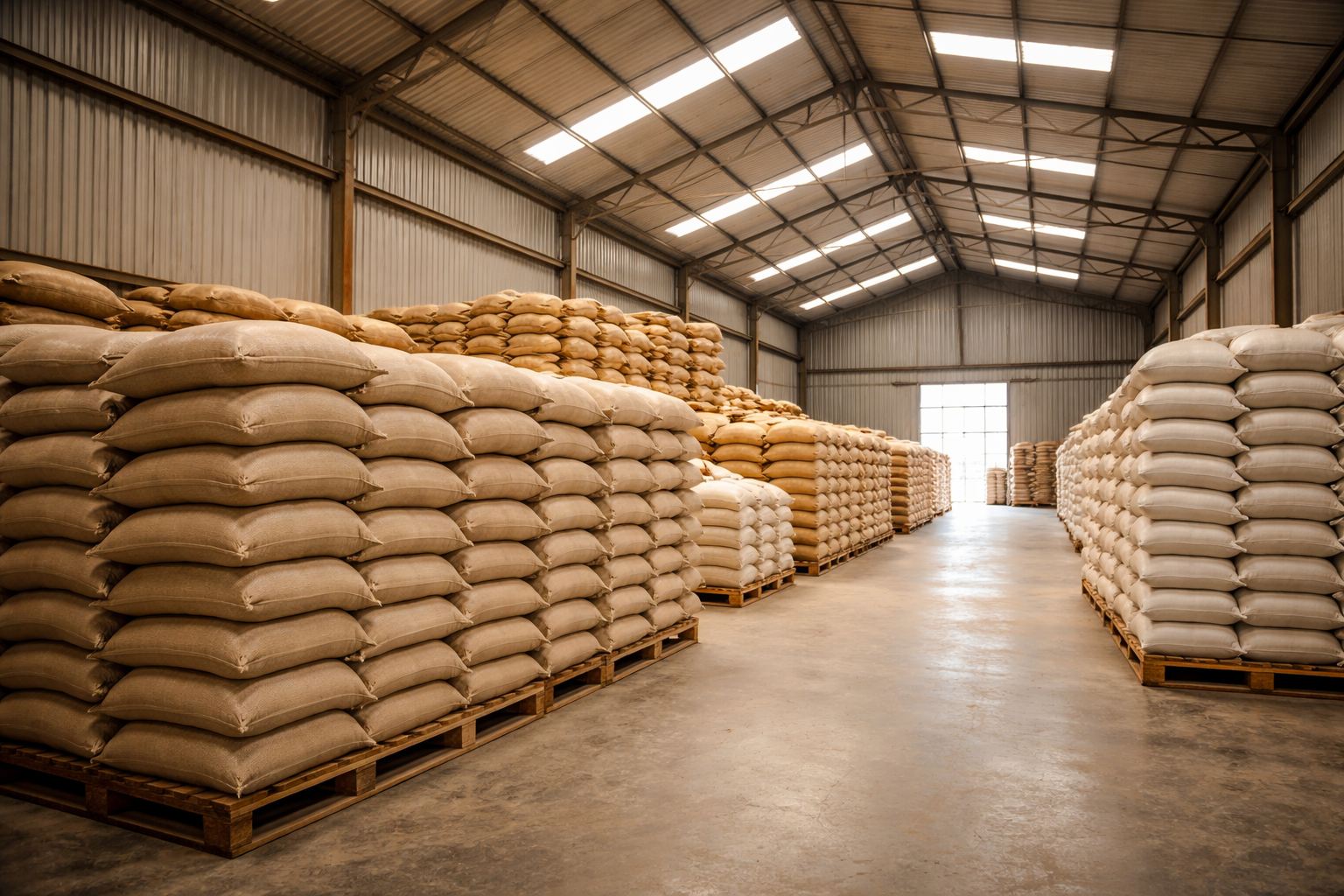
Modern warehouse for bulk crop storage
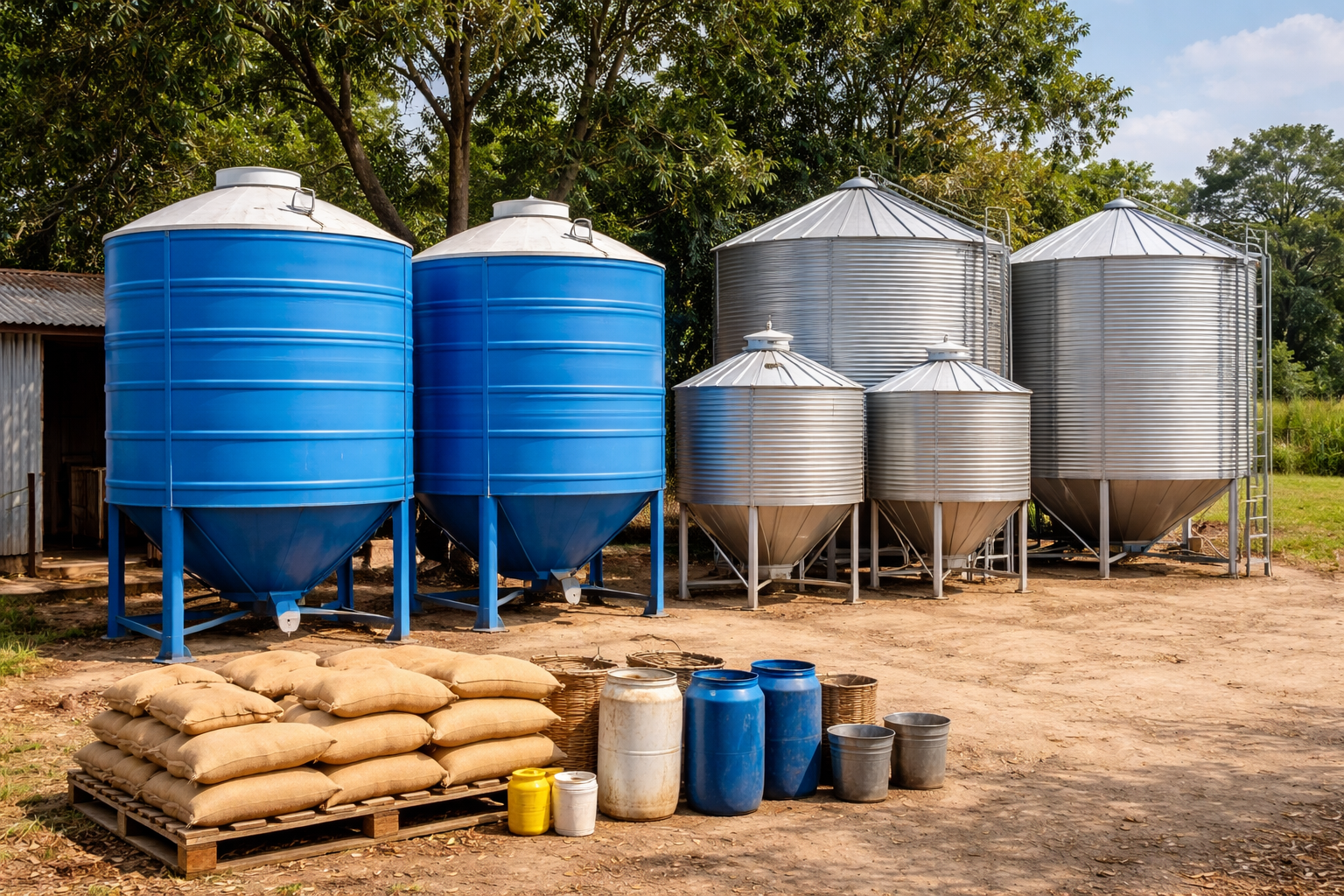
Metal and plastic containers used for long-term storage
Qualities of Good Storage Structures
A good storage structure should:
- Be dry and well-ventilated to prevent moisture buildup
- Be pest-proof to keep away insects and rodents
- Be strong and durable to last long and protect produce
- Be raised above ground level to avoid dampness and flooding
Ways of Preparing Storage Structures in Readiness for Storage
Before storing crop produce, storage structures must be properly prepared to ensure cleanliness and safety. This helps prevent contamination and pest infestation.
Preparation Practices
1. Cleaning
Cleaning removes dirt, dust, and old materials that may contaminate new produce.
- Sweep floors and walls thoroughly
- Remove cobwebs, dust, and debris
- Dispose of old or leftover produce properly
2. Dusting
Dusting helps control pests such as insects that may destroy stored produce.
- Apply ash or recommended storage chemicals
- Focus on corners, cracks, and hidden areas where pests hide
3. Sealing Cracks and Holes
Cracks provide entry points for pests like rats and insects.
- Seal all openings in walls and floors
- Close gaps around doors and windows
4. Repairing Structures
Damaged structures can expose produce to rain, pests, and contamination.
- Fix leaking roofs to prevent water entry
- Repair broken walls and floors
- Ensure doors and windows close properly
5. Controlling Pests
Pests should be eliminated before storage begins.
- Remove rodents and insects from the store
- Clear bushes and vegetation around the storage area
- Use traps and other control methods where necessary