Integrated Farming: Meaning, Components and Application
Add your content into each section below.
Meaning of Integrated Farming
Integrated farming is a farming system where different agricultural activities are combined and managed together on the same piece of land. These activities may include crop production, livestock keeping, fish farming, and tree planting.
In this system, the different components are interconnected and support each other. For example, waste from one activity can be used as an input in another, making the system more efficient and sustainable.
Integrated farming focuses on:
- Maximizing the use of available resources
- Reducing waste
- Improving productivity and sustainability
Did You Know?
Integrated farming helps farmers use waste from one activity as a resource in another, such as using animal manure to fertilize crops.
Integrated Farming System
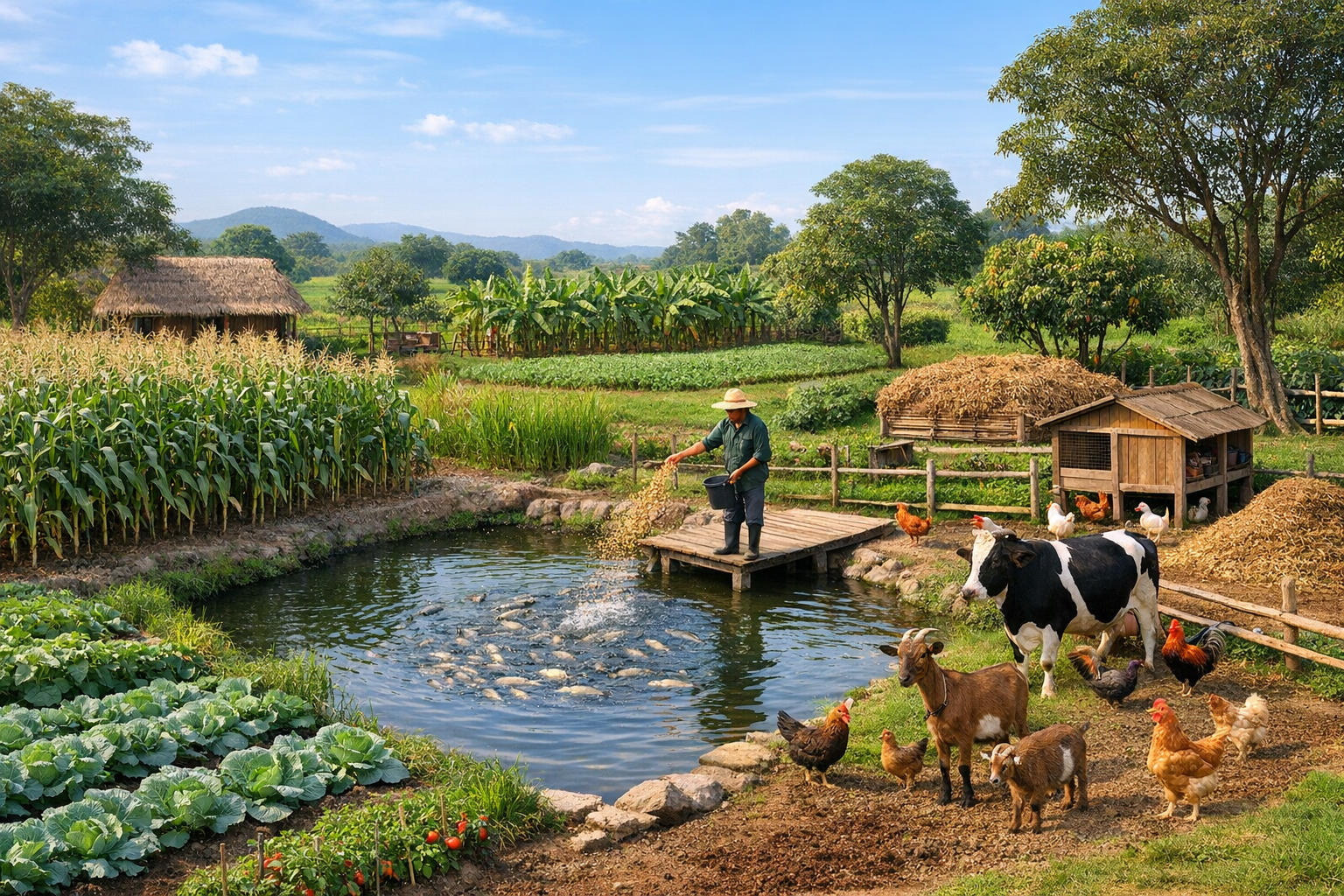
Components of Integrated Farming
Integrated farming consists of several key components that work together to support the farming system.
Main Components
-
Crop Production
Growing crops such as maize, vegetables, fruits, and legumes. Crops provide food for humans and feed for animals. -
Livestock (Cows, Goats, Poultry, etc.)
Animals provide products such as milk, meat, eggs, and manure. Manure is used to improve soil fertility. -
Fish Farming
Fish ponds can be included to provide protein-rich food and income. Waste from livestock can be used to feed fish or fertilize ponds. -
Trees and Vegetation
Trees provide shade, firewood, fruits, and help in controlling soil erosion. They also improve the environment and support biodiversity.
Designing an Integrated Farm
Designing an integrated farm involves careful planning to ensure that all components work together effectively.
Steps in Designing an Integrated Farm
-
Identify farm components
- Decide which activities to include (crops, livestock, fish, trees)
- Consider available resources such as land, water, and labour
-
Plan the layout of the farm
- Arrange components in a way that supports interaction
-
For example:
- Place livestock units near crop fields for easy manure use
- Locate fish ponds where water is easily available
-
Use locally available materials
- Use materials that are affordable and easily accessible
- This reduces costs and makes the system sustainable
-
Ensure proper interaction between components
-
Components should support each other, for example:
- Manure from animals → used in crop production
- Crop residues → used as animal feed
- Water from fish ponds → used for irrigation
-
Components should support each other, for example:
Did You Know?
A farm with crops, animals, fish, and trees can produce food, income, and fertilizer all from the same piece of land.