Conserving Animal Feed (Hay)
Introduction
Meaning of Conservation of Resources
Conservation of resources refers to the careful use, protection, and management of resources so that they are not wasted or depleted. It involves using resources in a responsible way to ensure that they are available both now and in the future.
What Is Meant by Conservation of Resources?
Resources include things such as:
- Natural resources such as soil, water, plants, and animals
- Food and household items
- Agricultural inputs such as animal feed, crops, and tools
When resources are not conserved, they can be exhausted, leading to shortages and environmental problems.
Importance of Conserving Resources
Conserving resources is essential in everyday life and plays a key role in sustainable development. It helps individuals, communities, and farmers to use what they have wisely.
1. Prevents Depletion of Natural Resources
Conservation ensures that resources such as water, soil, forests, and animals are not overused. If these resources are used carelessly, they may run out or become unusable.
2. Ensures Sustainability
By conserving resources, we make sure they are available not only for current use but also for future generations. This promotes long-term survival and development.
3. Supports Daily Human Activities
Resources like food, water, and energy are essential for everyday life. Proper conservation ensures a steady and reliable supply for cooking, farming, and other daily needs.
4. Improves Productivity in Farming and Households
Efficient use of resources leads to better output. For example, conserving animal feed ensures livestock remain healthy, while conserving food reduces waste and saves money.
5. Promotes Environmental Protection
Conserving resources helps to protect the environment by reducing activities that cause damage, such as deforestation, soil erosion, and water pollution.
6. Reduces Waste and Pollution
When resources are used carefully, less waste is produced. This helps reduce pollution in the environment.
7. Saves Money and Time
Conserving resources helps individuals and households spend less money because fewer resources are wasted. It also reduces the time spent replacing or acquiring new resources.
8. Enhances Food Security
Food security means having enough food at all times. Conservation ensures that food is available even during difficult periods such as drought or food shortages.
Example: Preserving food and animal feed ensures continuous supply.
9. Helps Communities Cope with Challenges (e.g., Drought)
Conservation prepares individuals and communities to handle challenges such as drought, famine, or economic difficulties.
Example: Conserved hay helps feed livestock during dry seasons.
Frequently Asked Questions
What is conservation of resources?
Conservation of resources is the careful use, protection, and management of resources to prevent waste and depletion.
Why is conserving resources important?
It is important because it supports sustainability, protects the environment, reduces waste, saves money, improves productivity, and ensures food security.
What are examples of resources that need conservation?
Examples include water, soil, forests, animals, food, household items, animal feed, crops, and farming tools.
Conervation of Hay
1.1 Conserving Animal Feed (Hay)
What is Hay?
Hay is grass or legumes that have been cut, dried, and stored for use as animal feed. It is mainly prepared during periods when grass is abundant and stored for future use, especially during dry seasons when fresh pasture is scarce.
Hay plays a very important role in livestock farming because it ensures that animals continue to receive adequate nutrition even when natural grazing is not available.
Did You Know?
Hay is best cut at the early flowering stage because at this stage it has the highest nutritional value for livestock.
Importance of Conserving Animal Feed
Conserving animal feed is essential for maintaining healthy livestock and ensuring continuous agricultural production. When farmers conserve hay properly, they are able to overcome challenges caused by seasonal changes.
Key Importance
-
Provides food during drought
During dry seasons, natural pasture becomes scarce. Conserved hay acts as an alternative source of feed, ensuring animals continue to eat.
-
Prevents livestock starvation and death
Without adequate feed, animals may become weak, sick, or die. Conserving hay helps farmers avoid such losses.
-
Ensures continuous production (milk, meat, etc.)
Livestock require consistent feeding to produce milk, meat, and other products. Conserved feed helps maintain production levels even during difficult periods.
-
Can be sold for income
Farmers can sell excess hay, especially during drought when demand is high. This creates an additional source of income.
Methods of Conserving Forage
There are several methods used to conserve forage (grass) for future use. The choice of method depends on available resources and environmental conditions.
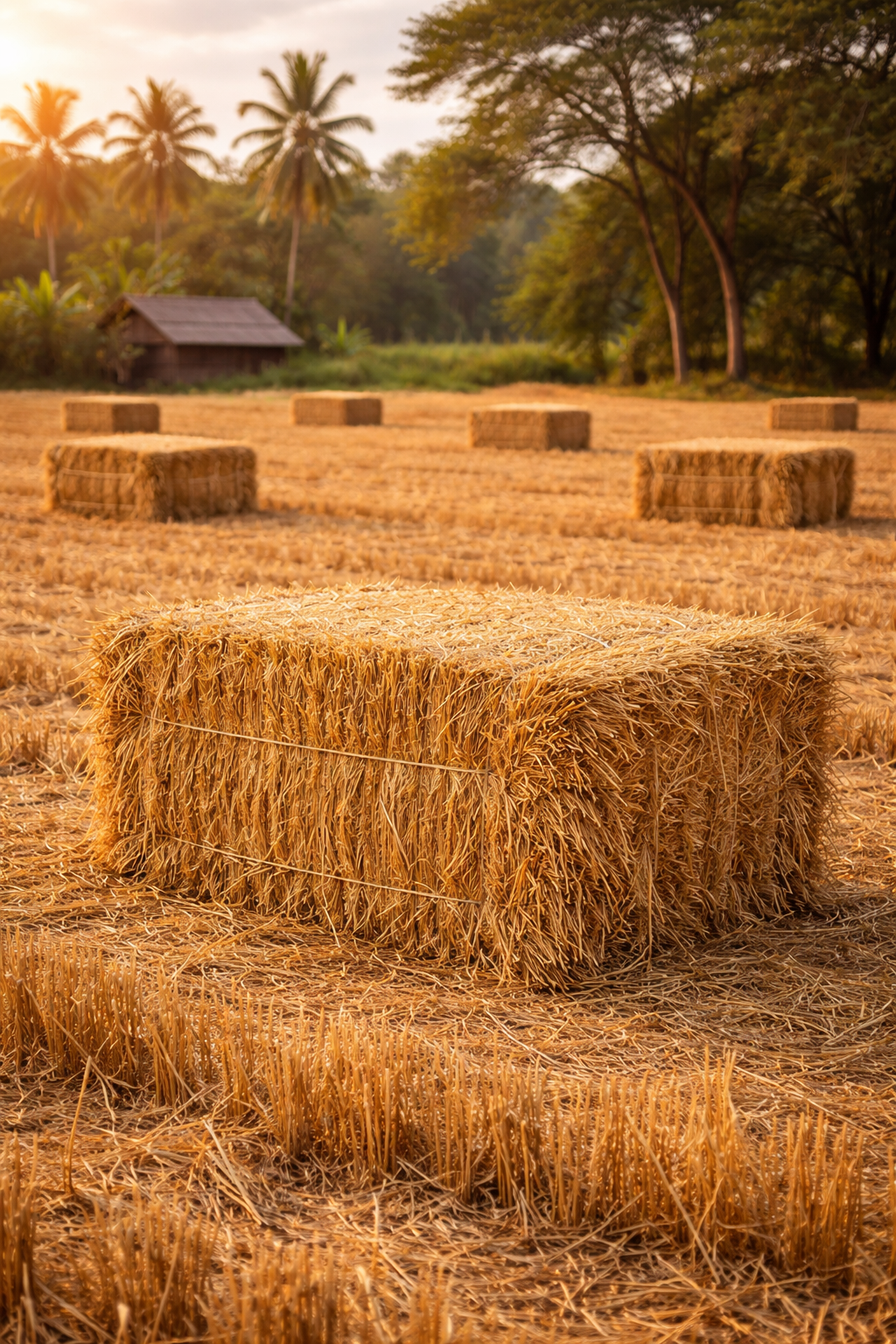
a) Baling
Baling involves compressing dried grass into compact blocks called bales.
- Makes hay easy to store and transport
- Reduces storage space
- Protects hay from damage when properly stored
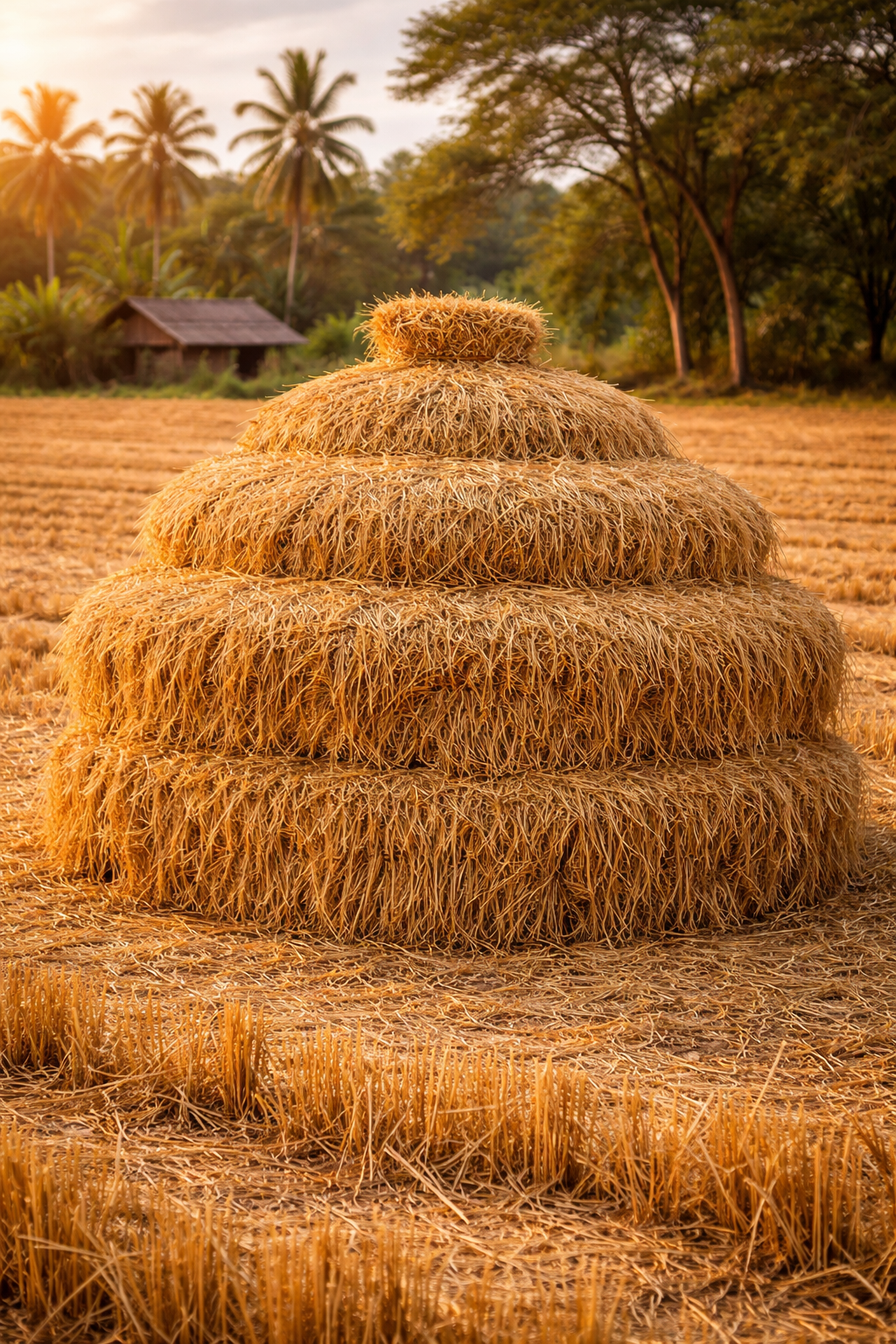
b) Stacking (Loose Hay)
In this method, dried grass is heaped into dome-shaped stacks.
- The stack is often covered with grass or thatch to protect it from rain
- Allows air circulation to prevent rotting
- Common where machinery is not available
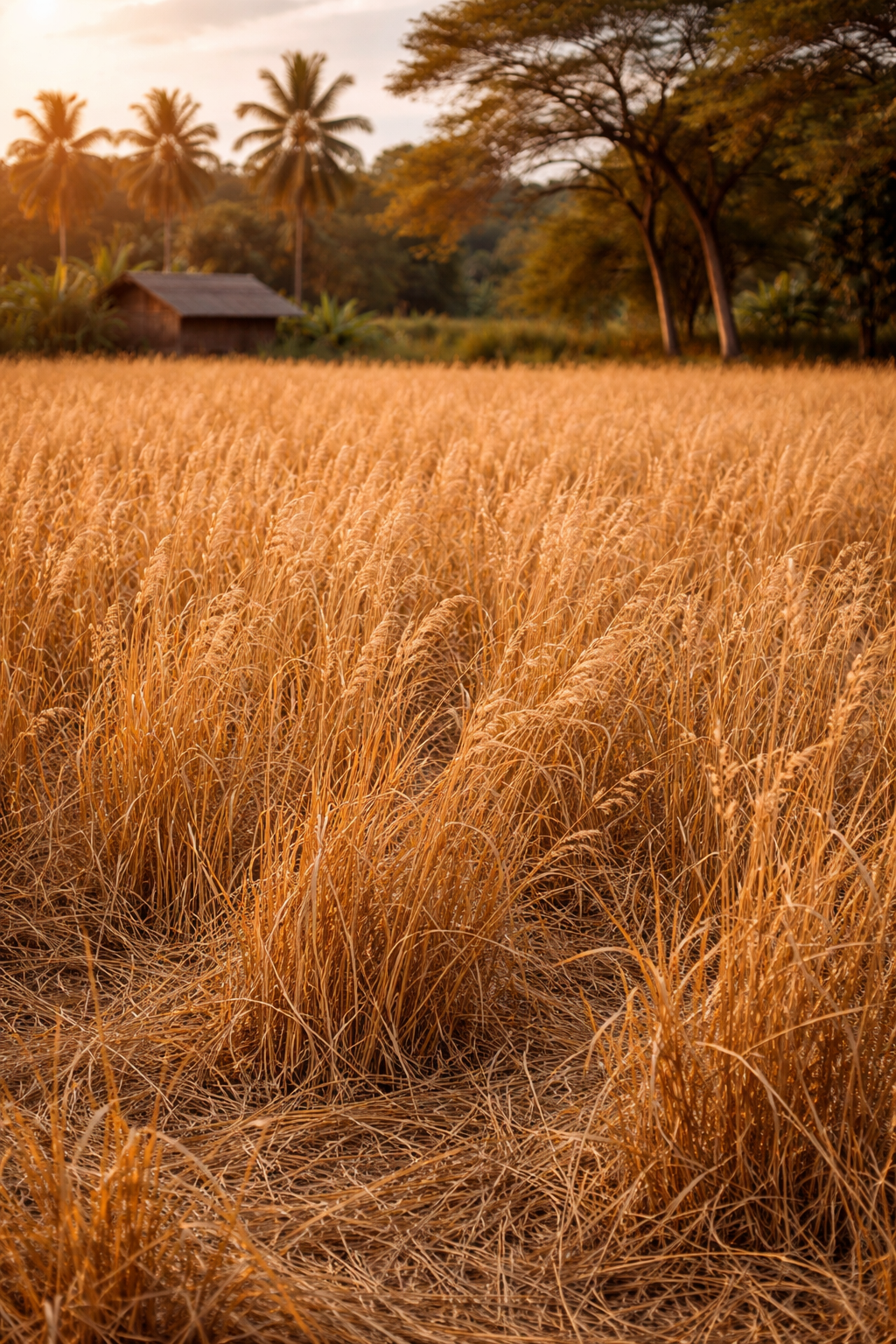
c) Standing Forage
This involves leaving grass to grow in the field and using it later when needed.
- Useful during drought periods
- Requires drought-resistant grass varieties
- Helps reduce the need for storage structures
Did You Know?
Properly conserved hay can be sold at much higher prices during drought, making hay conservation both a feeding strategy and a business opportunity.
🌾 Hay Conservation & Storage
Understand the best practices for harvesting, drying, storing, and utilizing hay to maintain livestock health and improve farm productivity.
15–20%
Ideal Moisture
Proper Drying
Prevents spoilage
High Returns
Sell during drought
Harvesting and Drying Hay
Proper harvesting and drying are critical to producing high-quality hay. Poor handling can lead to loss of nutrients or spoilage.
Key Guidelines
-
Grass should be cut at the right stage (early flowering stage)
→ At this stage, it has the highest nutritional value
-
Hay must be properly dried before storage
→ Prevents moulding and rotting
Moisture Content
The moisture level of hay determines its quality and safety.
- Ideal moisture content: 15% – 20%
-
If too wet:
- Hay rots
- Develops mould
- Becomes unsafe for feeding
-
If too dry:
- Loses important nutrients
- Becomes less beneficial to animals
Improving Drying of Hay
To ensure hay dries properly and quickly, farmers should follow good drying practices.
Drying Practices
- Turn (rake) the grass regularly to ensure even drying
- Spread grass in thin layers to allow air circulation
- Dry under direct sunlight for faster moisture removal
- Avoid exposure to rain, which can re-wet the hay and cause spoilage
Proper drying improves the quality, safety, and storage life of hay.
Storage of Hay
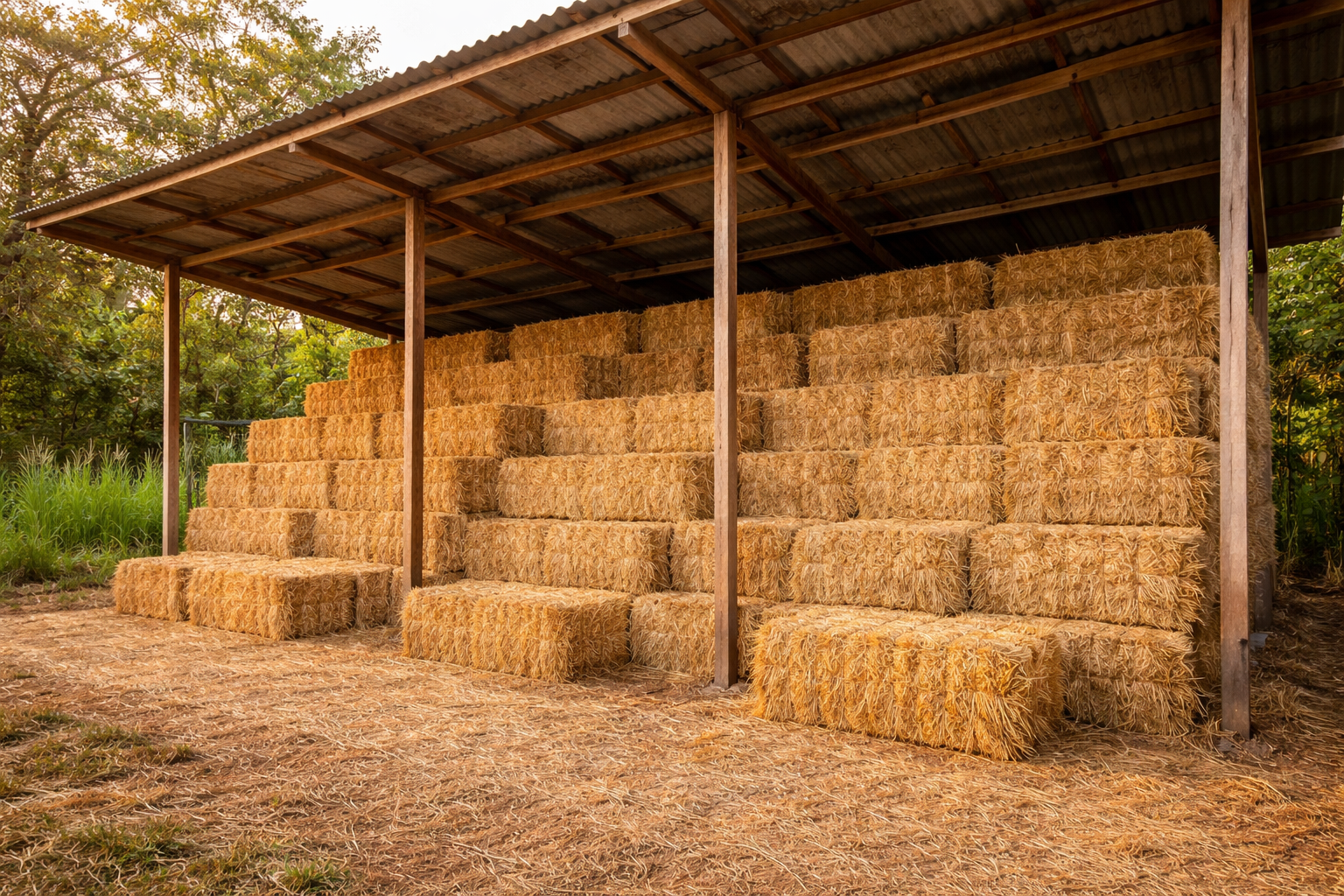
After drying, hay must be stored properly to maintain its quality.
Proper Storage Practices
- Store in a dry and well-ventilated place
- Protect from rain and moisture
- Avoid excessive exposure to direct sunlight
- Stack hay properly to allow air movement and prevent spoilage
- Keep away from fire since dry hay is highly flammable
Good storage prevents losses and ensures hay remains safe for feeding animals.
Baling Hay Using a Wooden Box
Baling hay using a wooden box is a simple method that can be done using locally available materials.
Materials Required
- Timber
- Nails
- Hammer
- Sisal rope
Procedure
- Construct a wooden box measuring approximately 75 cm × 50 cm × 40 cm
- Place sisal ropes inside the box
- Fill the box with dry grass
- Compress the grass tightly using hands or tools
- Tie the compressed hay using the ropes
- Remove the bale from the box
- Repeat the process to produce more bales
This method helps produce uniform, easy-to-handle hay bales.
Watch: Hay Storage and Handling
Coping with Drought
Drought is a major challenge in livestock farming. Conserving hay is one of the most effective ways to cope with it.
Effects of Drought
- Lack of pasture and grazing land
- Livestock starvation and death
- Reduced milk and meat production
- Economic losses for farmers
Farmer Adaptations
To cope with drought, farmers:
- Prepare and store hay in advance
- Use conserved feed during dry periods
- Engage in hay production as a business
Economic Benefits of Hay Conservation
- Farmers can buy hay cheaply during the rainy season
- Sell at higher prices during drought
Example:
- Buying price: Ksh 200–300 per bale
- Selling price: Ksh 700–800 per bale
Summary
Conservation of Resources
- Conservation involves careful use, protection, and management of resources.
- Ensures resources are not wasted or depleted.
- Supports availability of resources for present and future use.
Types of Resources
- Natural resources such as soil, water, plants, and animals.
- Food and household items used in daily life.
- Agricultural inputs such as animal feed, crops, and tools.
Importance of Conservation
- Prevents depletion of natural resources.
- Ensures sustainability for future generations.
- Supports daily human activities like farming and cooking.
Environmental and Economic Benefits
- Protects the environment by reducing pollution and degradation.
- Reduces waste and promotes efficient resource use.
- Saves money and time in households and farming.
Food Security and Survival
- Ensures availability of food during shortages or drought.
- Supports continuous supply of food and animal feed.
- Helps communities cope with challenges like famine.
Meaning of Hay
- Hay is dried grass or legumes stored as animal feed.
- Prepared during periods of abundance.
- Used during dry seasons when pasture is scarce.
Importance of Hay Conservation
- Provides feed during drought periods.
- Prevents livestock starvation and death.
- Ensures continuous production of milk and meat.
- Can generate income through sale.
Methods of Conserving Forage
- Baling compresses hay for easy storage and transport.
- Stacking allows natural storage with air circulation.
- Standing forage keeps grass in the field for later use.
Harvesting and Drying Hay
- Grass should be cut at early flowering stage.
- Proper drying prevents spoilage and nutrient loss.
- Drying ensures safe storage and feeding.
Moisture Content
- Ideal moisture content is 15%–20%.
- Too much moisture causes mould and rotting.
- Too little moisture leads to nutrient loss.
Storage of Hay
- Store hay in dry, well-ventilated places.
- Protect from rain and moisture.
- Keep away from fire and ensure proper stacking.
Drought Management
- Hay conservation helps farmers cope with drought.
- Prevents livestock losses and production decline.
- Supports planning and preparedness.
Economic Benefits
- Hay can be bought cheaply during rainy seasons.
- Sold at higher prices during drought.
- Provides an additional income source for farmers.
Assessment
Conservation of Resources Assessment
Answer all 10 questions about conservation of resources and hay conservation. Your results will be marked automatically.
10 Questions
Certificate of Achievement
This certifies that
has successfully completed the assessment on
Conservation of Resources
Score: