Physical Properties
Composition of Alloys
Uses of Metals
Rusting
Summary
Assessment
Physical Properties of Metals
Metals are important materials that are widely used in daily life, industry, construction, and technology.
Many objects around us such as buildings, vehicles, cooking utensils, and electrical wires
are made of metals.
Metals have special characteristics called physical properties that make them useful for different purposes.
Alloy: An alloy is a mixture of two or more metals or a metal mixed with another element.
Alloys are often made to improve the properties of pure metals.
1.2.1 Physical Properties of Metals
Metals have several physical properties that distinguish them from non-metals. These properties explain
why metals are useful in many applications.
The main physical properties of metals include:
1. Colour of Metals
Most metals have a grey or silvery colour.
Examples include:
- Iron
- Aluminium
- Zinc
- Silver
However, some metals have unique colours.
| Metal | Colour |
|---|---|
| Copper | Reddish-brown |
| Gold | Yellow |
These distinctive colours help in identifying these metals.
💡 Did You Know?
Pure gold is so soft and malleable that it can be hammered into extremely thin sheets
called gold leaf. One gram of gold can be spread into a sheet covering
more than one square metre.
2. Lustre
Lustre refers to the shiny appearance of metals when their surfaces are
polished or freshly cut.
Metals reflect light well, which gives them a bright and shiny surface.
Examples of lustrous metals include:
- Gold
- Silver
- Aluminium
- Copper
Because of their lustre, metals are commonly used in making:
- Jewellery
- Decorative items
- Coins
3. State of Metals at Room Temperature
Most metals exist as solids at room temperature.
Examples include:
- Iron
- Copper
- Aluminium
- Zinc
An important exception is mercury.
Mercury is the only common metal that exists as a liquid at room temperature.
Mercury is used in:
- Thermometers
- Barometers
- Some scientific instruments
💡 Did You Know?
Mercury is the only metal that is liquid at room temperature.
Because it expands and contracts easily with temperature changes, it is
widely used in thermometers and barometers.
4. Malleability
Malleability is the ability of a metal to be hammered or pressed into thin sheets without breaking.
Metals can be shaped into different forms because their atoms can slide over one another
without breaking the metallic bond.
Examples:
- Aluminium sheets
- Gold leaf
- Metal roofing sheets
Gold is one of the most malleable metals.
5. Ductility
Ductility is the ability of a metal to be drawn into thin wires.
This property allows metals to be used in making electrical wires and cables.
Examples:
- Copper wires
- Aluminium wires
Copper is widely used in electrical wiring because it is highly ductile and
conducts electricity well.
6. Thermal Conductivity
Metals are good conductors of heat.
This means heat can easily pass through them.
For example, when one end of a metal rod is heated, the heat travels quickly along the rod.
Because of this property, metals such as aluminium and copper are used to make:
- Cooking utensils
- Pots
- Pans
- Kettles
These metals help distribute heat evenly during cooking.
7. Electrical Conductivity
Metals are also good conductors of electricity.
This means electric current can pass through them easily.
Examples of metals used as electrical conductors include:
- Copper
- Aluminium
These metals are commonly used in:
- Electrical wiring
- Power transmission cables
- Electronic devices
Diagram: Physical Properties of Metals
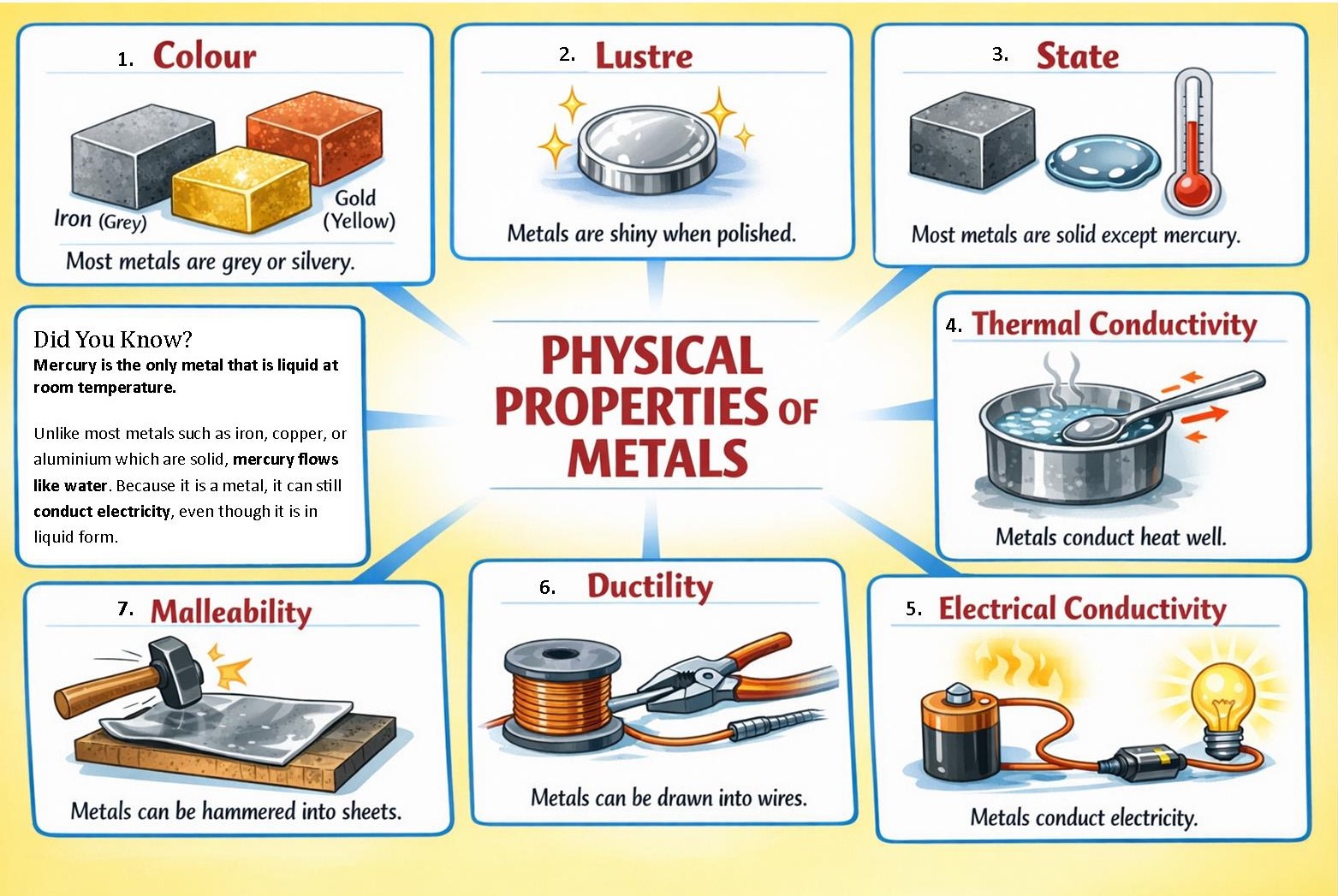
This diagram summarizes the main physical properties of metals including
lustre, colour, state, malleability, ductility, thermal conductivity,
and electrical conductivity.
Summary of Physical Properties of Metals
| Property | Description |
|---|---|
| Colour | Most metals are grey or silvery |
| Lustre | Metals have a shiny surface |
| State | Most metals are solid at room temperature |
| Malleability | Metals can be hammered into sheets |
| Ductility | Metals can be drawn into wires |
| Thermal conductivity | Metals conduct heat well |
| Electrical conductivity | Metals conduct electricity well |
Watch: Physical Properties of Metals
This video explains important physical properties of metals such as
lustre, malleability, ductility, and conductivity.
These properties make metals useful in construction, electricity, and manufacturing.
1.2.2 Composition of Alloys
Most metals in their pure form are not strong enough for many practical uses.
Pure metals may be too soft, easily bent, or easily corroded.
To improve their properties, metals are often mixed with other metals or elements to form alloys.
Definition of an Alloy
An alloy is a uniform mixture of two or more elements where at least one of the elements is a metal.
An alloy may be made by mixing:
- Two or more metals, or
- A metal and a non-metal
The elements in an alloy are usually melted together and mixed while in liquid form,
then allowed to cool and solidify.
💡 Did You Know?
Many coins used around the world are made from alloys rather than pure metals.
This makes the coins stronger, more durable, and resistant to wear.
Why Alloys Are Made
Alloys are produced because they often have better properties than pure metals.
Some improvements include:
- Greater strength
- Increased hardness
- Better resistance to corrosion
- Improved durability
- Better resistance to wear and tear
Because of these advantages, alloys are widely used in
construction, engineering, tools, machines, and household items.
💡 Did You Know?
The famous Eiffel Tower in Paris is made mostly from iron alloys.
Using alloys makes large structures stronger and more resistant to damage.
Common Alloys and Their Composition
The composition of an alloy refers to the elements that are mixed together to form that alloy.
| Alloy | Composition |
|---|---|
| Brass | Copper + Zinc |
| Bronze | Copper + Tin |
| Mild Steel | Iron + Carbon |
| Stainless Steel | Iron + Chromium + Nickel |
| Tungsten Steel | Iron + Tungsten |
| Manganese Steel | Iron + Manganese |
| Duralumin | Aluminium + Copper + Magnesium |
Examples of Alloys
1. Brass
Composition: Copper + Zinc
Characteristics:
- Stronger than pure copper
- Attractive golden colour
- Resistant to corrosion
Uses:
It is used to make:
- Door handles
- Musical instruments
- Decorative objects
2. Bronze
Composition: Copper + Tin
Characteristics:
- Hard and strong
- Resistant to corrosion
- Durable
Uses:
It is used to make:
- Medals
- Coins
- Statues
- Ship propellers
3. Mild Steel
Composition: Iron + small amount of Carbon
Characteristics:
- Strong
- Hard
- Easily shaped
Uses:
It is used to make:
- Car bodies
- Construction materials
- Tools
4. Stainless Steel
Composition: Iron + Chromium + Nickel
Characteristics:
- Resistant to rusting
- Strong and durable
- Shiny surface
Uses:
It is used to make:
- Cutlery
- Surgical instruments
- Kitchen sinks
- Cooking utensils
5. Tungsten Steel
Composition: Iron + Tungsten
Characteristics:
- Very hard
- Resistant to high temperatures
Uses:
It is used to make:
- Cutting tools
- Drill bits
6. Manganese Steel
Composition: Iron + Manganese
Characteristics:
- Very strong
- Tough and durable
Uses:
It is used to make:
- Heavy machinery
- Construction equipment
7. Duralumin
Composition: Aluminium + Copper + Magnesium
Characteristics:
- Very strong
- Lightweight
Uses:
It is used to make:
- Aircraft bodies
- Transport equipment
Importance of Alloys
Alloys are very important because they:
- Improve the strength of metals
- Increase resistance to corrosion
- Improve durability
- Allow metals to be used in different industries
Without alloys, many structures and machines would not be strong enough for practical use.
Watch: Composition and Uses of Alloys
This video explains how alloys are formed and why they are used
instead of pure metals. It also shows examples of alloys such as
brass, bronze, stainless steel, and duralumin.
Uses of Metals and Alloys
Introduction
Metals and alloys are very important materials in everyday life. Many objects used in homes, industries, transport, and construction are made from metals and alloys.
This is because metals and alloys have useful properties such as:
- Strength
- Durability
- Good conductivity of heat and electricity
- Resistance to corrosion
- Ability to be shaped into different forms
Because of these properties, metals and alloys are widely used in tools, machines, electrical equipment, construction materials, and household items.
💡 Did You Know?
The electrical wires in most homes are made of copper because copper allows electricity to flow very easily and is also flexible enough to be made into thin wires.
Uses of Common Metals
Different metals are used for different purposes depending on their properties.
1. Sodium
Sodium is a soft and highly reactive metal.
Uses of Sodium
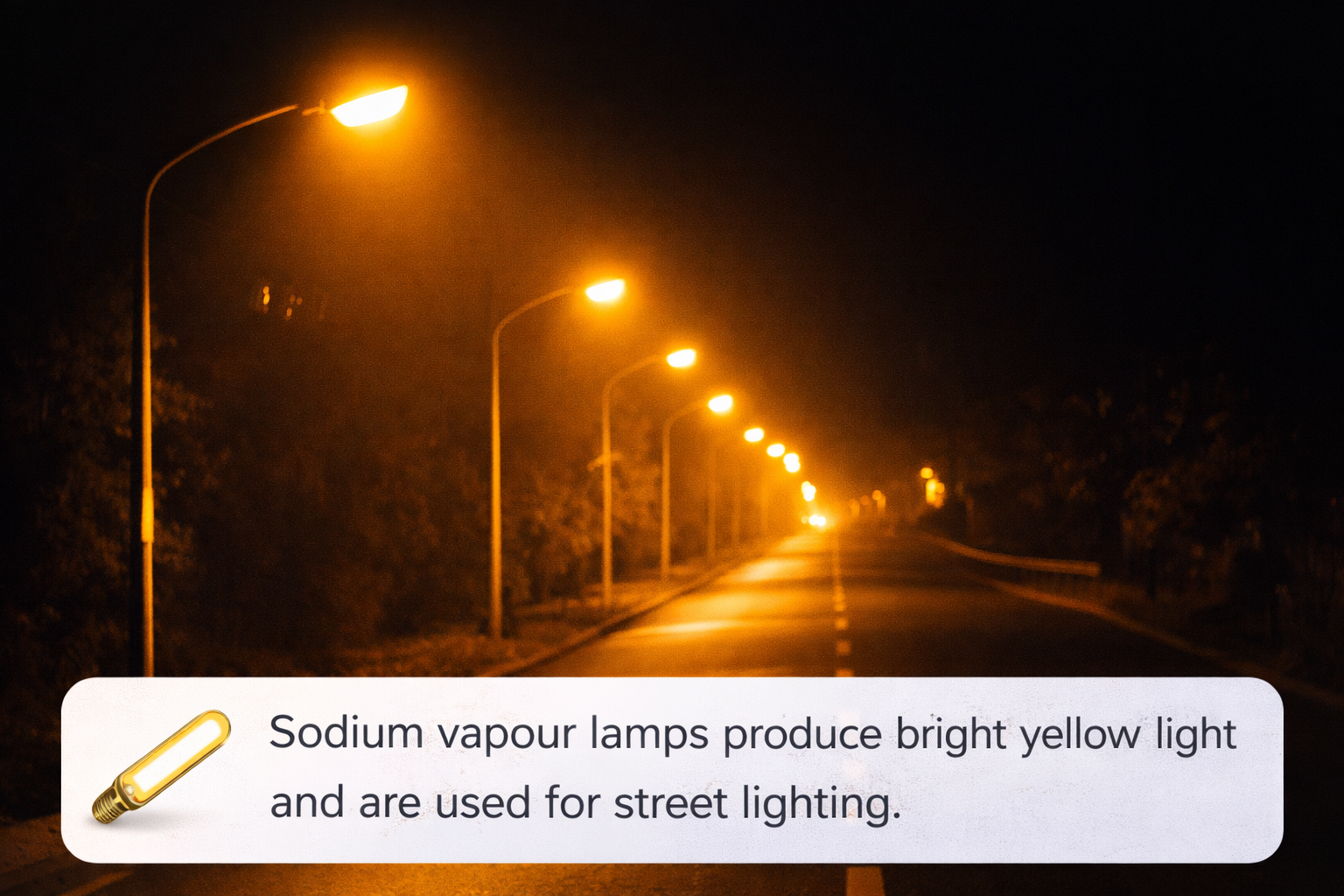
- Used in sodium vapour lamps for street lighting.
- Used in making sodium–potassium alloy, which is used as a coolant in nuclear reactors.
- Used in the manufacture of sodium cyanide, which is used in the extraction of gold.
2. Magnesium
Magnesium is a light metal with good strength.
Uses of Magnesium
- Used in the production of duralumin alloy.
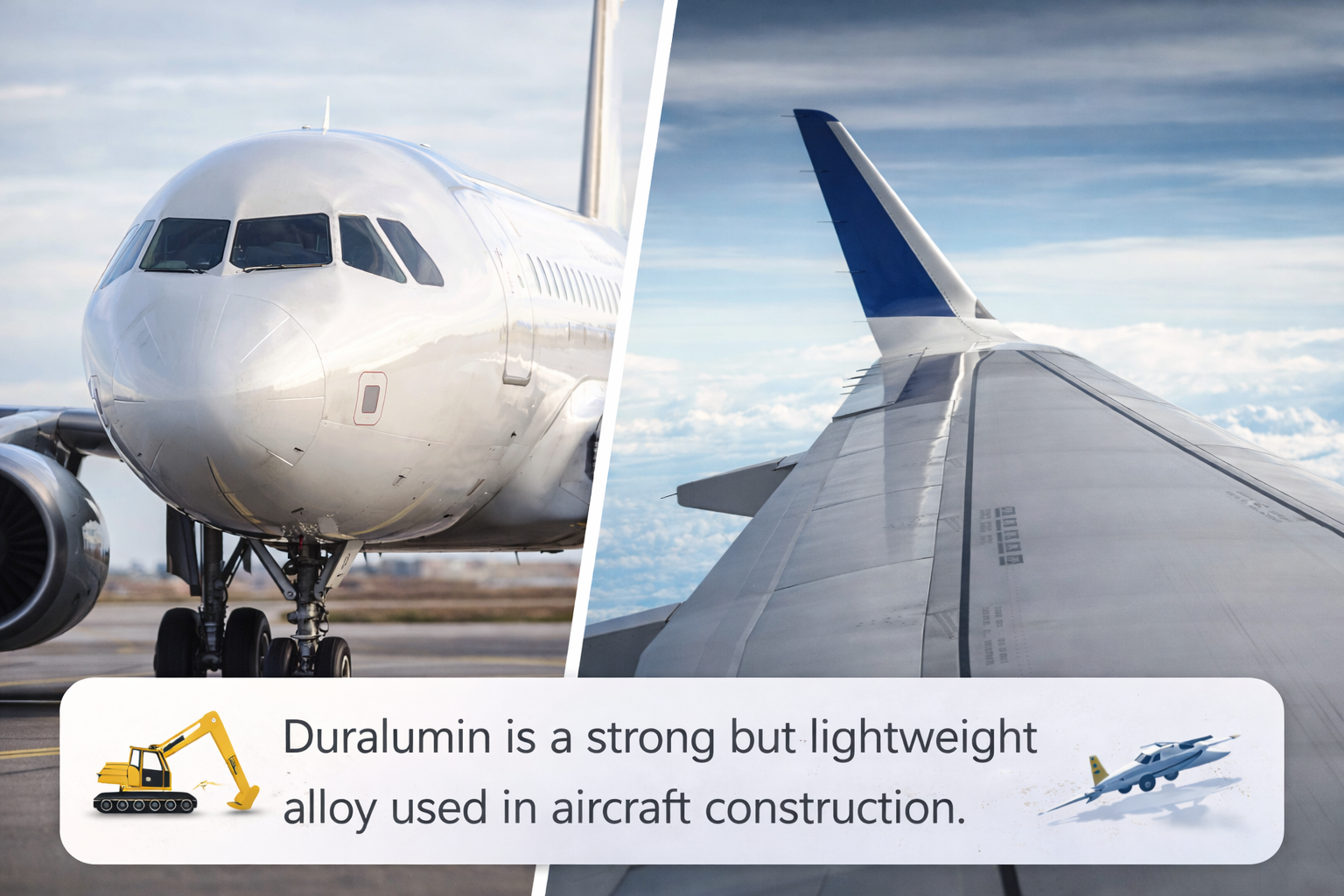
- Duralumin is used in the manufacture of aircraft bodies because it is light but strong.
3. Copper
Copper is a metal that has excellent electrical conductivity.
Uses of Copper
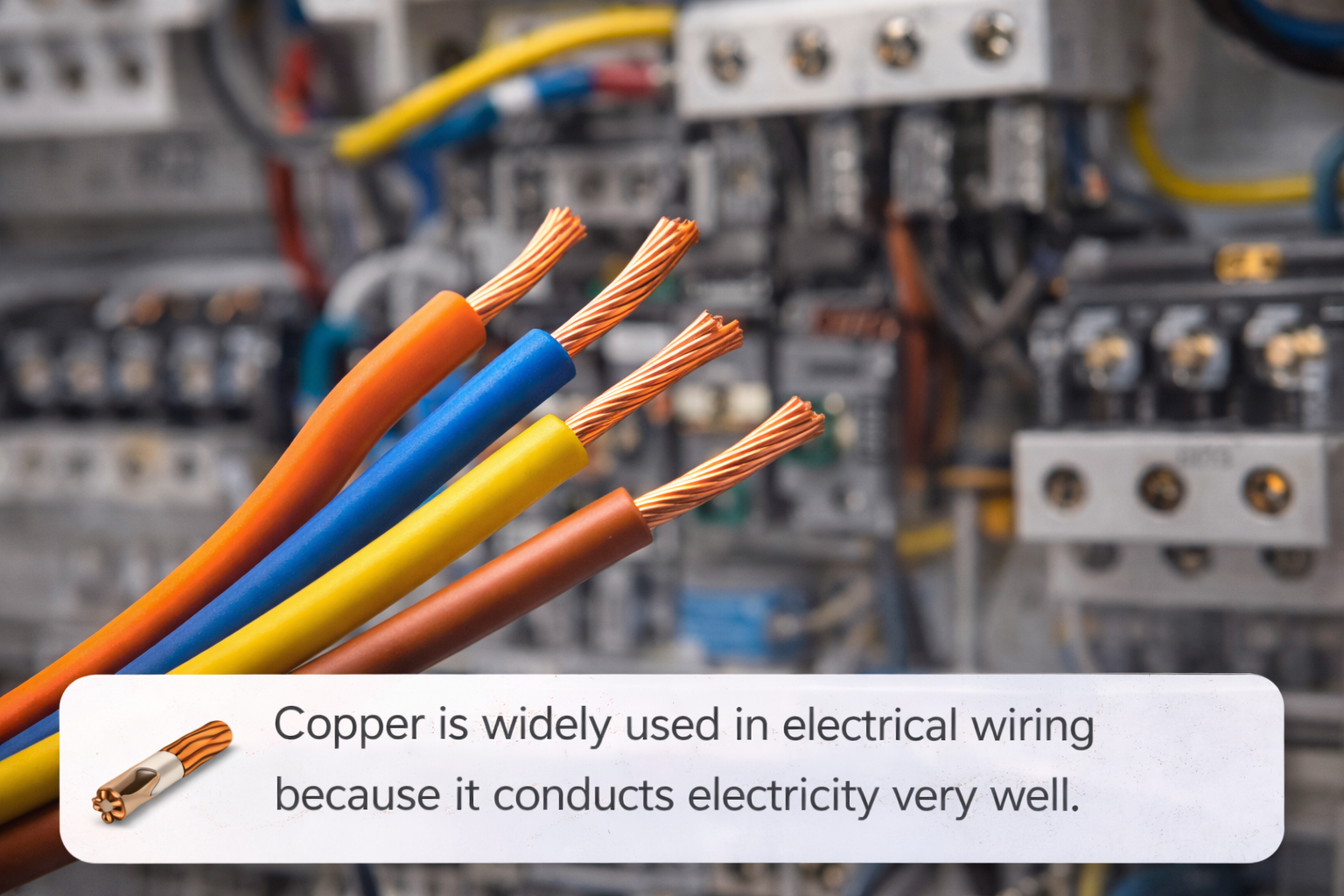
- Used to make electrical wires and cables.
- Used in making alloys such as brass and bronze.
Copper is widely used in electrical installations and electronics.
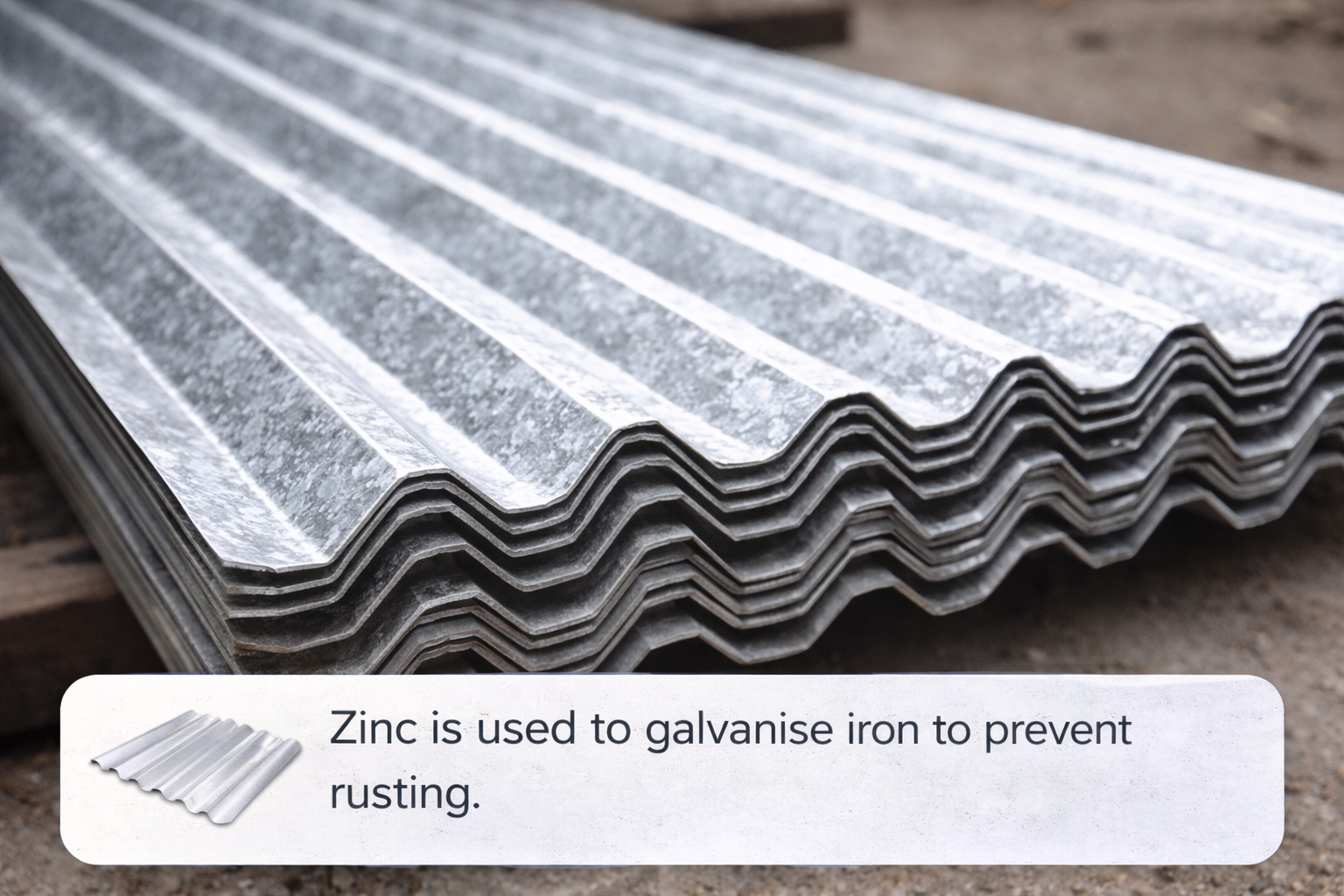
4. Zinc
Zinc is commonly used to protect other metals from corrosion.
Uses of Zinc
- Used for galvanising iron to prevent rusting.
- Used in the manufacture of brass alloy.
- Used in dry cell batteries.
5. Aluminium
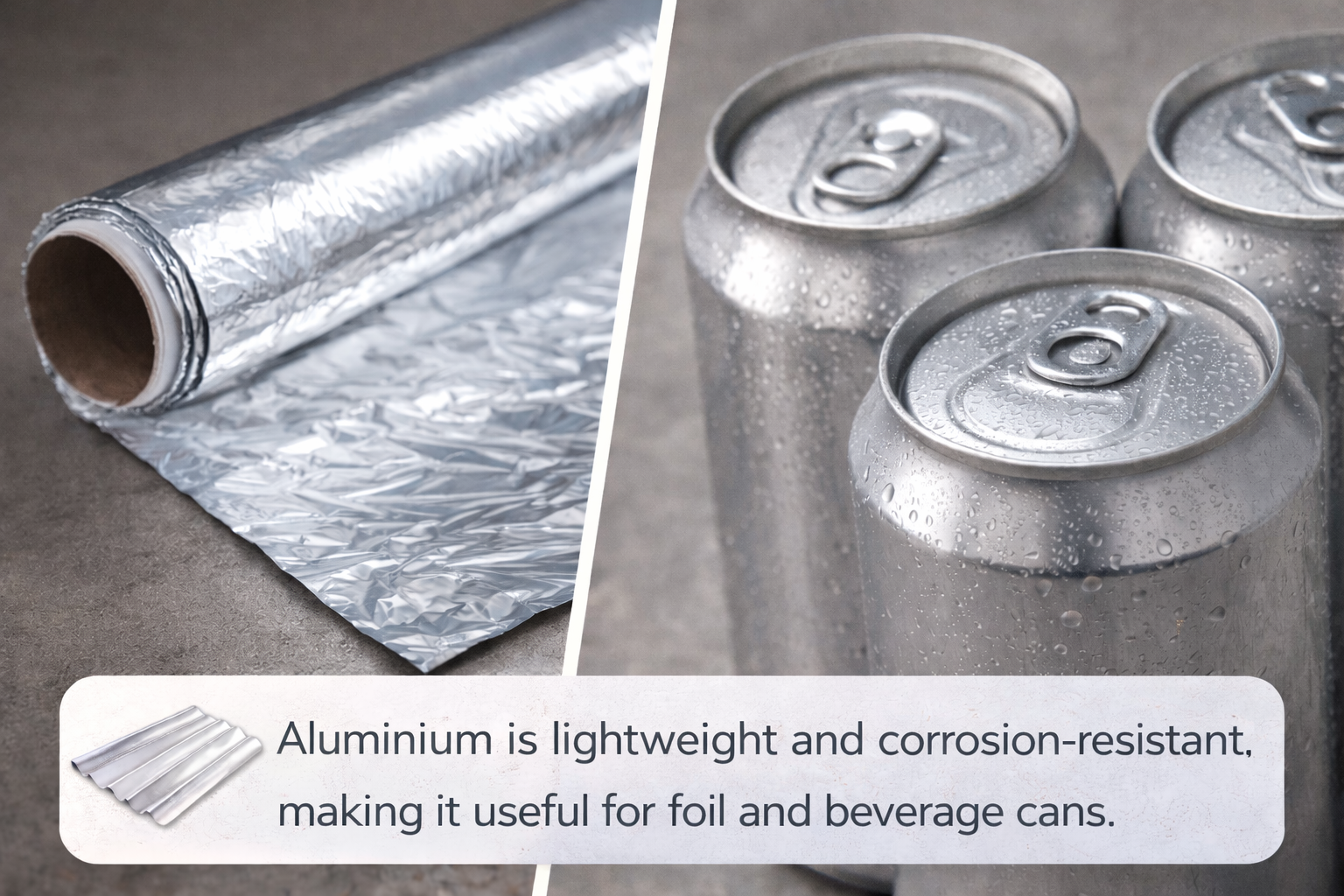
Aluminium is a lightweight metal that is resistant to corrosion.
Uses of Aluminium
- Used in making window frames.
- Used to produce kitchen foil (aluminium foil).
- Used in making beverage cans.
- Used in overhead electrical cables.
Because aluminium is light and strong, it is also used in transport equipment.
6. Iron
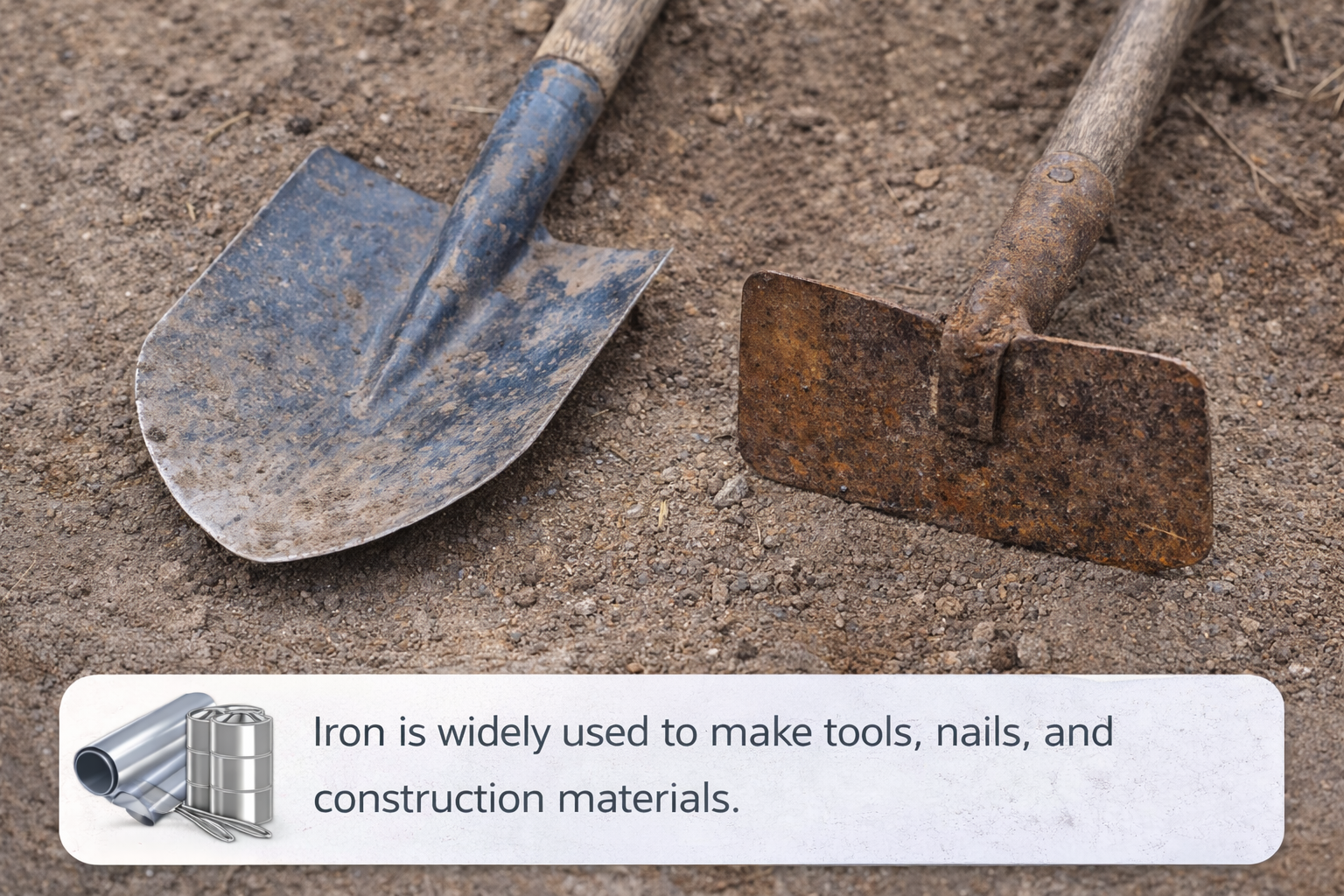
Iron is one of the most widely used metals.
Uses of Iron
- Used in making iron sheets.
- Used to produce nails.
- Used in making farm tools.
- Used to make anchors and gates.
Iron is widely used in construction and engineering.
7. Gold
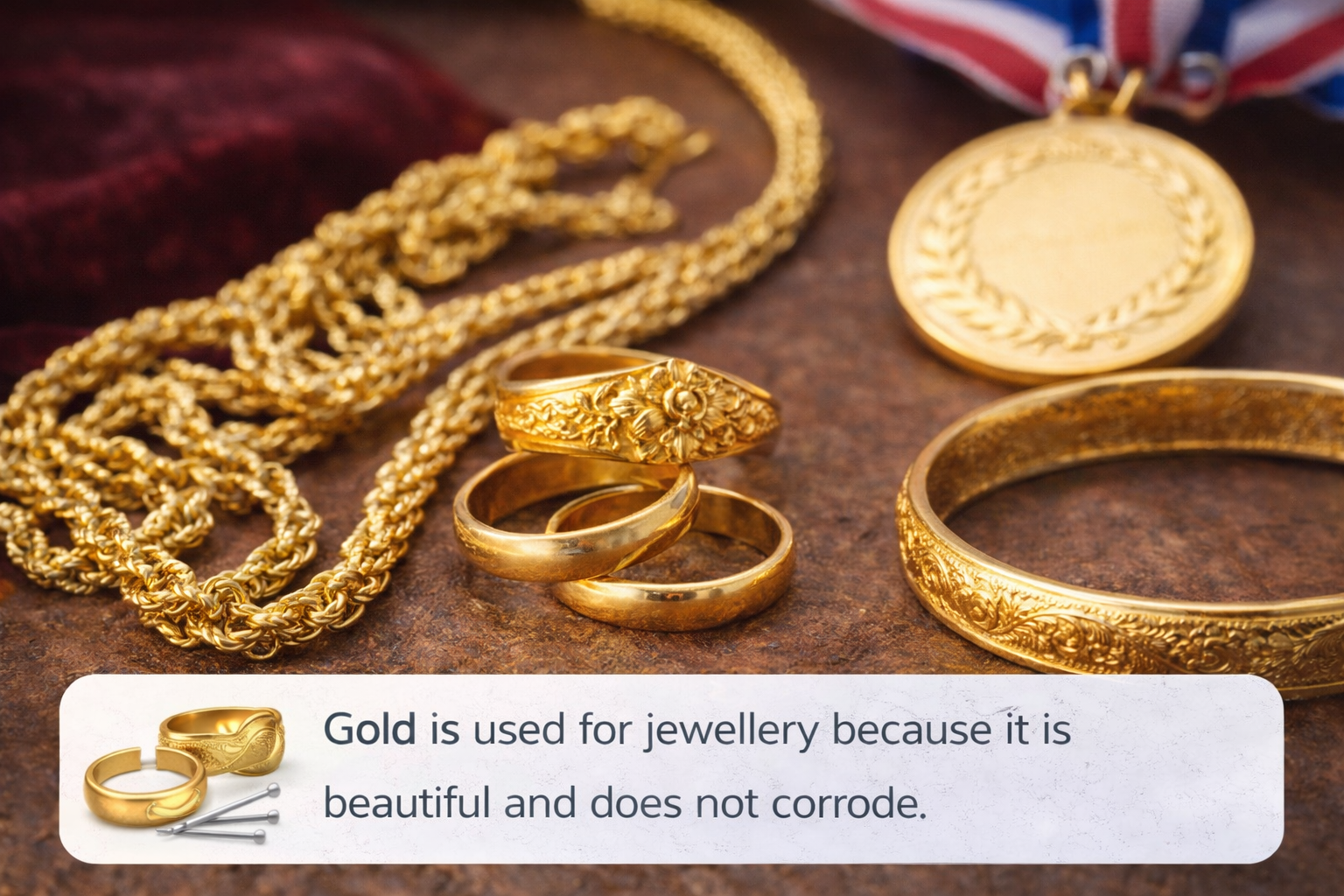
Gold is a precious metal that is valued for its beauty and resistance to corrosion.
Uses of Gold
- Used to make jewellery.
- Used in making medals and ornaments.
Gold is preferred because it is malleable, ductile, and does not corrode easily.
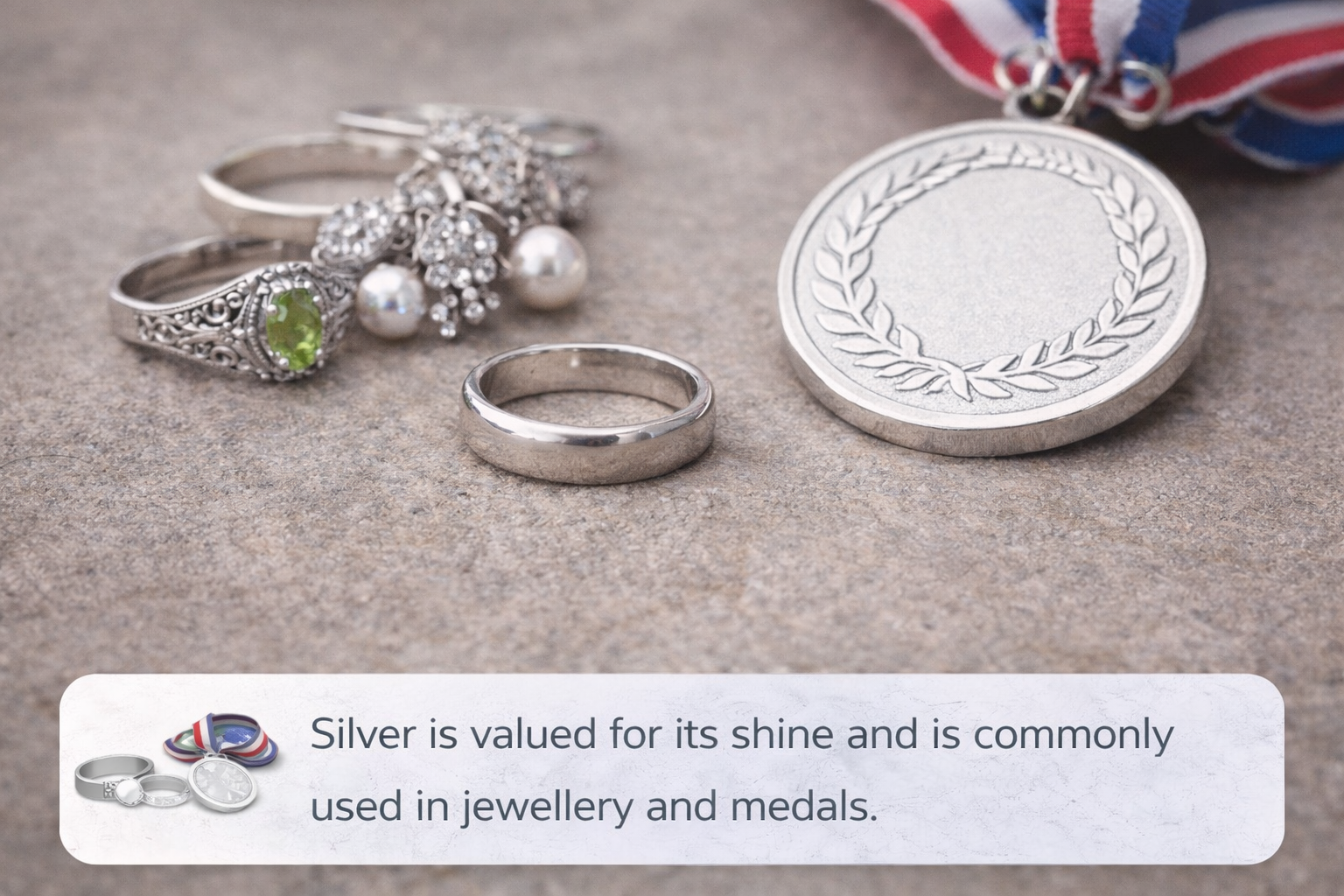
8. Silver
Silver is another precious metal with high lustre.
Uses of Silver
- Used to make jewellery.
- Used in producing silver medals.
Silver is valued because it is lustrous and resistant to corrosion.
💡 Did You Know?
Aluminium is one of the most widely recycled metals in the world. Recycling aluminium saves a large amount of energy compared to producing it from raw materials.
Uses of Common Alloys
Alloys are widely used because they often have better properties than pure metals.
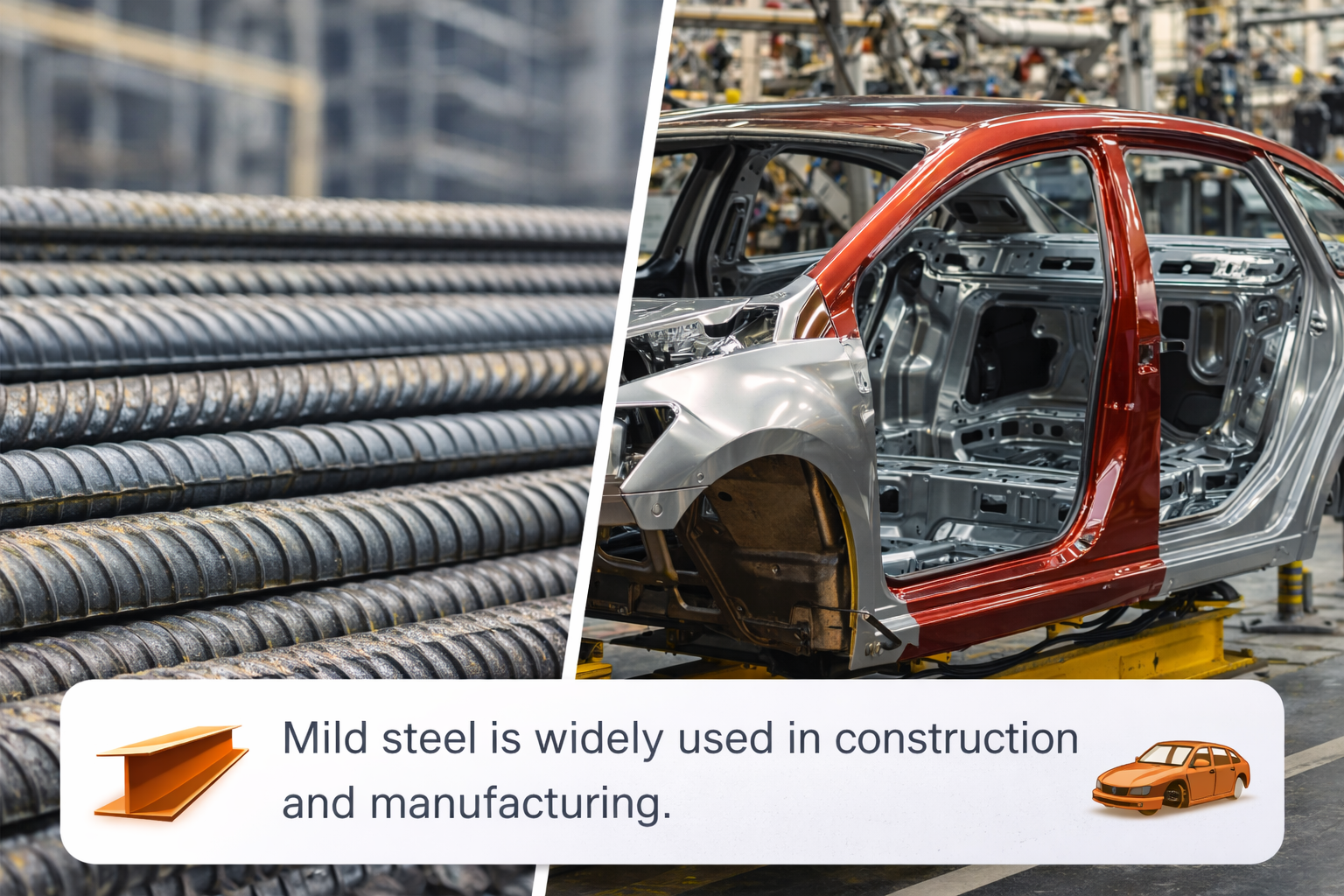
1. Mild Steel
- Used in making car frames.
- Used in construction materials.
Mild steel is strong and suitable for making structural components.
2. Stainless Steel
- Used to make cutlery.
- Used in making surgical instruments.
- Used for kitchen sinks and utensils.
Stainless steel is popular because it does not rust easily.
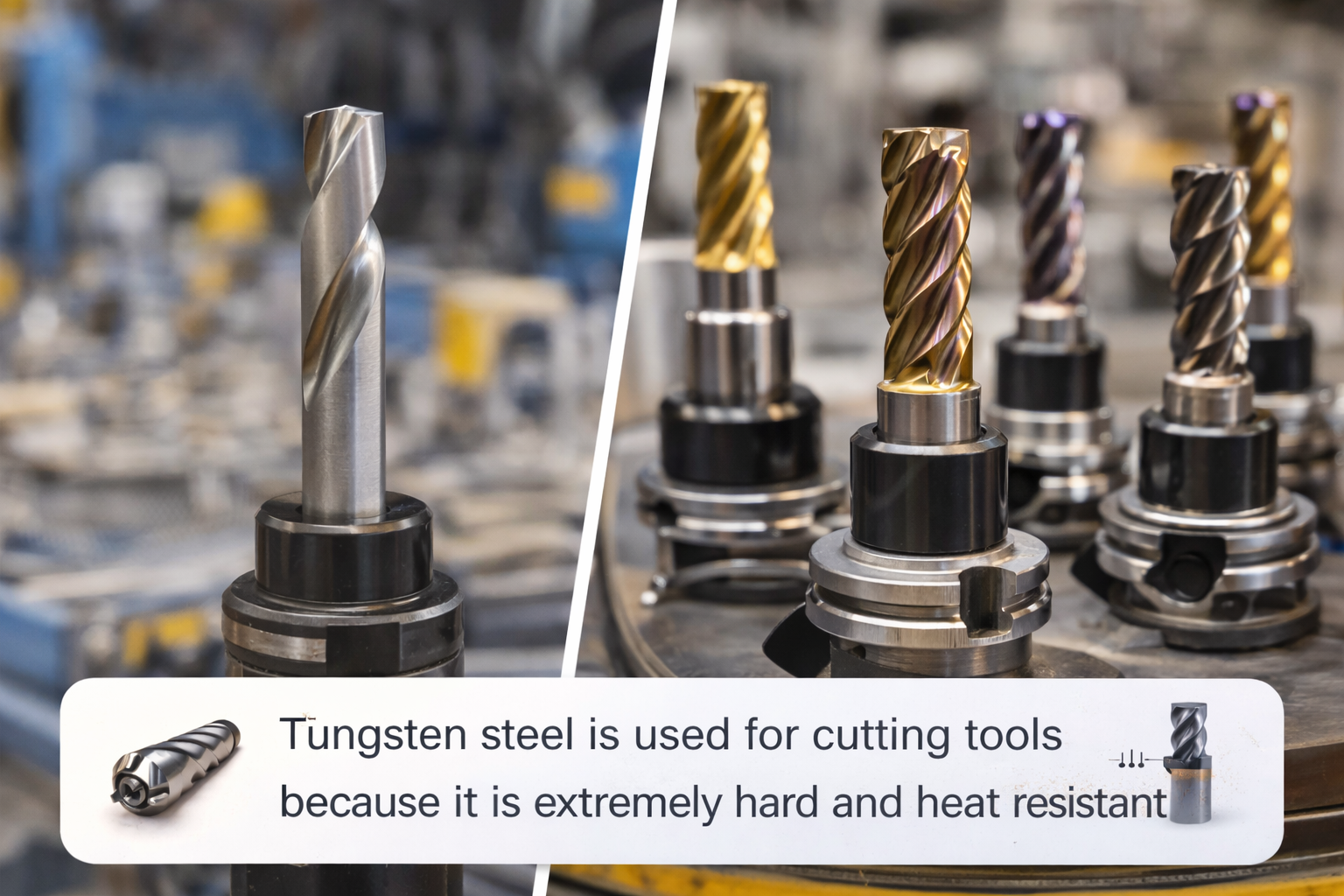
3. Tungsten Steel
Composition
Iron + Tungsten
Uses
- Used to make cutting tools.
Tungsten steel is very hard and resistant to wear.
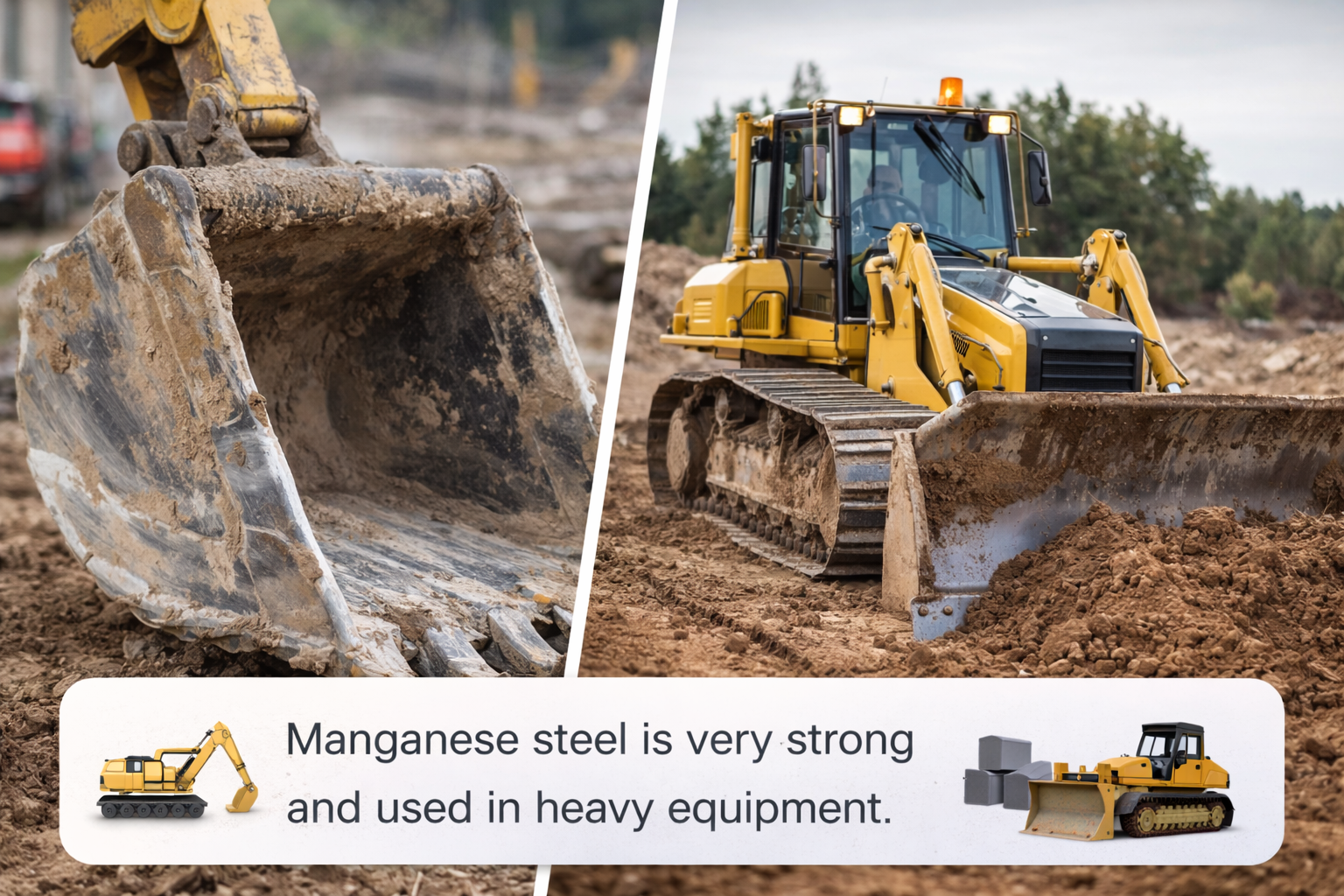
4. Manganese Steel
- Used in building equipment.
- Used in cement mixers.
Manganese steel is strong and resistant to impact.
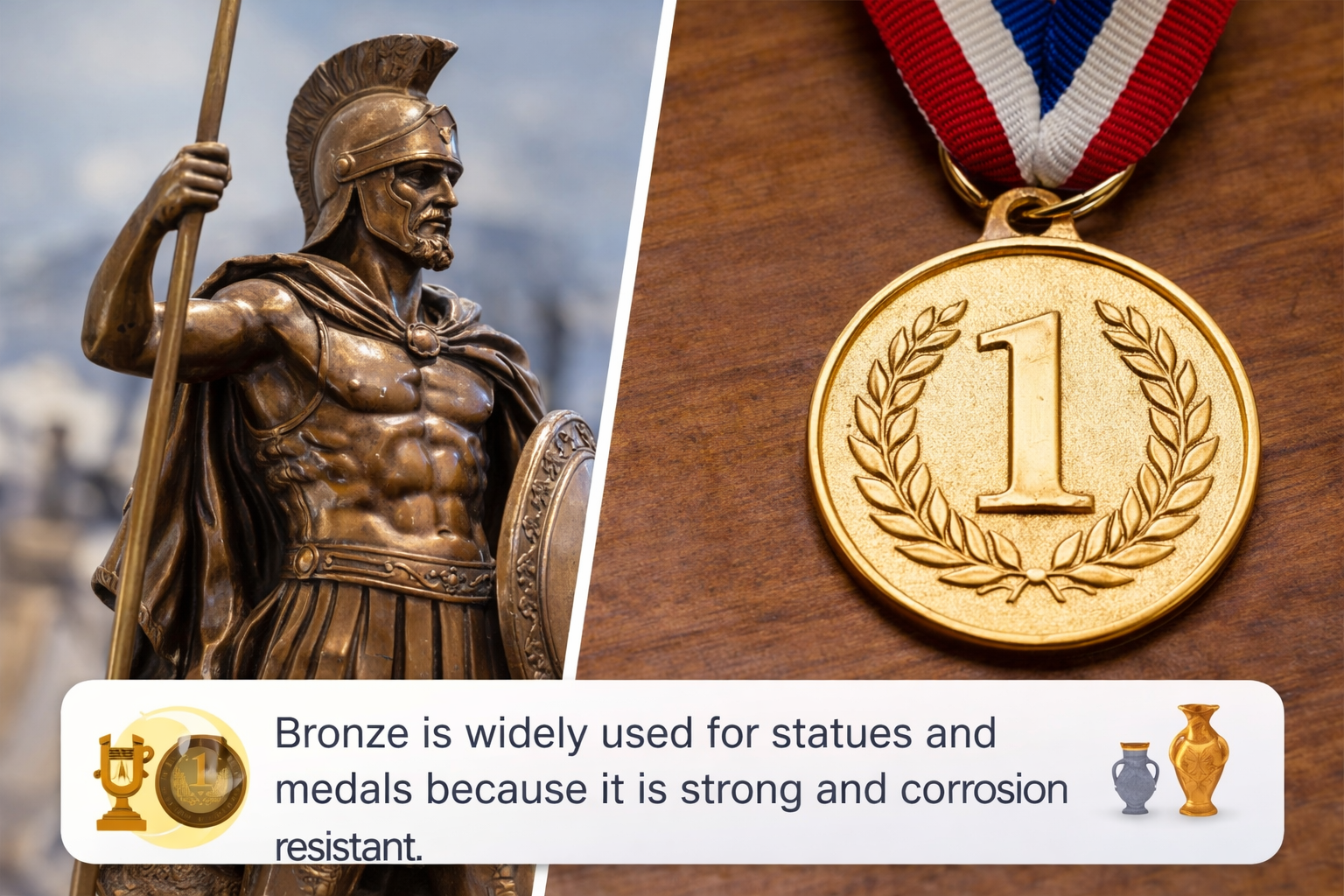
5. Bronze
- Used to make medals.
- Used in making coins.
- Used in springs.
- Used in ship propellers.
Bronze is valued because it is hard and resistant to corrosion.
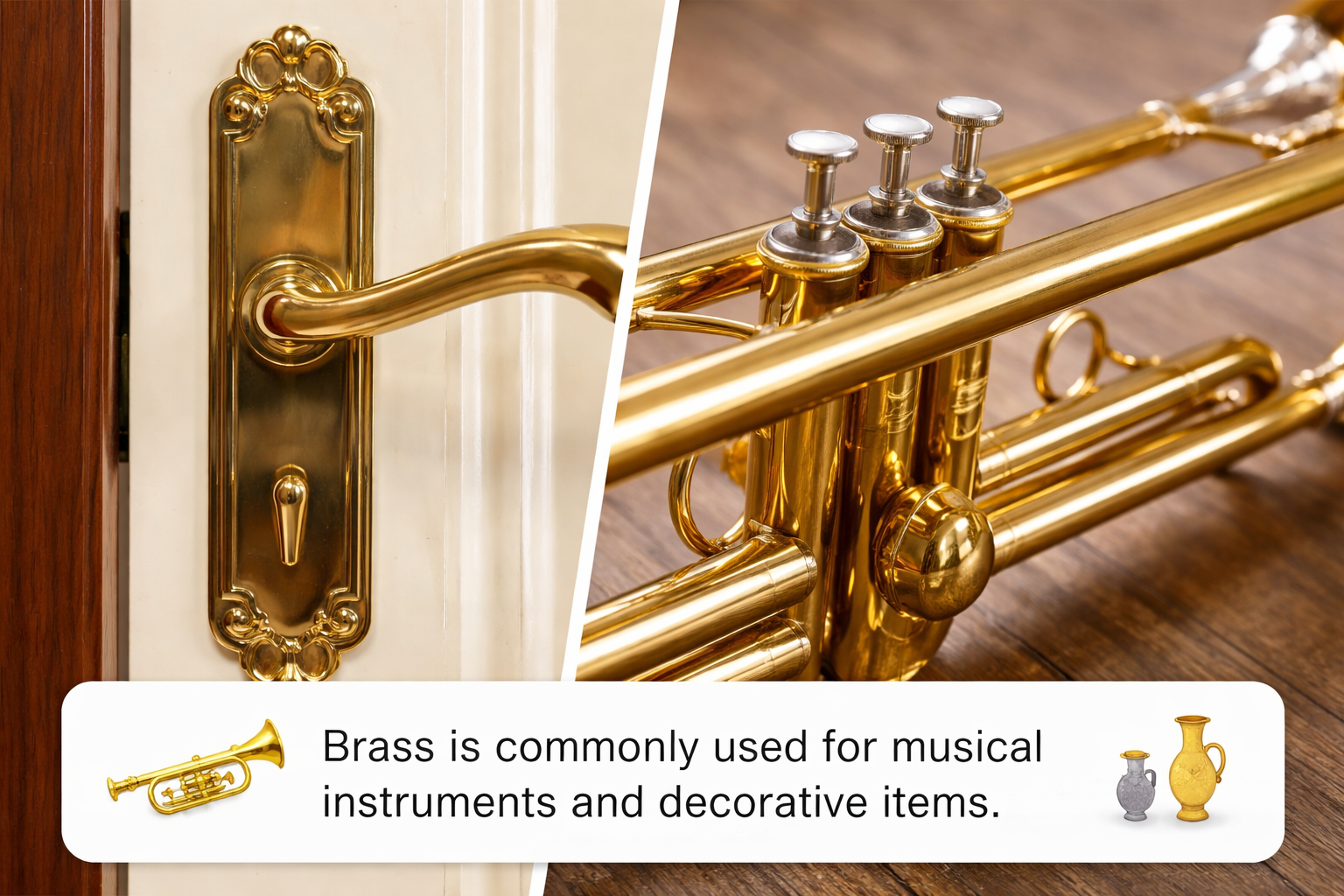
6. Brass
- Used to make door handles.
- Used in door locks and knobs.
- Used in musical instruments.
Brass has an attractive gold-like colour and good durability.
Importance of Metals and Alloys in Daily Life
Metals and alloys are essential because they are used in:
- Construction of buildings and bridges
- Manufacture of machines and tools
- Electrical wiring and power transmission
- Transport systems such as cars and aircraft
- Household equipment and kitchen utensils
Without metals and alloys, many modern technologies and structures would not be possible.
Effects of Rusting
Rusting is a common problem that affects metals, especially iron and steel. When metals are exposed to certain environmental conditions, they undergo corrosion, which leads to damage and weakening of the metal.
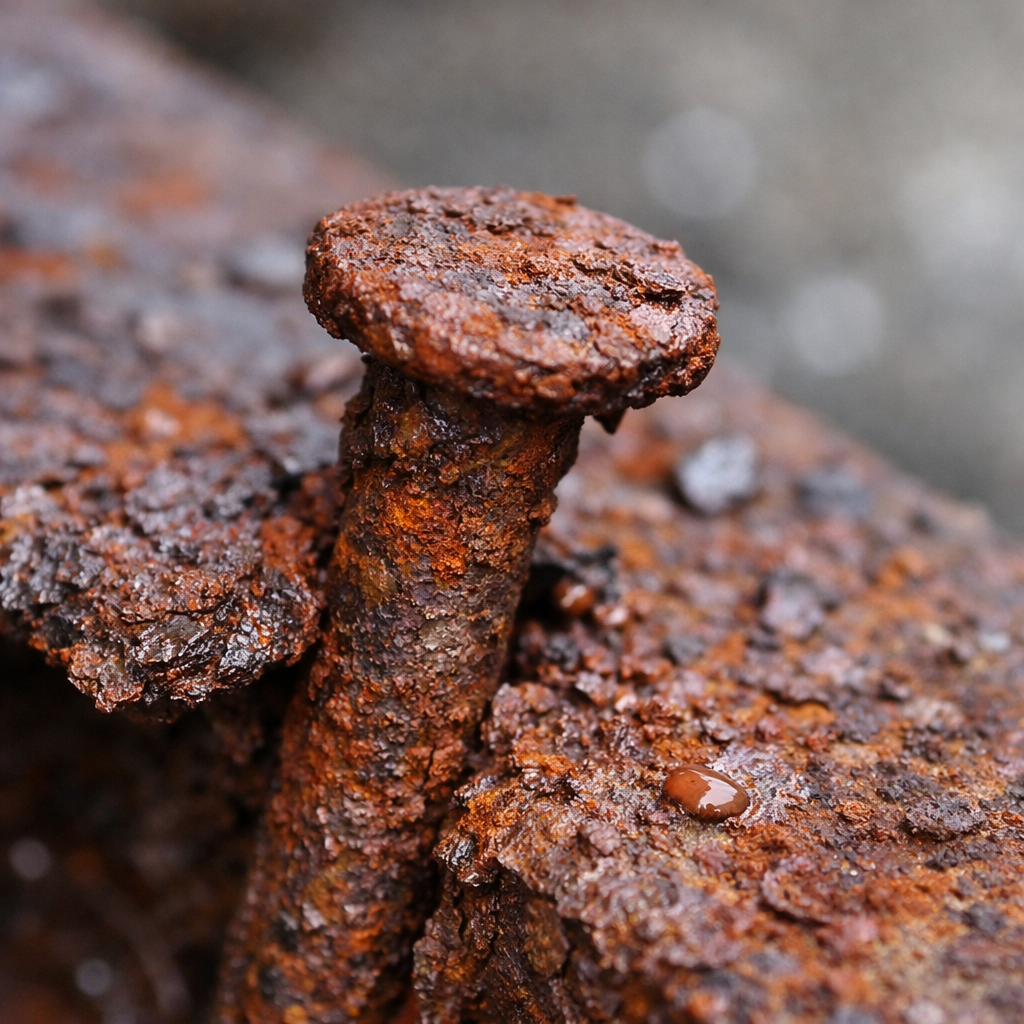
Rust forming on iron when it reacts with oxygen and water.
Rusting mainly occurs when iron reacts with oxygen and water in the environment. This chemical reaction produces a reddish-brown substance called rust.
Rusting can cause serious problems in buildings, machines, tools, and other metal structures, making it important to understand its effects.
💡 Did You Know?
Rusting is actually a type of corrosion. Corrosion is the gradual destruction of metals by chemical reactions within their environment.
What is Rusting?
Rusting is the process in which iron reacts with oxygen and water to form rust.
Rust is a reddish-brown substance that forms on the surface of iron when it corrodes.
Rust is chemically known as hydrated iron (III) oxide.
Conditions Necessary for Rusting
Rusting occurs when two important conditions are present:
- Oxygen (air)
- Water (moisture)
If either oxygen or water is absent, rusting cannot occur.
For example:
- Dry air alone does not cause rusting.
- Water without oxygen also does not cause rusting.
Both conditions must be present for rusting to occur.
💡 Did You Know?
Ships and bridges made of steel are regularly painted and coated to prevent rusting because constant exposure to water and oxygen increases corrosion.
Chemical Process of Rusting
Rusting involves a chemical reaction between iron, oxygen, and water.
The reaction can be simplified as:
Iron + Oxygen + Water → Hydrated Iron (III) Oxide (Rust)
This reaction gradually damages the metal and causes it to lose its strength.
Effects of Rusting on Metals
Rusting has several negative effects on metals and metal structures.
1. Weakening of Metal Structures
Rusting slowly destroys the metal by eating away its surface.
As rust forms, the metal becomes:
- Thinner
- Weaker
- Less durable
This can weaken structures such as:
- Bridges
- Buildings
- Metal roofs
If rusting continues for a long time, structures may collapse or break.
2. Damage to Machines and Tools
Rust can affect the proper functioning of machines and tools.
Rusting can cause:
- Moving parts to stick
- Tools to become rough or damaged
- Machines to operate inefficiently
This can reduce the efficiency and lifespan of equipment.
3. Formation of Holes in Metal Surfaces
As rust spreads, it gradually eats away the metal.
This can lead to the formation of:
- Holes in iron sheets
- Leakage in metal tanks or pipes
For example, rusting of iron roofing sheets can cause water leakage during rain.
4. Economic Losses
Rusting leads to the damage and replacement of metal objects, which can be expensive.
Examples of economic losses include:
- Replacement of rusted tools
- Repair of rusted buildings
- Replacement of rusted machines and equipment
Industries spend a lot of money on preventing rusting.
5. Poor Appearance of Metal Objects
Rusting makes metal objects look old, dirty, and unattractive.
Examples include:
- Rusted gates
- Rusted vehicles
- Rusted iron roofs
Because of this, rusting affects the appearance and value of metal objects.
Methods of Preventing Rusting
Because rusting causes many problems, it is important to prevent it.
Rusting can be prevented by methods such as:
- Painting metal surfaces
- Galvanising (coating with zinc)
- Oiling or greasing
- Using stainless steel or other alloys
These methods protect the metal from contact with air and water.
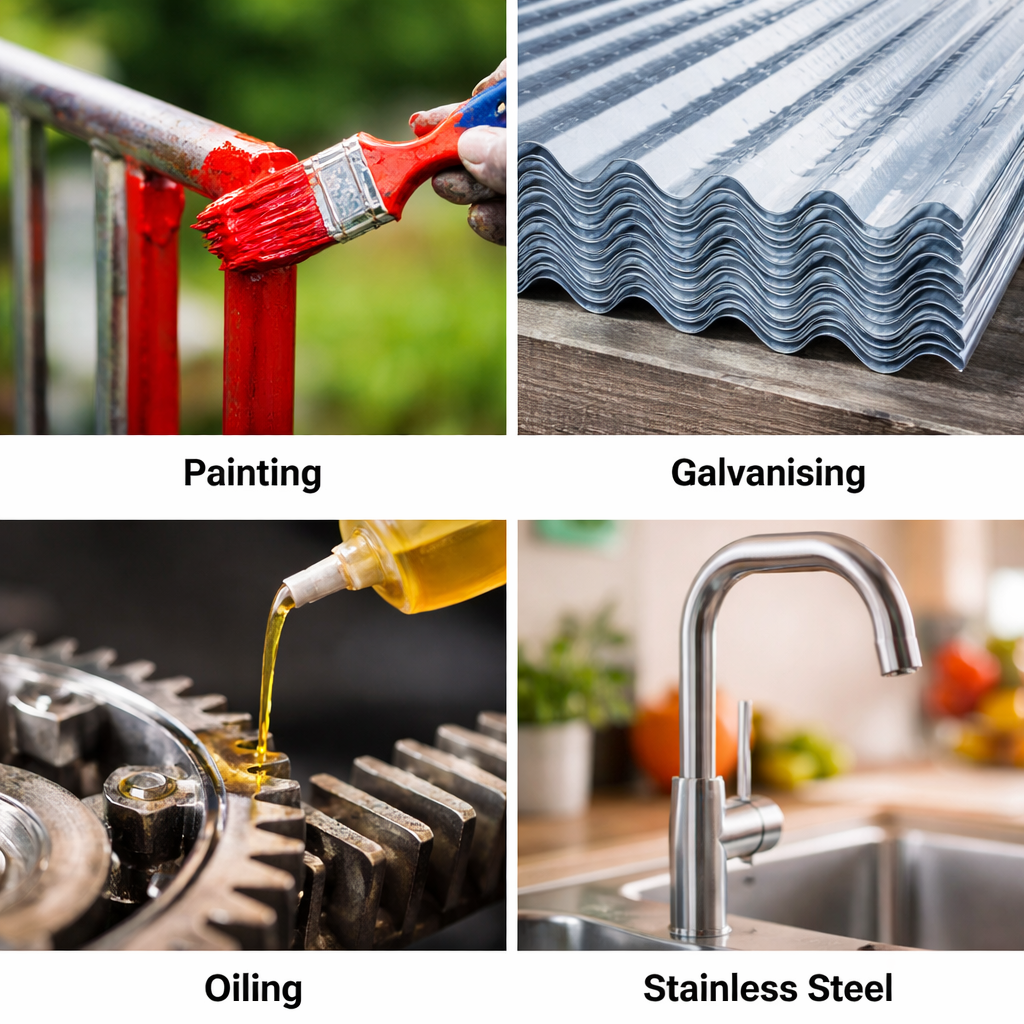
Common methods used to prevent rusting of metals such as painting, galvanising, oiling, and using stainless steel.
Summary
Metals & Alloys
- Metals are widely used in daily life.
- Used in construction, transport, and technology.
- Alloys are mixtures of metals or metals + non-metals.
- Alloys improve properties of pure metals.
Physical Properties
- Mostly grey or silvery in colour.
- Shiny (lustrous).
- Mostly solid at room temperature.
- Good conductors of heat and electricity.
Malleability & Ductility
- Malleable: can be hammered into sheets.
- Ductile: can be drawn into wires.
- Gold is highly malleable.
- Copper is highly ductile.
Special Cases
- Mercury is liquid at room temperature.
- Copper is reddish-brown.
- Gold is yellow.
- Unique colours help identification.
Alloys
- Mixture of two or more elements.
- At least one must be a metal.
- Made by melting and mixing elements.
- Have better properties than pure metals.
Why Alloys Are Made
- Increase strength and hardness.
- Improve durability.
- Resist corrosion.
- Reduce wear and tear.
Common Alloys
- Brass = Copper + Zinc
- Bronze = Copper + Tin
- Mild steel = Iron + Carbon
- Stainless steel = Iron + Chromium + Nickel
Uses of Metals
- Copper → electrical wiring.
- Aluminium → cooking utensils, cables.
- Iron → construction and tools.
- Gold & silver → jewellery.
Uses of Alloys
- Stainless steel → utensils, surgical tools.
- Bronze → medals, coins.
- Brass → door handles, instruments.
- Duralumin → aircraft bodies.
Rusting
- Reaction of iron with oxygen and water.
- Forms reddish-brown rust.
- Weakens metal over time.
- Requires both air and moisture.
Effects of Rusting
- Weakens structures.
- Damages tools and machines.
- Causes holes and leakage.
- Leads to economic losses.
Prevention of Rusting
- Painting metal surfaces.
- Galvanising (zinc coating).
- Oiling or greasing.
- Using stainless steel.
Assessment
Metals and Alloys Assessment
Answer all 15 questions on properties, alloys, uses and rusting.
15 Questions
🔎 Grade 9 Integrated Science Navigator
Structure of Atom
Metals and Alloys
Water Hardness
Nutrition in Plants
Nutrition in Animals
Reproduction in Plants
Interdependence of Life
Curved Mirrors
Waves