1.3 Conserving Food Nutrients
Learn how careful preparation and proper cooking methods help foods retain important
vitamins and minerals for healthy body growth, protection, and proper functioning.
Introduction
Vegetables and other foods contain important nutrients such as vitamins and minerals
that help the body grow and function properly. However, these nutrients can easily be
lost during washing, preparation, or cooking if proper methods are not used.
Conserving food nutrients involves using appropriate preparation and cooking techniques
to ensure that foods retain their nutritional value.
These nutrients are vital for:
- Supporting normal body functions
- Boosting immunity
- Improving digestion
- Maintaining good health
- Enhancing taste and quality of food
Without proper conservation, vegetables can lose important nutrients during washing,
chopping, or cooking.
Significance of the Study
Understanding how to conserve food nutrients helps learners prepare healthy meals and
maintain the nutritional value of foods. Proper handling and cooking methods help
preserve essential vitamins and minerals, improve the taste and quality of food, and
promote good health. This knowledge also helps reduce nutrient loss and encourages
healthy eating habits in the community.
Did you know?
Most vitamins in vegetables are found close to the skin, which is why peeling vegetables
too deeply can reduce their nutritional value.
Ways of Conserving Vitamins and Minerals
-
Proper Preparation:
Handle vegetables carefully to reduce nutrient loss. -
Proper Cooking Methods:
Use cooking techniques that preserve vitamins and minerals. -
Avoid Overcooking:
Excessive heat destroys sensitive nutrients like vitamin C.
Key Idea
Nutrients are best preserved when food is handled gently, cooked correctly, and not exposed
to too much heat for too long.
Handling and Preparing Vegetables
- Wash gently: Remove dirt and soil without damaging the vegetables.
- Avoid long soaking: Prolonged soaking can wash away water-soluble vitamins.
- Rinse and drain well: Reduces water loss while cleaning.
- Chop into large pieces: Smaller pieces lose more nutrients through exposure to air.
- Cook shortly after preparation: Minimizes nutrient loss.
- Peel only if necessary: Peel thinly because most nutrients are near the skin.
Note
Good handling of vegetables before cooking is just as important as the cooking method itself.
Cooking Methods That Conserve Nutrients
1. Steaming
- Place chopped vegetables in a cooking pot and cover with a lid.
- Cook using steam for about 3 minutes, turning the vegetables for even cooking.
- Covering reduces cooking time and helps retain vitamins and minerals.
- Vegetables can also be steamed in a strainer above boiling water.
2. Stir-Frying
- Use a small amount of oil in a pan or cooking pot.
- Add chopped vegetables on low heat.
- Stir constantly to cook evenly and prevent burning.
- Turn off heat when vegetables are just cooked to preserve nutrients.
- Safety tip: Stir carefully to avoid burns from hot oil or food.
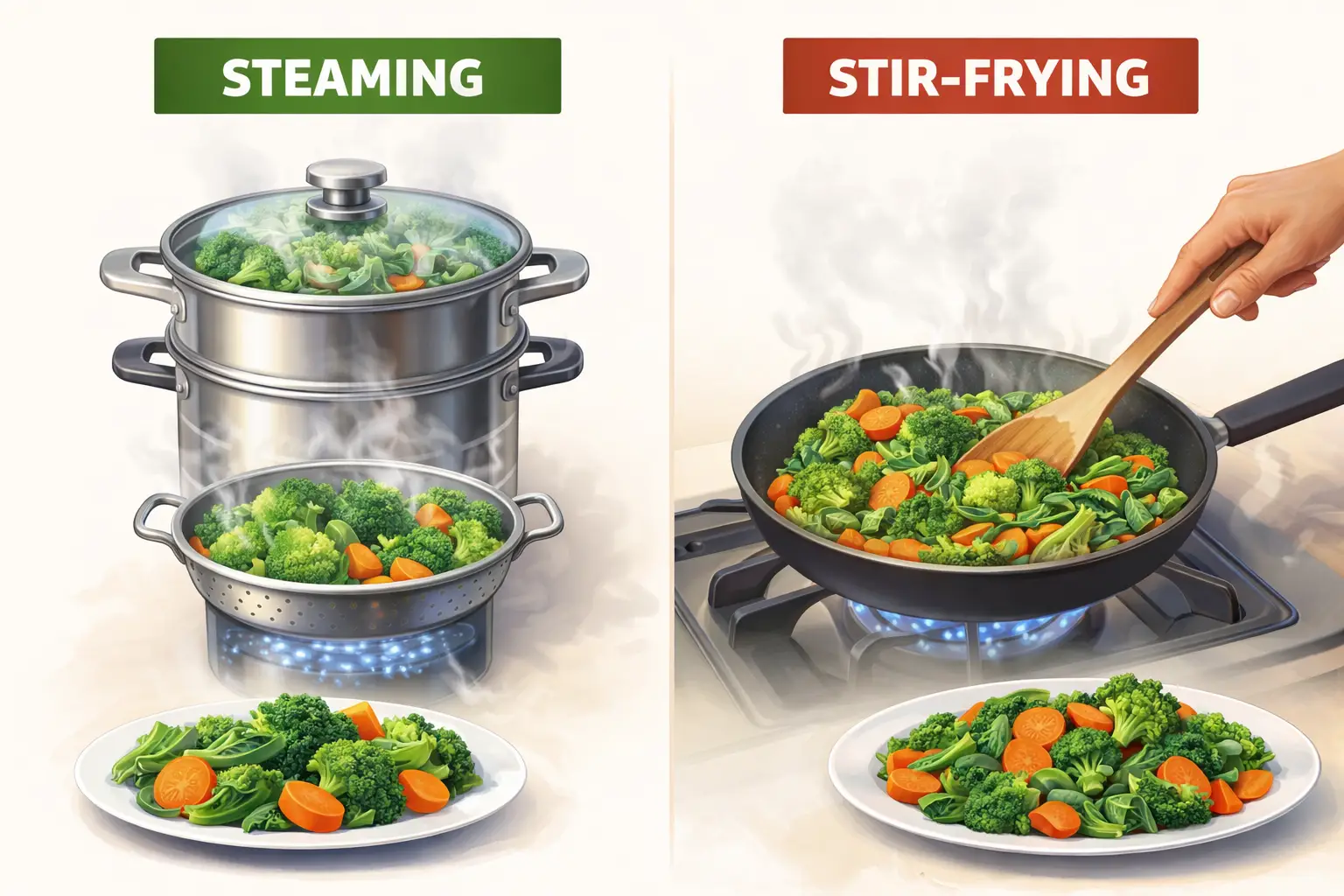
Steaming and stir-frying
Vegetables Suitable for Steaming and Stir-Frying
- Kales – rich in iron, vitamin A, and vitamin C
- Carrots – high in vitamin A and antioxidants
- Spinach – rich in iron, calcium, and vitamins
Summary
- Food nutrients such as vitamins and minerals are essential for good health.
- These nutrients can be lost during washing, preparation, and cooking.
- Proper preparation helps reduce nutrient loss in vegetables.
- Vegetables should be washed gently, not soaked for long, and cooked soon after preparation.
- Peeling should be thin because many nutrients are close to the skin.
- Steaming and stir-frying are good cooking methods for conserving nutrients.
- Overcooking destroys sensitive nutrients such as vitamin C.
Assessment
Conserving Food Nutrients Assessment
Answer all 10 questions about conserving food nutrients, handling vegetables, and cooking methods. Your results will be marked automatically.
10 Questions
Certificate of Achievement
This certifies that
has successfully completed the assessment on
Conserving Food Nutrients
Score:
Jump to Grade 7 Agriculture Topics
Select another topic below:
Controlling Soil Pollution
Water Retention Structures
Conserving Food Nutrients
Growing Trees
Crop Establishment
Crop Management Practices
Preparing Animal Products
Cooking Food
Animal Hygiene Practices
Laundry (Loose-Coloured Items)
Knitting Skills
Framed Suspended Gardens
Adding Value to Crop Produce
Making Homemade Soap