4.2.1 Types of Magnets
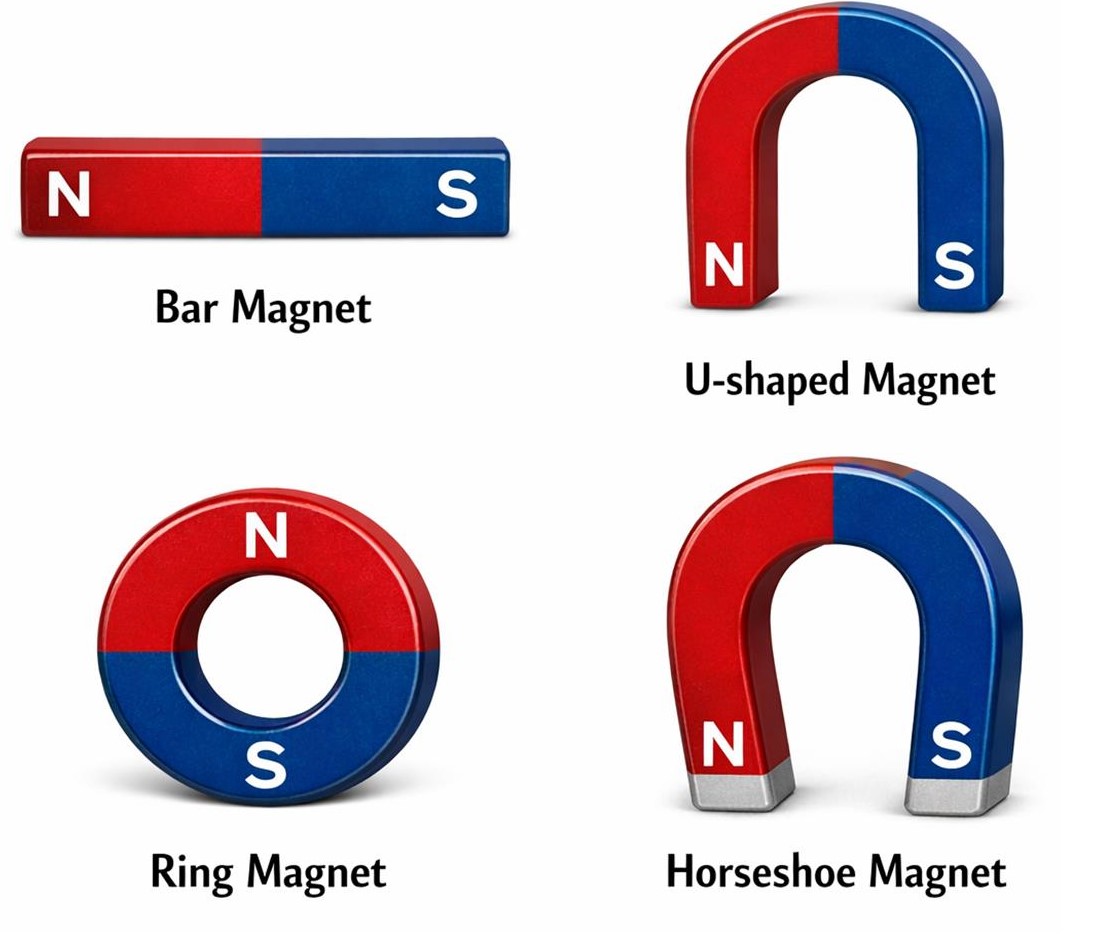
Magnets come in different shapes and forms, each with specific uses:
| Type | Description |
|---|---|
| Bar Magnet | A rectangular magnet with poles at the ends. |
| U-shaped Magnet | Shaped like the letter U; concentrates magnetic force at the ends. |
| Ring Magnet | Circular magnet with a hole in the middle; often used in speakers. |
| Horseshoe Magnet | U-shaped magnet with a stronger magnetic field due to close poles. |
Note: Magnets always have two poles, a North (N) and a South (S) pole.
💡
Did you know? The magnetic poles of the Earth itself act like a giant magnet with a North and South pole.
4.2.2 Properties of Magnets
-
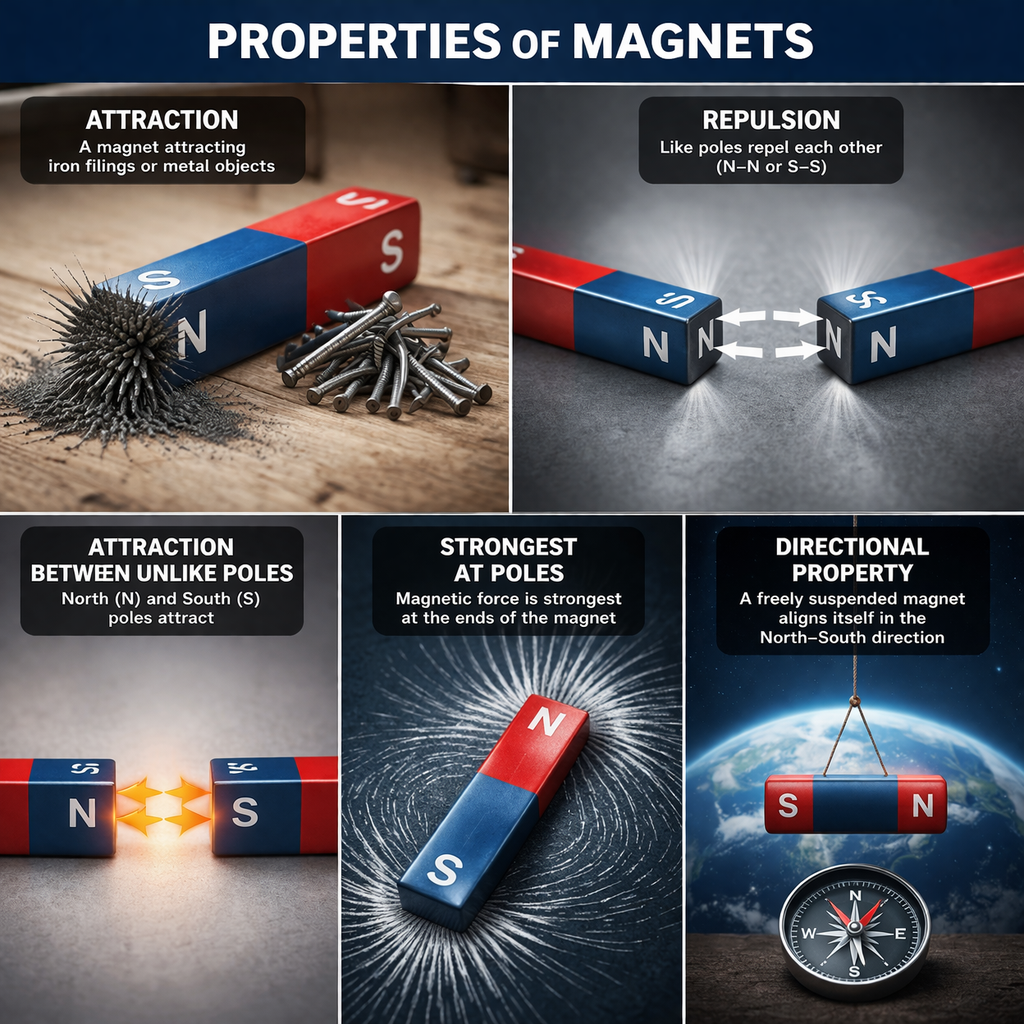
Attraction – Magnets attract magnetic materials like iron and steel.
💡 Did you know? Magnetic attraction is caused by the movement of electric charges within atoms, especially electrons.
- Poles – Every magnet has two poles: North (N) and South (S).
-
Repulsion – Like poles repel each other (N–N, S–S).
💡 Interesting fact: When like poles are brought close, they exert force that pushes them apart, known as repulsion.
- Attraction Between Unlike Poles – North and South poles attract (N–S).
- Strongest at Poles – Magnetic force is strongest at the ends of the magnet.
- Directional Property – A freely suspended magnet aligns itself in the North–South direction.
Demonstrating Properties of Magnets
(a) Attractive Property
- Place a magnet near nails or iron filings.
- Observe that the magnet attracts the materials.
- Attraction is strongest at the poles.
(b) Repulsive Property
- Place the North pole of one magnet near the North pole of another – they repel.
- South–South also repels.
- North–South poles attract each other.
(c) Directional Property
- Suspend a magnet freely using a string.
- Observe that it settles pointing in the North–South direction, showing the Earth’s magnetic effect.
4.2.3 Magnetic vs Non-Magnetic Materials
| Magnetic Materials | Non-Magnetic Materials |
|---|---|
| Iron | Wood |
| Steel | Plastic |
| Cobalt | Glass |
| Nickel | Rubber |
| Aluminium | |
| Paper | |
| Copper |
Tip: Only materials containing iron, cobalt, or nickel are magnetic.
💡
Did you know? Although aluminum is non-magnetic, it can exhibit weak magnetic properties under certain conditions, like in strong magnetic fields.
4.2.4 Uses of Magnets in Daily Life
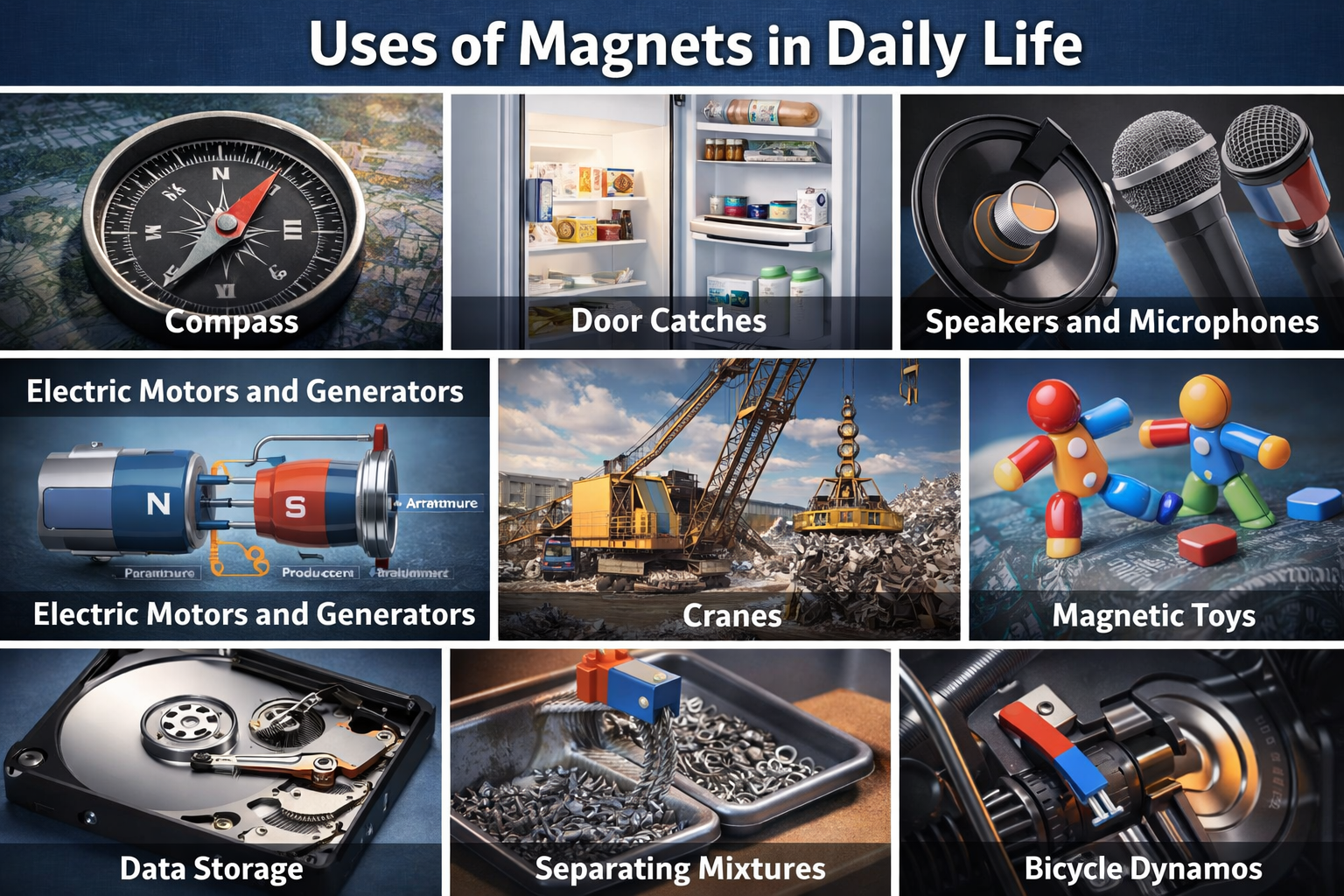
Magnets are widely used in homes, schools, and industries:
-
Compass – Helps in finding directions.
💡 Fun Fact The magnetic compass has been used for navigation since ancient times and is still essential for guiding ships and airplanes.
-
Door catches – Fridge doors use magnets to stay closed.
💡 Did you know? Magnets in door catches work by attracting the metal plate on the door, creating a secure seal.
-
Speakers and microphones – Magnets help convert electrical signals into sound.
💡 Interesting Fact The magnets in speakers interact with coils of wire, producing vibrations that create sound waves.
- Electric motors and generators – Use magnetic force to produce motion or electricity.
- Cranes – Lift scrap metal using strong electromagnets.
- Magnetic toys – Use magnets for movement or attachment.
- Data storage – Hard drives and memory devices store information using magnetic materials.
- Separating mixtures – Magnets separate magnetic substances from non-magnetic ones.
- Doorbells – Use magnets in the electromagnet system.
- Bicycle dynamos – Convert mechanical motion into electricity using magnets.
Summary
Magnetism
- A magnet attracts magnetic materials such as iron, steel, cobalt, and nickel.
- Magnets can be naturally occurring (like lodestone) or artificially made.
Types of Magnets
- Bar Magnet: A rectangular magnet with poles at the ends.
- U-shaped Magnet: Shaped like the letter U, concentrating magnetic force at the ends.
- Ring Magnet: Circular with a hole in the middle, commonly used in speakers.
- Horseshoe Magnet: U-shaped with stronger magnetic fields due to close poles.
Properties of Magnets
- Attraction: Magnets attract magnetic materials like iron and steel.
- Poles: Every magnet has two poles: North (N) and South (S).
- Repulsion: Like poles repel each other (N–N, S–S).
- Attraction Between Unlike Poles: North and South poles attract (N–S).
- Strongest at Poles: Magnetic force is strongest at the ends of the magnet.
- Directional Property: A freely suspended magnet aligns itself in the North–South direction.
Magnetic vs Non-Magnetic Materials
- Magnetic Materials: Iron, Steel, Cobalt, Nickel.
- Non-Magnetic Materials: Wood, Plastic, Glass, Rubber, Aluminium, Paper, Copper.
- Tip: Only materials containing iron, cobalt, or nickel are magnetic.
Uses of Magnets in Daily Life
- Compass: Helps in finding directions.
- Door catches: Fridge doors use magnets to stay closed.
- Speakers & microphones: Magnets convert electrical signals into sound.
- Electric motors & generators: Use magnetic force to produce motion or electricity.
- Cranes: Lift scrap metal using strong electromagnets.
- Magnetic toys: Use magnets for movement or attachment.
- Data storage: Hard drives & memory devices store information using magnetic materials.
- Separating mixtures: Magnets separate magnetic substances from non-magnetic ones.
- Doorbells: Use magnets in the electromagnet system.
- Bicycle dynamos: Convert mechanical motion into electricity using magnets.
Assessment
Magnetism Assessment
Answer all 15 questions about magnetism, types of magnets, properties of magnets, and their uses in daily life. Your results will be marked automatically.
Certificate of Achievement
This certifies that
has successfully completed the assessment on
Magnetism
Score: