1.2 Laboratory Safety
Learn about laboratory safety, hazards, accidents, prevention methods, and first aid in science.
Those tiny 💡 bulbs are not just sitting there looking cute 😏
Tap them… they’re hiding smart facts 🧠✨
Introduction
Meaning of a Laboratory
A laboratory is a special room or building that is equipped with apparatus, chemicals and materials for carrying out scientific experiments, investigations and learning. 💡 Quick fact Laboratories are designed to provide a safe and controlled environment for scientific work.
Laboratories are found in:
- Schools
- Hospitals
- Research centres
- Industries
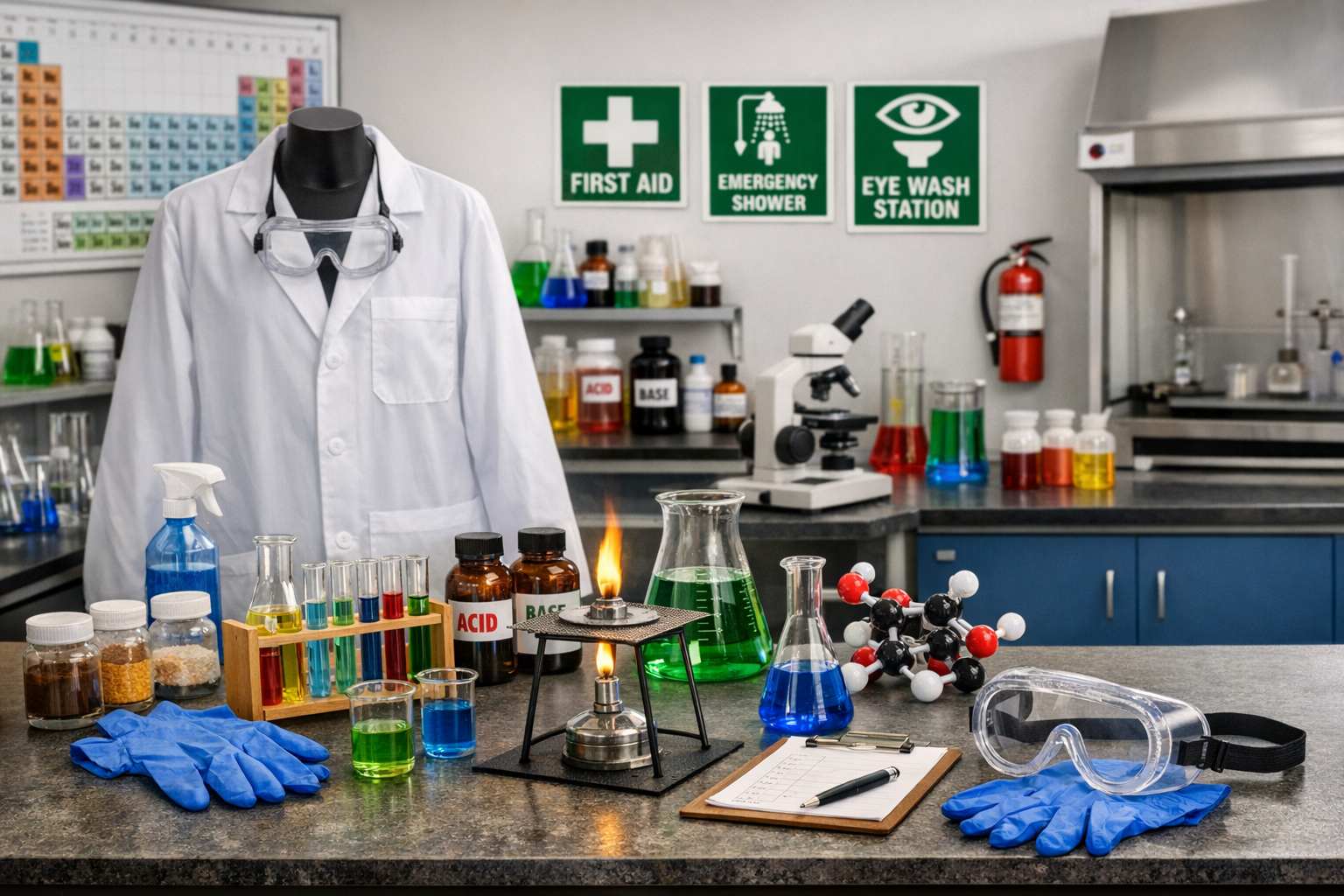
Laboratory Safety
Laboratory safety refers to rules and precautions taken to prevent accidents and injuries in the laboratory. 💡 Safety idea Following safety rules helps protect people, equipment, and the environment.
Why Laboratory Safety is Important
- Prevents accidents and injuries such as burns, cuts and poisoning.
- Ensures a safe and organised working environment.
- Promotes proper handling, storage and disposal of chemicals.
- Protects laboratory users, teachers and visitors.
- Protects laboratory equipment from damage.
- Prevents environmental pollution.
General Laboratory Safety Rules
- Do not run or play in the laboratory.
- Follow the teacher’s instructions carefully.
- Do not taste or smell chemicals directly.
- Wear protective clothing (lab coat, gloves, goggles). 💡 Protection Protective gear helps prevent injuries from chemicals, heat, and broken glass.
- Tie long hair back.
- Report accidents immediately.
- Do not eat or drink in the laboratory.
- Wash hands after experiments.
- Dispose of chemicals properly.
- Handle glassware carefully.
Common Laboratory Hazards
Meaning of a Laboratory Hazard
A laboratory hazard is anything in the laboratory that can cause injury, illness, or damage to people and property. 💡 Hazard meaning A hazard is any dangerous substance or situation that can cause harm in the laboratory.
Hazards may come from:
- Chemicals
- Equipment
- Electricity
- Fire
- Radiation
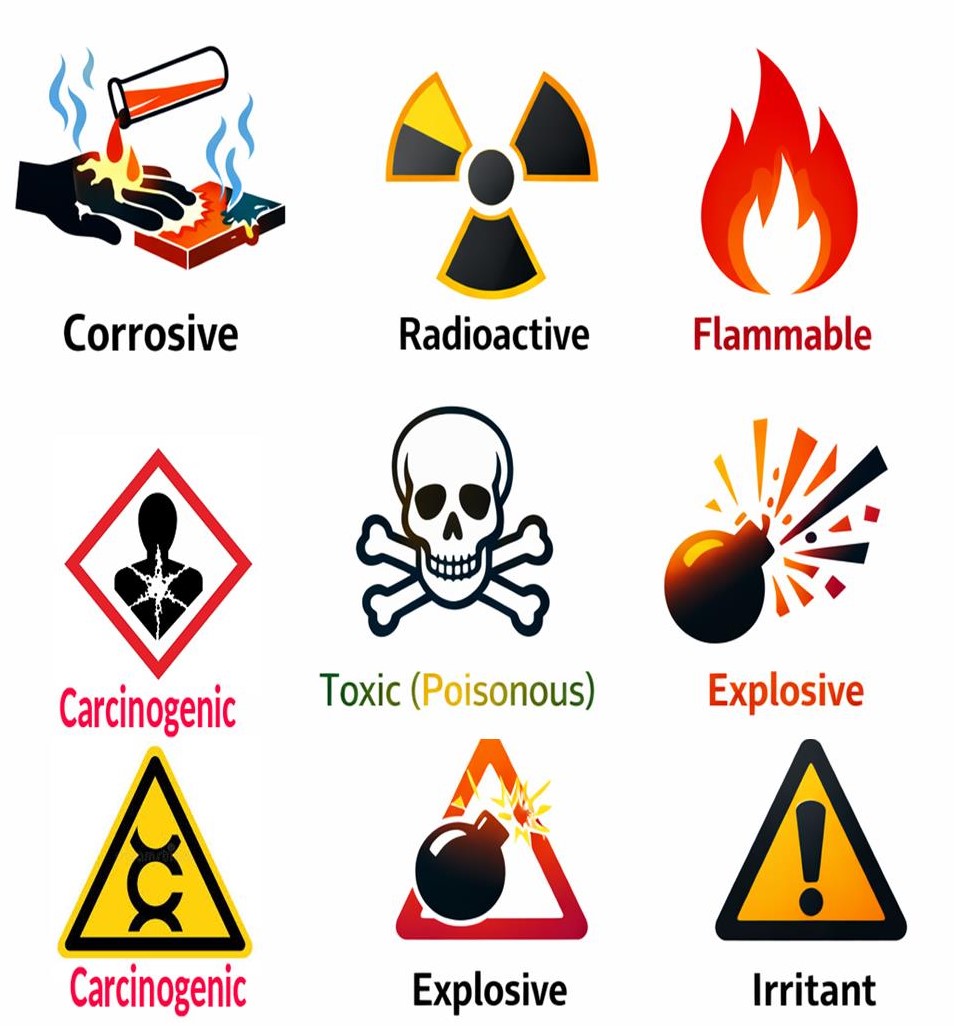
Types of Laboratory Hazards
| Hazard | Description | Examples |
|---|---|---|
| Corrosive | Substances that destroy skin, eyes or materials on contact. | Concentrated acids, sodium hydroxide |
| Radioactive | Substances that produce harmful radiation. | Uranium, radioactive isotopes |
| Flammable | Substances that easily catch fire. 💡 Fire risk Flammable substances should be kept away from open flames and heat sources. | Ethanol, methylated spirit |
| Carcinogenic | Substances that can cause cancer. | Certain industrial chemicals |
| Toxic (Poisonous) | Substances that can cause illness or death if inhaled or swallowed. 💡 Danger Toxic substances should never be tasted or inhaled directly. | Chlorine gas, bromine |
| Explosive | Substances that may explode when heated or hit. | Some gases, unstable chemicals |
| Irritant | Substances that cause itching or inflammation. | Some cleaning chemicals |
Common Laboratory Accidents, Their Causes, and First Aid Measures
Definition: First Aid
First aid is the immediate help given to an injured or ill person before professional medical treatment. 💡 Quick note First aid helps reduce the severity of injuries and can save lives before medical help arrives.
Accidents, Causes and First Aid Measures
| Accident | Causes | First Aid Measures |
|---|---|---|
| Cuts |
• Breaking glass apparatus (test tubes, beakers). • Careless handling of sharp objects (scalpels, razor blades, knives). |
1. Wash hands and wear gloves. 2. Apply pressure to stop bleeding. 3. Clean the wound. 4. Cover with sterile dressing or bandage. |
| Burns and Scalds |
• Touching hot apparatus with bare hands. • Splashing concentrated acids or bases on skin. • Careless handling of steam from boiling liquids. • Contact with open flames. |
1. Move the person away from the source of heat. 2. Cool the burn under cold running water for about 20 minutes. 3. Remove tight clothing, watches, or jewellery (if not stuck). 4. Cover the burn loosely with clean plastic wrap. |
| Ingestion of Harmful Substances |
• Swallowing harmful chemicals. • Tasting or eating laboratory materials. • Inhaling toxic gases due to poor ventilation. 💡 Warning Never taste chemicals or inhale gases directly in the laboratory. |
If conscious: 1. Ask what was swallowed, how much, and when. 2. Inform the teacher or laboratory technician immediately. If unconscious: 1. Inform the teacher or technician immediately. 2. Monitor and record vital signs while waiting for help. |
| Falls |
• Running in the laboratory. • Wet or slippery floors. |
1. Help the person sit or lie down safely. 2. Check for injuries (bleeding, swelling, pain). 3. Inform the teacher or laboratory technician immediately. |
| Electric Shock | • Inserting metallic objects into electric sockets. |
1. Do not touch the person directly if still in contact with electricity. 2. Switch off the power source immediately. 3. Inform the teacher or laboratory technician immediately. |
| Fire Accidents |
• Leaving burning candles unattended. • Playing with flames. • Careless mixing of chemicals. |
1. Raise alarm immediately. 2. Use fire extinguisher or fire blanket if trained. 3. Move away from the fire to a safe area. 4. Inform the teacher or laboratory technician immediately. |
What To Do In Case of an Accident
- Inform the teacher immediately.
- Wash affected area with clean water.
- Use first aid kit if necessary.
- Do not panic.
First Aid Kit: Items and Their Uses
| Item | Use |
|---|---|
| Gloves | Protect the first aider from contact with body fluids. |
| Scissors | Cut bandages and dressings safely. |
| Bandages | Cover wounds to keep germs away. |
| Antiseptic | Clean wounds to prevent infection. |
| Cotton wool | Apply antiseptic or ointments. |
| Painkillers | Reduce pain (as advised by a doctor). |
| Safety pin | Hold bandages in place. |
| Plaster | Cover small wounds and cuts. |
Prevention of Laboratory Accidents
Laboratory accidents can be prevented when safety rules are strictly followed and responsible behaviour is maintained at all times. 💡 Key idea Most laboratory accidents happen due to carelessness or failure to follow instructions.
Safety Practices
-
Follow laboratory safety rules.
Always obey the instructions given by the teacher or laboratory technician. Read and understand all procedures before starting any experiment. -
Do not run in the laboratory.
Running can cause slipping, falling, or knocking over chemicals and equipment, which may lead to injuries or fires. 💡 Safety tip Always walk carefully to avoid accidents in the laboratory. -
Handle chemicals carefully.
Read labels before use. Avoid direct contact with chemicals, and never mix substances unless instructed to do so. -
Wear protective clothing (lab coat, gloves).
Protective clothing helps prevent burns, cuts, and chemical splashes from coming into contact with the skin. -
Do not taste chemicals.
Chemicals in the laboratory are not safe for consumption and may cause poisoning or serious health problems. 💡 Warning Never taste or smell chemicals directly in the laboratory. -
Use equipment properly.
Handle glassware and electrical equipment carefully. Do not use cracked glassware or faulty equipment. -
Keep floors dry and clean.
Immediately clean up any spills to prevent slipping accidents. -
Avoid playing with flames.
Do not leave burning candles or Bunsen burners unattended. Open flames can easily start fires. -
Do not insert objects into electrical sockets.
Inserting metallic or foreign objects into sockets can cause electric shock or fire. -
Dispose of broken glass properly.
Broken glass should be placed in designated containers to prevent cuts and injuries.
Importance of Safety and Prevention of Laboratory Accidents
- Prevents accidents and injuries.
- Prevents damage to laboratory equipment and school property.
- Ensures a safe and healthy working environment.
- Protects learners, teachers, and laboratory staff.
- Promotes responsible and disciplined behaviour.
Summary
Laboratory
- A laboratory is a special place used for scientific experiments and investigations.
- It contains apparatus, chemicals and materials for learning science.
- Laboratories are found in schools, hospitals, research centres and industries.
Laboratory Safety
- Laboratory safety involves rules and precautions to prevent accidents and injuries.
- It ensures a safe and organised working environment.
- It protects people, equipment and the environment.
Importance of Laboratory Safety
- Prevents accidents such as burns, cuts and poisoning.
- Promotes proper handling and disposal of chemicals.
- Protects laboratory users and visitors.
- Prevents environmental pollution.
Laboratory Hazards
- Hazards are anything that can cause injury, illness or damage.
- They may come from chemicals, equipment, electricity, fire or radiation.
- Proper handling helps reduce risks in the laboratory.
Types of Hazards
- Corrosive substances damage skin and materials.
- Flammable substances catch fire easily.
- Toxic substances can cause illness or death.
- Explosive and radioactive materials are highly dangerous.
Laboratory Accidents
- Common accidents include cuts, burns, poisoning, falls and electric shock.
- Accidents are often caused by carelessness or unsafe practices.
- Quick action and proper first aid are important.
First Aid
- First aid is the immediate help given before medical treatment.
- It helps reduce injury severity and prevent complications.
- Knowing basic first aid is important in the laboratory.
First Aid Kit
- Contains items such as gloves, bandages, antiseptic and cotton wool.
- Used to treat injuries like cuts, burns and bruises.
- Helps prevent infection and control bleeding.
Prevention of Accidents
- Follow all laboratory safety rules and instructions.
- Handle chemicals and equipment carefully.
- Wear protective clothing such as lab coats and gloves.
- Keep the laboratory clean and organised.
Importance of Safety
- Ensures a safe and healthy working environment.
- Protects learners, teachers and laboratory staff.
- Prevents damage to equipment and property.
- Promotes responsible and disciplined behaviour.
Assessment
Laboratory Safety Assessment
Answer all 15 questions about laboratory safety, hazards, accidents, first aid and prevention of accidents. Your results will be marked automatically.
Certificate of Achievement
This certifies that
has successfully completed the assessment on
Laboratory Safety
Score: