Human Excretory System: Skin and Urinary System
Learn about the human excretory system, including the skin and urinary system. Explore how these systems function, their importance in maintaining balance, and how disorders such as kidney failure and stones affect the body.
Introduction
The human excretory system is responsible for removing waste and excess substances from the body to maintain internal balance. This includes the functions of organs like the kidneys, skin, and urinary system, which work together to eliminate toxins and regulate bodily functions. Understanding how this system works is essential for maintaining good health.
The excretion process ensures that harmful waste products, such as urea, are filtered out of the body. This section will cover the different parts of the excretory system and their role in keeping the body functioning properly.
The Human Skin
The skin is the largest organ of the human body. It protects the body, helps regulate temperature, and plays a key role in excretion and sensation.
Main Functions of the Skin
- Protection – Acts as a barrier against injury, harmful microorganisms, and ultraviolet radiation.
- Prevents water loss – Reduces dehydration by limiting water evaporation.
- Regulates body temperature – Through sweating and adjusting blood flow to the skin.
- Excretes waste – Removes water, salts, and small amounts of urea through sweat.
- Sensation – Detects touch, pressure, pain, and temperature through nerve endings.
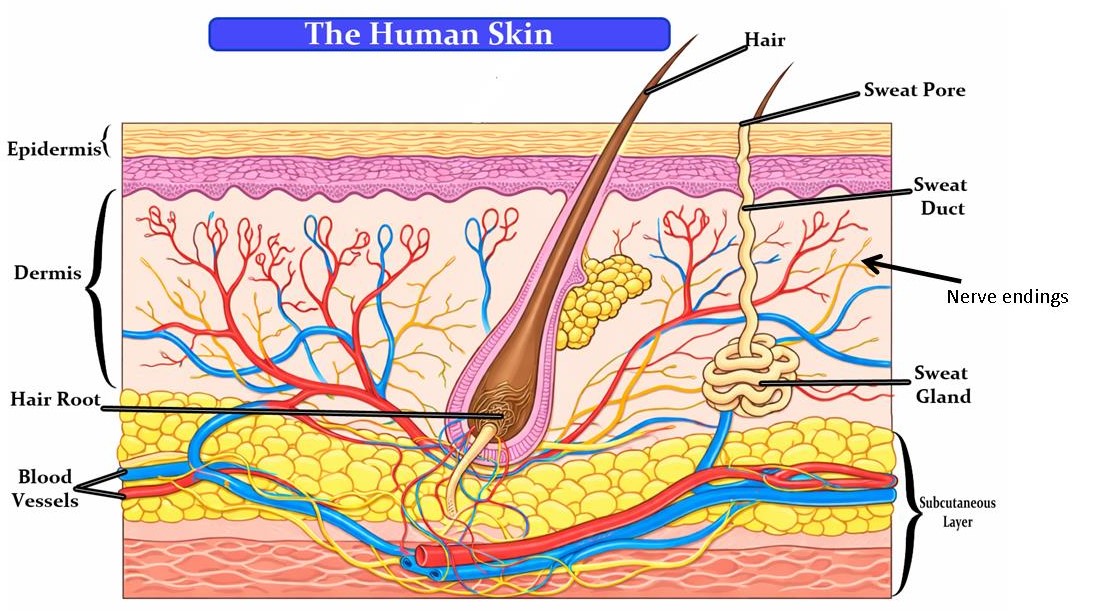
Parts of the Skin
| Part | Description |
|---|---|
| Epidermis | Outermost layer; provides a protective barrier. |
| Dermis | Inner layer; contains blood vessels, nerves, and sweat glands. |
| Subcutaneous layer | Fat layer beneath the dermis; stores energy and cushions organs. |
| Sweat glands | Produce sweat for cooling and excretion of waste. |
| Sweat ducts | Channels that carry sweat from glands to skin surface. |
| Sweat pores | Openings on the skin through which sweat is released. |
| Hair | Provides protection and regulates temperature. |
| Hair roots | Embedded in the dermis; responsible for hair growth. |
| Blood vessels | Supply nutrients and oxygen; help regulate temperature. |
| Nerve endings | Detect touch, pain, and temperature changes. |
Waste Products Excreted Through the Skin
- Water – helps cool the body.
- Salts – maintain electrolyte balance.
- Small amounts of urea – metabolic waste removed from the blood.
Functions of Sweat
- Cooling the body through evaporation.
- Excreting waste products such as salts and urea.
Important Notes
- The skin not only protects the body from physical damage but also plays a key role in maintaining the body's overall health.
- Good hydration and skincare are essential for supporting the skin's role in excretion and overall health.
The Urinary System
The urinary system removes waste products from the blood, maintains water and salt balance, and regulates blood pressure.
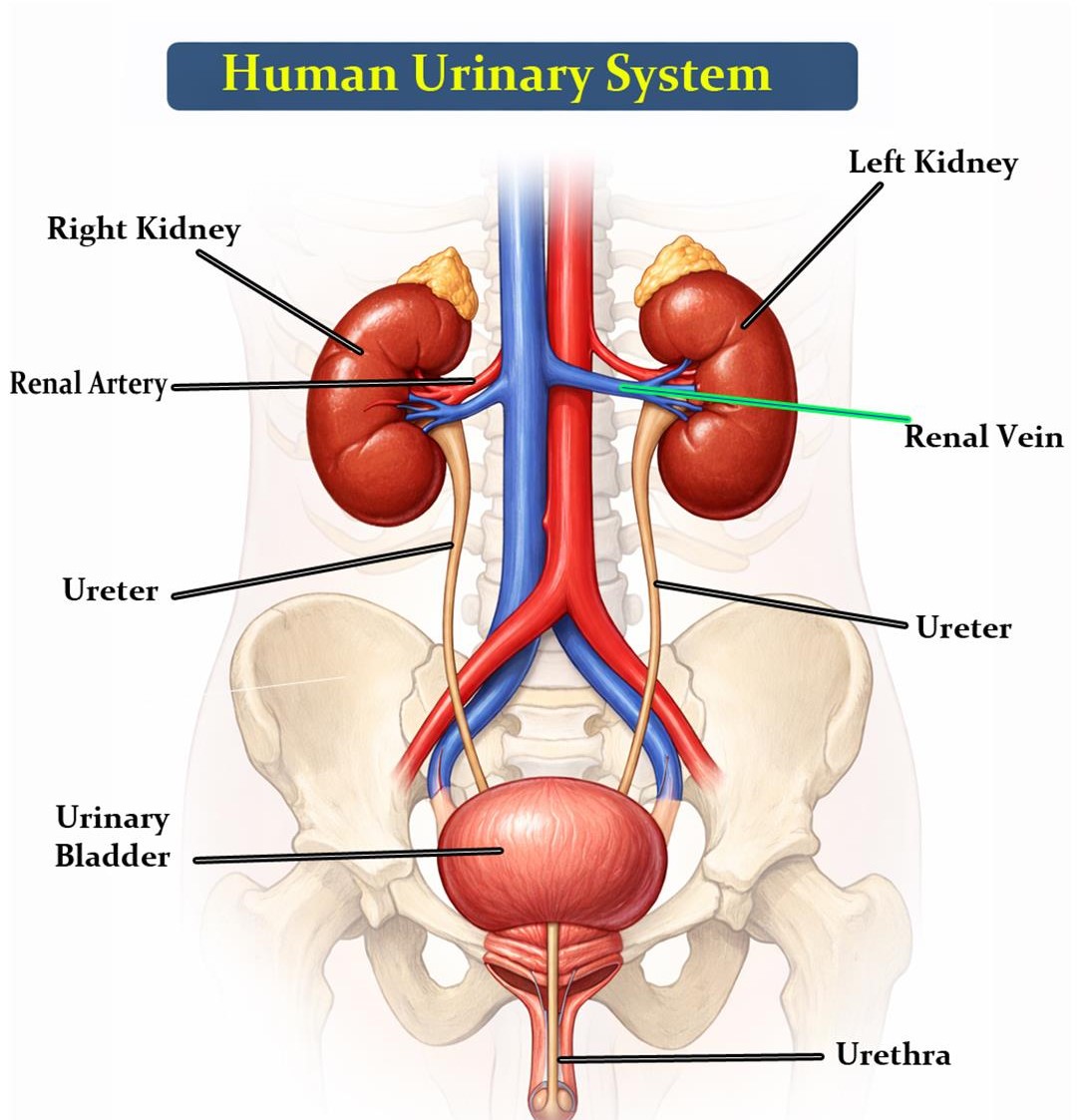
Main Parts of the Urinary System
| Part | Function |
|---|---|
| Right Kidney & Left Kidney | Filter blood, remove waste products, and produce urine. |
| Renal artery | Carries unfiltered blood from the heart to the kidneys. |
| Renal vein | Returns filtered blood from the kidneys to the heart. |
| Ureters | Carry urine from the kidneys to the urinary bladder. |
| Urinary bladder | Stores urine temporarily before excretion. |
| Urethra | Allows urine to leave the body. |
Waste Products Excreted Through the Kidneys
- Excess water – helps maintain proper hydration.
- Urea – produced from protein metabolism.
- Salts – help maintain electrolyte balance.
Kidney Disorders
Examples of Kidney Disorders
| Disorder | Description |
|---|---|
| Chronic kidney failure | Gradual, long-term loss of kidney function, often requiring dialysis or transplant. |
| Nephritis | Inflammation of the kidneys, usually caused by infections or autoimmune responses. |
| Hypertension | High blood pressure can damage kidney blood vessels, reducing their filtering efficiency. |
| Diabetes | High blood sugar over time can harm kidney tissues, leading to diabetic nephropathy. |
| Kidney stones | Hard, solid deposits of salts and minerals form in the kidneys; they can cause severe pain and block urine flow. |
Causes of Kidney Disorders
- Infections – bacterial or viral infections can damage kidney tissues.
- Improper diet – high intake of salt, sugar, or protein strains the kidneys.
- Inadequate water intake – dehydration reduces kidney filtration ability.
- Prolonged use of certain medications – such as painkillers or anti-inflammatory drugs.
- High blood pressure – constant pressure damages delicate kidney blood vessels.
- Diabetes – excess glucose can harm kidney cells over time.
Key Point:
Kidney disorders can range from mild and manageable to severe and life-threatening. Early detection is critical for effective treatment.
Ways to Prevent Kidney Disorders
- Drink plenty of clean water – helps flush toxins and maintain kidney function.
- Eat a balanced diet – rich in fruits, vegetables, and fiber; limit salt, sugar, and processed foods.
- Exercise regularly – maintains healthy blood pressure and body weight.
- Avoid smoking and excessive alcohol – these substances damage kidneys and other organs.
- Limit use of harmful drugs – avoid overuse of painkillers and consult a doctor before prolonged medication use.
- Maintain healthy body weight – prevents strain on kidneys and reduces risk of hypertension and diabetes.
- Attend regular medical check-ups – early detection of kidney issues improves outcomes.
- Practice good personal hygiene – reduces risk of infections that can affect kidney health.
Healthy Lifestyles That Promote Skin and Kidney Health
- Eat healthy food – supports immune system, organ function, and tissue repair.
- Drink enough water – keeps skin hydrated and helps kidneys filter blood efficiently.
- Exercise regularly – boosts circulation, strengthens muscles, and aids toxin removal.
- Maintain personal hygiene – prevents skin infections and reduces bacterial load on the body.
- Avoid harmful substances – tobacco, excessive sugar, alcohol, and recreational drugs can damage skin and kidneys.
- Seek medical advice when necessary – early detection of skin or kidney issues prevents complications.
- Manage stress – prolonged stress can affect hormone levels and overall health.
- Get adequate sleep – promotes repair of skin tissues and supports kidney function.
Summary
Human Skin Overview
- The skin is the body's largest organ and serves as a barrier to protect from injury, microorganisms, and harmful UV rays.
- It also regulates body temperature through sweating and blood flow adjustment.
- Excretion is also a function of the skin, removing waste products like water, salts, and small amounts of urea through sweat.
- The skin consists of three main layers: epidermis, dermis, and subcutaneous layer, each with unique functions.
- Healthy skin requires hydration, proper nutrition, and good hygiene practices.
Urinary System Overview
- The urinary system includes the kidneys, ureters, urinary bladder, and urethra, working together to remove waste from the body and maintain water and salt balance.
- The kidneys filter waste and produce urine, which is carried to the bladder by the ureters.
- The urinary bladder stores urine temporarily before excretion through the urethra.
- The kidneys also help regulate blood pressure and electrolyte levels in the body.
- Common kidney disorders include chronic kidney failure, nephritis, kidney stones, and the effects of hypertension and diabetes.
Prevention and Healthy Habits
- Maintaining hydration, a balanced diet, and regular exercise supports both skin and kidney health.
- Avoiding harmful substances like tobacco, excessive alcohol, and recreational drugs helps prevent damage to the skin and kidneys.
- Early detection of skin and kidney issues through regular medical check-ups is essential for effective treatment.
- Good personal hygiene, stress management, and adequate sleep also contribute to overall health and well-being.
Assessment
Human Skin & Urinary System Assessment
Answer the 11 questions based on your understanding of the human skin, urinary system, their functions, disorders, and prevention. The questions are divided into three levels: Beginner, Intermediate, and Advanced.
Certificate of Achievement
This certifies that
has successfully completed the assessment on
Human Skin & Urinary System
Score: