Electrical Energy, Sources, Circuits, and Appliances
Introduction here...
Introduction to Electricity
Electricity is a form of energy that flows through wires and is used to make devices work. It helps us to see, hear, cook, communicate, and do work. Electricity powers many appliances used in homes, schools, hospitals, offices, and industries.
Electricity can produce:
- Light (bulbs, lamps)
- Heat (iron box, cooker)
- Sound (radio, television)
- Motion (fans, washing machines)
4.1.1 Sources of Electricity
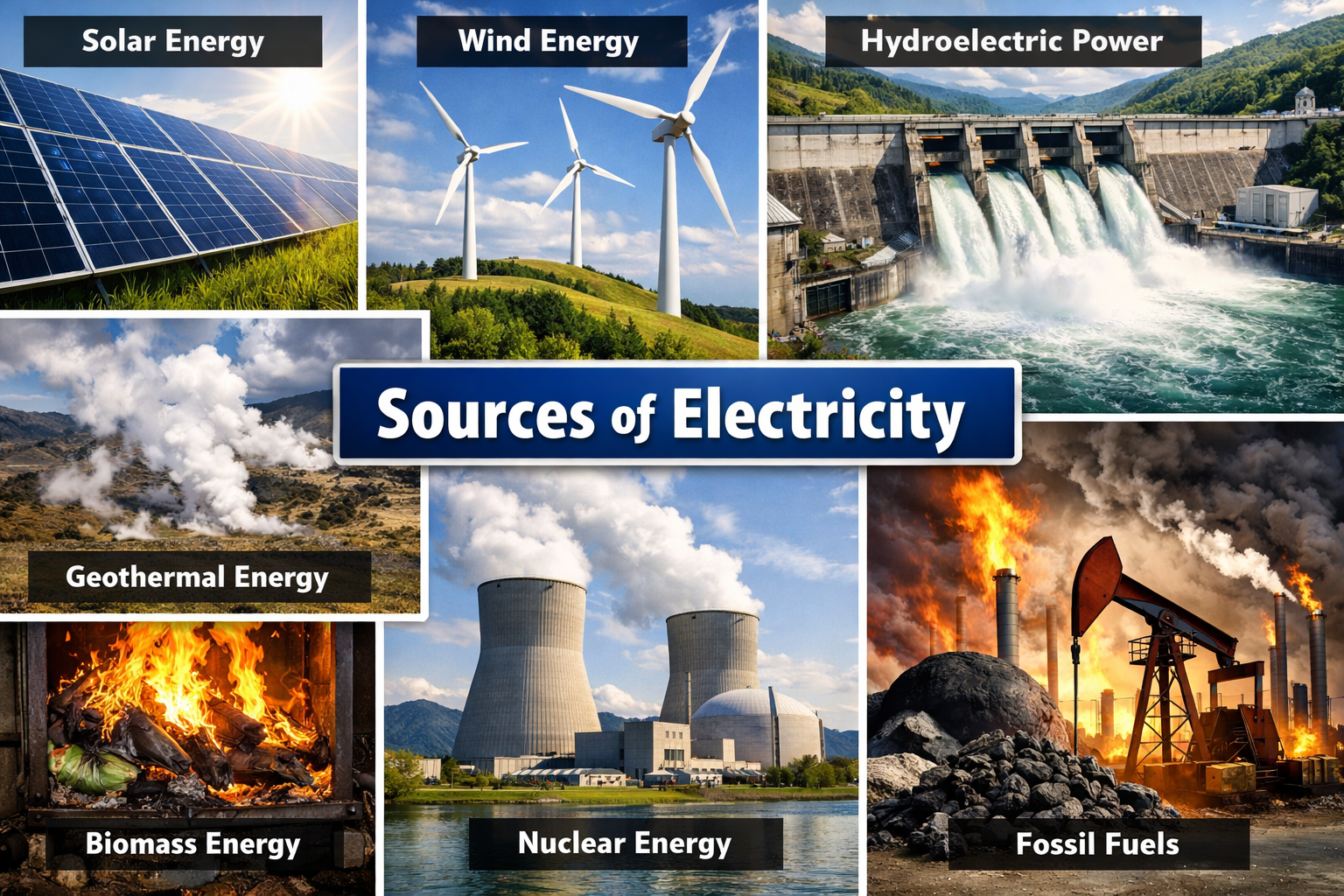
Electricity can be produced from different energy sources, which may be renewable or non-renewable.
Solar Energy
-
Comes from the sun.
💡 Did you know? Solar energy is one of the most abundant renewable energy sources.
- Solar panels absorb sunlight.
- The sunlight is converted into electricity.
- It is clean, renewable, and environmentally friendly.
- Used in homes, schools, street lights, and calculators.
Wind Energy
-
Wind turns large blades called turbines.
💡 Did you know? Wind turbines can generate electricity with wind speeds as low as 3 meters per second.
- The turbines rotate generators.
- The generators produce electricity.
- Wind energy is renewable and does not cause pollution.
Hydroelectric Power
-
Produced using flowing or falling water.
💡 Did you know? Hydroelectric power provides nearly 16% of the world's electricity.
- Water turns turbines in power stations.
- Commonly produced at dams.
- It is one of the main sources of electricity in many countries.
Geothermal Energy
-
Comes from heat beneath the earth’s surface.
💡 Did you know? Geothermal energy is a reliable and renewable energy source with minimal environmental impact.
- Underground heat produces steam.
- Steam turns turbines connected to generators.
- It is reliable and renewable.
Biomass Energy
-
Uses plant and animal waste such as wood, crop remains, and animal dung.
💡 Did you know? Biomass helps reduce waste while providing renewable energy.
- The waste is burned to produce heat.
- Heat is used to generate electricity.
- It helps reduce waste.
Nuclear Energy
-
Produced from nuclear reactions.
💡 Did you know? Nuclear power plants provide around 10% of the world’s electricity.
- The reaction produces a large amount of heat.
- Heat turns water into steam.
- Steam turns turbines to generate electricity.
- Produces a lot of power but must be handled carefully.
Fossil Fuels
-
Includes coal, oil, and natural gas.
💡 Did you know? Fossil fuels are the largest source of electricity generation globally, but they cause pollution.
- These fuels are burned to produce heat.
- Heat is used to generate electricity.
- They are non-renewable and cause pollution.
4.1.2 Simple Electrical Circuit
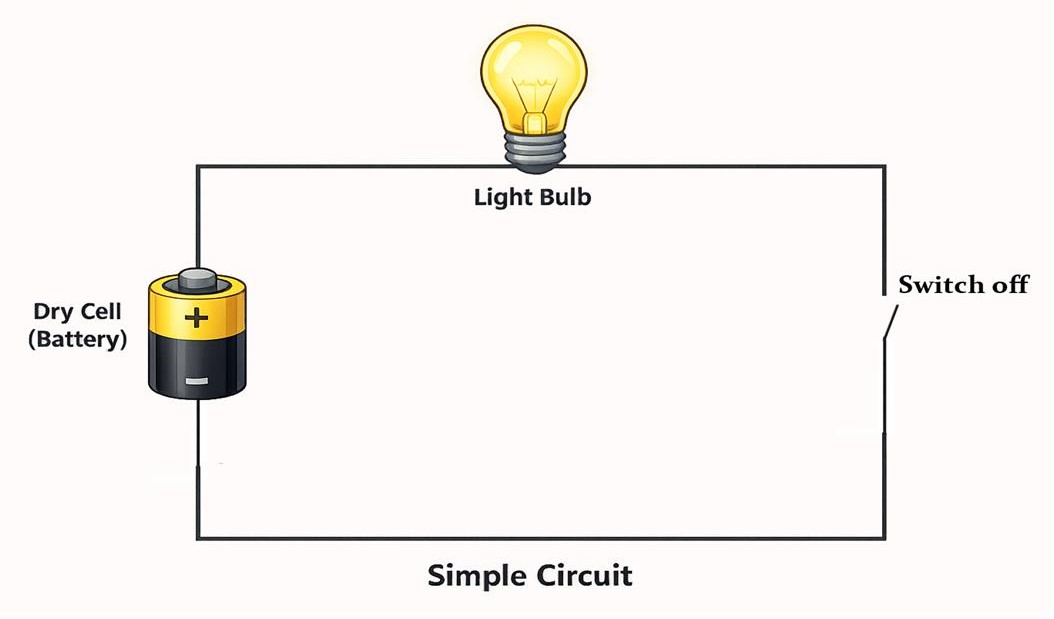
A simple electrical circuit is a closed path through which electric current flows from a power source, through a device, and back to the source.
Parts of a Simple Circuit
-
Dry cell (battery) – supplies electrical energy
💡 Did you know? A dry cell is a type of battery that does not require a liquid electrolyte.
-
Bulb – uses electricity to produce light
💡 Fun fact Incandescent bulbs use a filament that heats up and emits light when electricity flows through it.
- Switch – opens or closes the circuit
- Connecting wires – allow current to flow between parts
If the circuit is open, electricity will not flow. If the circuit is closed, electricity flows and the bulb lights.
Series Connection
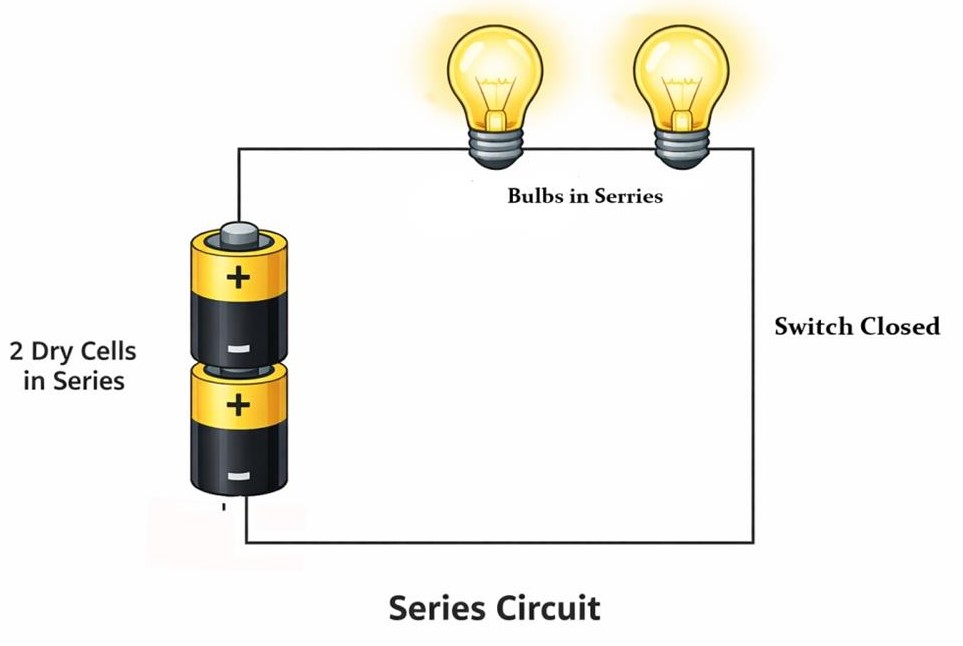
In a series circuit, components are connected in one single path.
Characteristics:
- Cells are connected end to end (+ to −).
- Bulbs share the same path.
- If one bulb goes off, all others go off.
- Adding more cells increases the brightness.
- Used in torchlights and simple devices.
Parallel Connection
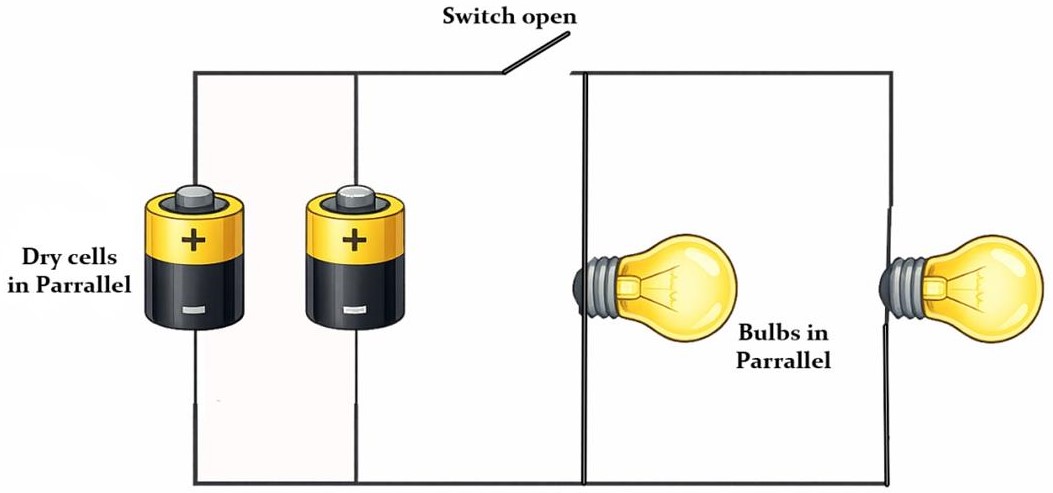
In a parallel circuit, components are connected in separate paths.
Characteristics:
- Like terminals are connected (+ to +, − to −).
- Each bulb has its own path for current.
- If one bulb fails, others remain on.
- All bulbs receive the same voltage.
- Commonly used in homes and buildings.
Electrical Appliances Used in Daily Life
Electrical appliances make work easier and faster. Examples include:
- Electric iron
- Television
- Refrigerator
- Electric cooker
- Blender
- Washing machine
- Electric kettle
- Microwave
- Fan
- Lamp
Each appliance converts electrical energy into useful energy such as heat, light, sound, or motion.
Safety Measures When Handling Electrical Appliances
Electricity can be dangerous if not handled properly. Always follow safety rules:
- Do not insert metal objects into sockets.
- Switch off sockets when not in use.
- Switch off appliances before plugging or unplugging.
- Never use appliances with wet hands.
- Do not overload sockets.
- Repair or replace damaged wires and cords.
- Follow manufacturer’s instructions.
- Call qualified professionals for repairs.
- Keep water away from electrical appliances.
Uses of Electricity in Daily Life
Electricity is used for:
- Cooking food
- Lighting homes and streets
- Washing clothes
- Ironing clothes
- Refrigeration to preserve food
- Entertainment (TV, radio)
- Communication (charging phones, computers)
- Running machines in factories and industries
Summary
Electrical Energy
- Electricity is a form of energy that flows through wires to power devices.
- It helps us see, hear, cook, communicate, and perform various tasks.
- Electricity powers appliances in homes, schools, hospitals, offices, and industries.
Sources of Electricity
- Electricity can be produced from both renewable and non-renewable sources.
- Solar energy, wind energy, hydroelectric power, geothermal energy, and biomass are renewable sources.
- Fossil fuels and nuclear energy are non-renewable sources.
Solar Energy
- Comes from the sun and is converted into electricity using solar panels.
- It is clean, renewable, and environmentally friendly.
- Used in homes, schools, street lights, and calculators.
Wind Energy
- Wind turns turbines to generate electricity.
- It is a renewable source and does not cause pollution.
Hydroelectric Power
- Produced from flowing or falling water that turns turbines in power stations.
- Commonly produced at dams and is one of the main sources of electricity in many countries.
Geothermal Energy
- Comes from heat beneath the earth’s surface and produces steam to generate electricity.
- It is reliable and renewable.
Biomass Energy
- Uses plant and animal waste, such as wood and crop remains, to produce heat and generate electricity.
- It helps reduce waste and is a renewable source.
Nuclear Energy
- Produced from nuclear reactions, which generate large amounts of heat.
- Heat turns water into steam, which is used to generate electricity.
- Produces a lot of power but requires careful handling.
Fossil Fuels
- Includes coal, oil, and natural gas.
- These fuels are burned to produce heat for generating electricity.
- Non-renewable and cause pollution.
Simple Electrical Circuit
- A simple circuit consists of a dry cell (battery), bulb, switch, and connecting wires.
- If the circuit is open, electricity will not flow; if closed, electricity flows and the bulb lights up.
Series Connection
- In a series circuit, components are connected in a single path, and if one bulb goes off, all others go off.
- More cells increase the brightness of the circuit.
Parallel Connection
- In a parallel circuit, components are connected in separate paths.
- If one bulb fails, others remain on, and all bulbs receive the same voltage.
Electrical Appliances
- Examples include electric iron, television, refrigerator, electric cooker, and microwave.
- Each appliance converts electrical energy into useful energy like heat, light, sound, or motion.
Safety Measures
- Follow safety rules to avoid accidents when handling electrical appliances.
- Ensure proper socket use, repair damaged wires, and avoid using wet hands while plugging appliances.
Uses of Electricity
- Used for cooking, lighting homes and streets, washing clothes, ironing, and refrigeration.
- Also used in entertainment, communication (charging phones), and running industrial machines.
Assessment
Electrical Energy Assessment
Answer all 15 questions about electrical energy, circuits, and appliances. Your results will be marked automatically.
Certificate of Achievement
This certifies that
has successfully completed the assessment on
Electrical Energy
Score: